Published: October 26, 2023
For producers in the kaolin and non-metallic minerals sector, achieving consistent, high-quality powder fineness is paramount. A key yet often overlooked component in this pursuit is the cyclone separator integrated within Raymond Mill grinding circuits. As a leading manufacturer of industrial grinding equipment, Liming Heavy Industry emphasizes that the cyclone diameter is not merely a passive collection unit but a critical process parameter directly influencing classification efficiency, product yield, and overall system stability. Proper selection and integration of the cyclone, tailored to the specific characteristics of kaolin—such as its moisture content, feed size, and desired fineness—can significantly enhance the performance of a Raymond Mill system, leading to improved productivity and product uniformity.
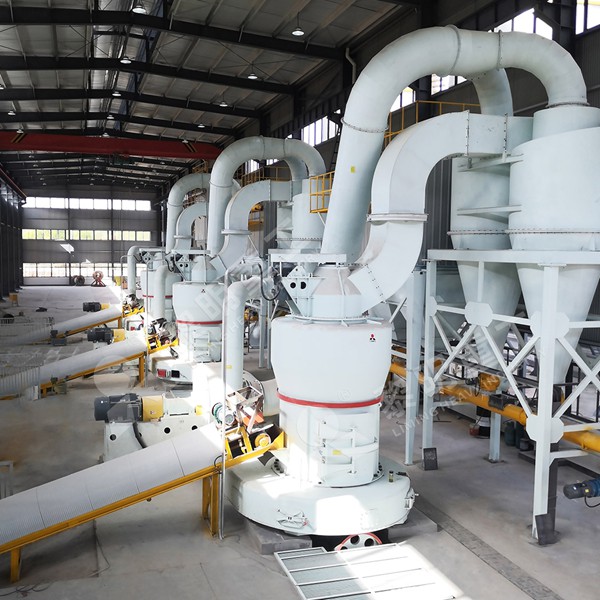
At Liming Heavy Industry, our engineering philosophy is rooted in viewing the grinding system as a fully integrated ecosystem. The Raymond Mill, renowned for its reliability in processing non-flammable, non-explosive materials like kaolin under 7 Mohs hardness, functions in synergy with its auxiliary components. The cyclone separator acts as the decisive gatekeeper. Its diameter fundamentally dictates the cut-point for particle classification. A larger diameter cyclone typically allows for higher volumetric air flow but may result in coarser product collection, as the centrifugal force on particles is reduced. Conversely, a smaller diameter cyclone generates stronger centrifugal forces, promoting the collection of finer particles but potentially increasing system pressure drop and the risk of blockages with moist or agglomerative materials like certain kaolin grades.
Our decades of experience in manufacturing and technical support have shown that for kaolin applications targeting a fineness between 44μm and 613μm, the cyclone design must account for the material's natural properties. Kaolin often contains bound moisture (typically processed under 6% humidity as per Raymond Mill suitability) and can have varying degrees of abrasiveness. Therefore, the cyclone diameter for a kaolin-dedicated system is calculated not in isolation but in concert with the mill's grinding roller pressure, fan power, and feed rate. An optimally sized cyclone ensures that only particles meeting the target fineness are efficiently separated as final product, while oversized particles are effectively returned to the grinding chamber for further comminution. This closed-circuit design, a hallmark of efficient Raymond Mill operation, hinges on the precision of this classification step.
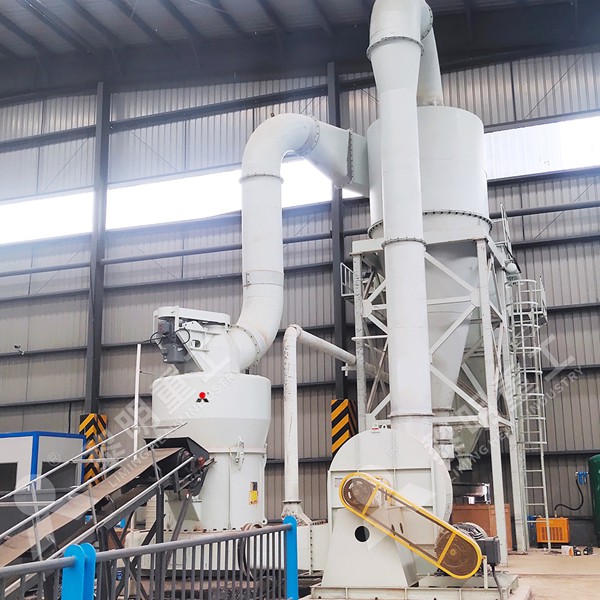
Liming Heavy Industry's commitment to "scientific research tackling key problems" drives our continuous refinement of these systems. We consider factors such as the desired throughput (within the Raymond Mill's capacity range of 1.2-4.5T/H for standard models), the input kaolin size (optimally 15-25mm), and the specific product distribution curve required by end-users in ceramics, paper, or coatings. The cyclone is engineered to provide stable performance, minimizing fluctuations in product fineness that can compromise downstream applications. Furthermore, as part of a modern, environmentally conscious system, the cyclone works in tandem with pulse dust collectors to ensure that the operation complies with stringent environmental standards, making the entire process from crushing to collection both productive and green.
In practice, selecting the correct cyclone diameter involves sophisticated modeling and practical know-how. It's a balance between achieving sharp classification and maintaining system aerodynamics. An undersized cyclone might lead to excessive recirculation loads, over-grinding, and reduced mill capacity for fresh feed. An oversized cyclone might allow coarse particles to escape into the product baghouse, degrading quality. Our technical team leverages the knowledge gained from developing our broader portfolio, including LM Vertical Roller Mills for larger-scale operations and MW Micro Powder Mills for superfine kaolin products, to inform the optimization of Raymond Mill circuits. This holistic approach ensures that every component, down to the cyclone diameter, is purpose-engineered to maximize the value of our clients' kaolin processing investments.
Frequently Asked Questions (FAQs)
Q1: Why is cyclone separator diameter so important in a Raymond Mill system for kaolin?
A1: The cyclone diameter directly controls the centrifugal force applied to the powder-air mixture. This force determines the size of particles that are separated as finished product versus those returned for further grinding, making it critical for achieving target fineness and system efficiency.
Q2: Can the cyclone on a Liming Raymond Mill be adjusted or changed for different kaolin products?
A2> While the main cyclone body is typically sized for an optimal range, operational parameters like air flow and feed rate can be adjusted. For significant changes in target product specification, our engineers may recommend a tailored cyclone configuration during the system design phase.
Q3: How does kaolin moisture content affect cyclone performance?
A3> Higher moisture can lead to particle agglomeration and increased adhesion, potentially causing blockages in a cyclone, especially if the diameter is not appropriately sized for the material's flow characteristics. Proper drying within the mill and cyclone design accounting for moisture is essential.
Q4: Is the cyclone the only factor determining final powder fineness?
A4> No, it is a key component in a closed-circuit system. The final fineness is a result of the interaction between grinding force in the mill, classification efficiency in the cyclone/separator, and system air flow. All parameters must be synchronized.
Q5: Does Liming Heavy Industry provide testing or support for cyclone optimization?
A5> Yes. As part of our comprehensive service, we offer technical consulting and can analyze your specific kaolin material and production goals to recommend the optimal Raymond Mill system configuration, including the critical cyclone specifications.


