Published: October 26, 2023
The shrinkage rate of ceramic kaolin during drying and firing is a critical parameter that directly influences dimensional accuracy, product integrity, and final quality in ceramic manufacturing. Effectively managing this shrinkage requires precise control over the particle size, moisture content, and thermal processing of the kaolin powder—a process where advanced grinding technology plays a decisive role. As a leader in industrial grinding equipment for over three decades, LIMING HEAVY INDUSTRY CO., LTD. provides engineered milling solutions designed to deliver consistent, ultra-fine kaolin powders with optimized particle size distribution. This consistency is fundamental to predicting and minimizing differential shrinkage, reducing warping and cracking, and achieving superior ceramic end-products. This article explores the technical relationship between kaolin powder preparation and shrinkage behavior, highlighting how modern grinding systems from Liming contribute to enhanced process control and product reliability.
Kaolin, or china clay, undergoes significant physical and chemical transformations from a wet, plastic state to a hard, vitrified ceramic body. The shrinkage occurs in two primary stages: drying shrinkage (removal of physical water) and firing shrinkage (removal of chemically bound water and sintering). The magnitude and uniformity of this shrinkage are profoundly affected by the initial particle characteristics of the kaolin powder. Finer, more uniformly sized particles pack more densely, leading to a more predictable and often higher shrinkage rate, but with significantly reduced risk of internal stresses that cause defects. Conversely, a broad or coarse particle size distribution can result in uneven packing, leading to differential shrinkage, warping, and cracking during thermal processing.
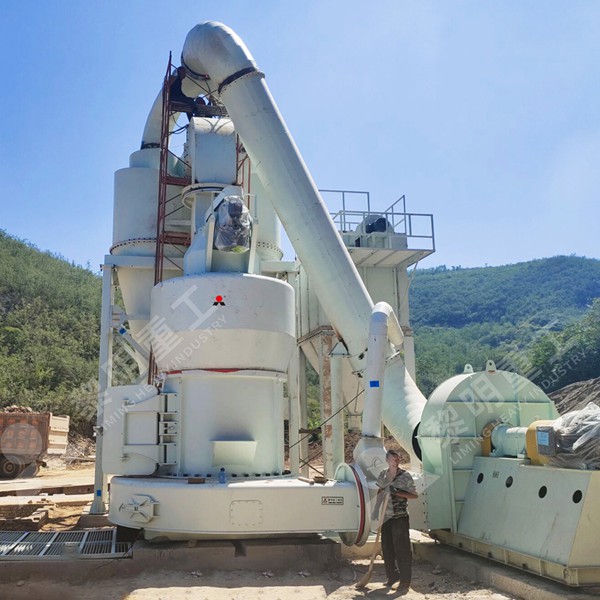
This is where the precision of Liming's grinding technology becomes indispensable. Our portfolio of grinding mills is engineered to transform raw, beneficiated kaolin into powders with tightly controlled fineness and distribution. For instance, the MW Micro Powder Mill, incorporating advanced Swedish grinding technology, excels in superfine powder processing. It can produce kaolin powder with a fineness up to d97 ≤ 5μm (3250 mesh), allowing ceramic producers to achieve exceptionally uniform particle sizes. This ultra-fine, consistent powder ensures homogeneous green body formation, leading to uniform drying and firing shrinkage. The mill's closed-circuit system with an efficient pulse dust collector also maintains product purity, free from contamination that could otherwise create weak points and irregular shrinkage.
For large-scale production of ceramic-grade kaolin, the MTW European Type Trapezium Mill offers a robust solution. As an upgrade over traditional Raymond mills, it provides stable performance, high productivity, and energy efficiency. Its patented technology ensures consistent grinding pressure and precise classification. The system—comprising the mill, separator, feeder, and dust collector—creates a closed-loop process that minimizes heat loss and moisture variation, two factors critical to maintaining batch-to-batch consistency in powder properties. A consistent feed material directly translates to predictable shrinkage rates in the ceramic plant.
In many ceramic production lines, kaolin is blended with other materials like feldspar or quartz. The Ball Mill remains a cornerstone for such mixed grinding applications. Its ability to grind various ores and materials into a homogenous blend is crucial. The cascading action of steel balls within the rotating chamber ensures thorough mixing and size reduction, creating a perfectly integrated ceramic body powder. Uniform blending at this stage prevents localized areas with different shrinkage potentials, thereby controlling overall dimensional change. Liming's Ball Mills, with capacities up to 50 T/H, are key equipment for beneficiation and preparation in the ceramics industry.
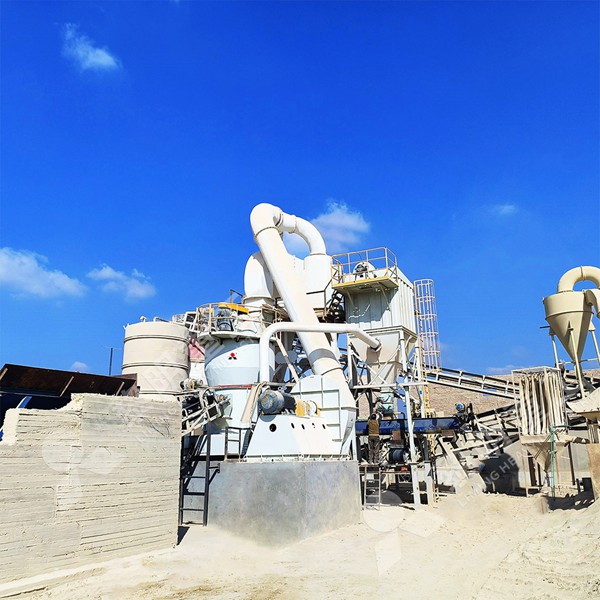
Beyond the mill itself, Liming's integrated system approach is vital. From the initial crushing by a Jaw Crusher to the precise feeding via variable-frequency belt feeders and final powder collection, every component is designed for stability. The LM Vertical Roller Mill, integrating drying, grinding, and powder selection, is particularly advantageous when processing kaolin with higher moisture content. By controlling the drying process within the mill, it prepares a powder with optimal moisture for pressing or casting, directly influencing the subsequent drying shrinkage phase. Our commitment to "scientific research tackling key problems" drives continuous innovation in these systems, aiming at the technological frontier to provide customers with tools for unparalleled process control.
Ultimately, mastering ceramic kaolin shrinkage is not merely about measuring a final percentage; it's about engineering the entire powder preparation chain for maximum consistency and predictability. LIMING HEAVY INDUSTRY CO., LTD., with its modern management, precision manufacturing, and mature scientific research team, provides the technological foundation for this control. By offering a range of mills from the superfine MW series to the high-capacity MTW and versatile Ball Mills, we empower ceramic manufacturers to select the optimal technology for their specific kaolin formulation and production goals, turning the challenge of shrinkage into a manageable, standardized variable for superior quality ceramics.
Frequently Asked Questions (FAQ)
- How does particle size distribution from grinding affect kaolin firing shrinkage?
A narrow, uniform particle size distribution, achievable with mills like the MW Micro Powder Mill, promotes even packing in the green body. This uniformity leads to consistent densification during sintering, resulting in predictable and homogeneous firing shrinkage, reducing defects like warping. - Can your grinding equipment handle kaolin with varying moisture content?
Yes. Our LM Vertical Roller Mill is specifically designed to integrate drying and grinding. It can efficiently process kaolin with higher moisture, delivering a consistently dry powder, which is crucial for controlling the initial drying shrinkage stage in ceramic forming. - What is the role of a closed-circuit grinding system in shrinkage control?
Closed-circuit systems, as used in our MTW European Mill, recycle the air flow and continuously re-grind oversized particles. This ensures every batch of powder meets the exact same fineness specification, providing the batch-to-batch consistency essential for reliable shrinkage predictions in production. - Is superfine grinding always better for reducing shrinkage-related defects?
While superfine grinding enhances uniformity, the optimal fineness depends on the specific ceramic body formulation and forming method. Our technical team can help determine the ideal particle size range from our MW or Raymond Mill to balance shrinkage, strength, and production efficiency for your application. - How does your equipment contribute to overall consistency beyond just fineness?
Our systems emphasize stability in feeding, grinding pressure, and classification. Features like variable-frequency feeders and precision separators minimize fluctuations in the grinding process. This holistic consistency in powder production is the first and most critical step in controlling all subsequent shrinkage variables.


