Published: October 26, 2023
For professionals in the kaolin processing industry, achieving the precise fineness and quality of the final powder is paramount. The Raymond mill, a cornerstone of mineral grinding technology, plays a critical role in this process. A key operational parameter that directly dictates product quality and system efficiency is the separator speed. This article provides a comprehensive, professional analysis of separator speed functionality within the context of kaolin milling, drawing on the engineering expertise and product evolution of Liming Heavy Industry. We will explore the principles, optimization strategies, and practical impacts of this crucial setting to empower operators and plant managers with actionable knowledge.
The heart of any Raymond mill system is its integrated classifier or separator. This dynamic component acts as the gatekeeper of particle size. In the grinding chamber, kaolin is pulverized between rollers and a grinding ring. The resulting powder-air mixture is carried upwards by the airflow generated by the system's blower. As this mixture enters the separator, a rotating cage or turbine—whose speed is precisely controlled—creates a centrifugal field. Particles finer than the target cut-point possess insufficient mass to be thrown to the separator walls and are carried through to the collection cyclone or bag filter as finished product. Coarser particles are rejected by this centrifugal force, falling back to the grinding zone for further comminution. This continuous internal recirculation is fundamental to achieving a consistent, narrow particle size distribution.
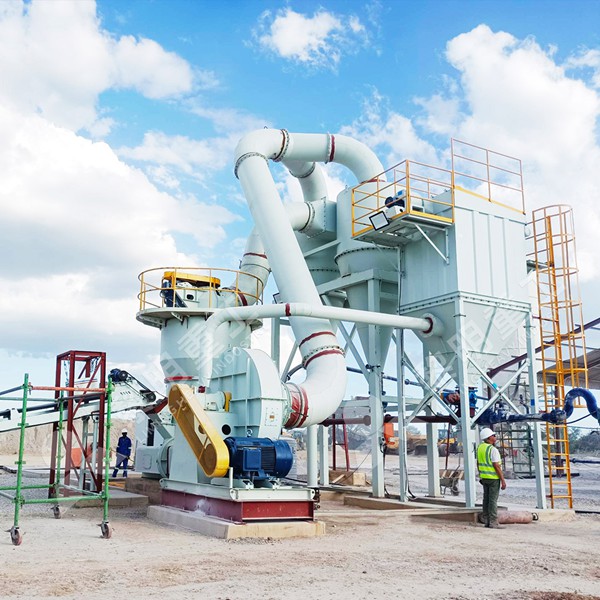
Adjusting the separator's rotational speed is the primary method for controlling product fineness. A higher speed increases the centrifugal force within the classifier, raising the cut-point size. This means only the very finest particles can escape; coarser ones are more aggressively rejected, leading to a finer overall product but potentially reducing mill throughput. Conversely, lowering the separator speed reduces centrifugal force, allowing larger particles to pass through as finished product, resulting in a coarser output but typically higher capacity. For kaolin, which often targets finenesses between 44μm (325 mesh) and finer for various industrial applications, finding the optimal speed setting is a balance between the desired spec, production rate, and energy consumption. It is not a set-and-forget parameter; it requires adjustment based on feed material characteristics (e.g., moisture, initial hardness) and desired output.
Liming Heavy Industry's decades of experience in manufacturing and refining grinding equipment, including their advanced Raymond mill series, underscore the importance of precise separator control. Their design philosophy integrates robust mechanical construction with reliable drive systems to ensure separator speed adjustments are stable and repeatable. Modern iterations of these mills often feature improved separator designs that offer sharper classification efficiency, meaning a more precise separation at a given speed, leading to better product uniformity and less over-grinding of fines—a critical factor for preserving the brightness and properties of processed kaolin.
Operational optimization extends beyond just fineness. The separator speed significantly impacts the mill's internal load and energy profile. An incorrectly high speed for a target coarse grind can lead to excessive material recirculation, increasing pressure drop, fan power consumption, and wear on grinding components. Properly synchronizing separator speed with grinding roller pressure, feed rate, and air volume is essential for achieving peak system efficiency. Liming Heavy Industry's commitment to "scientific research tackling key problems" is evident in their holistic approach to mill system design, where the separator is engineered as an integral, harmonized component rather than an isolated part.
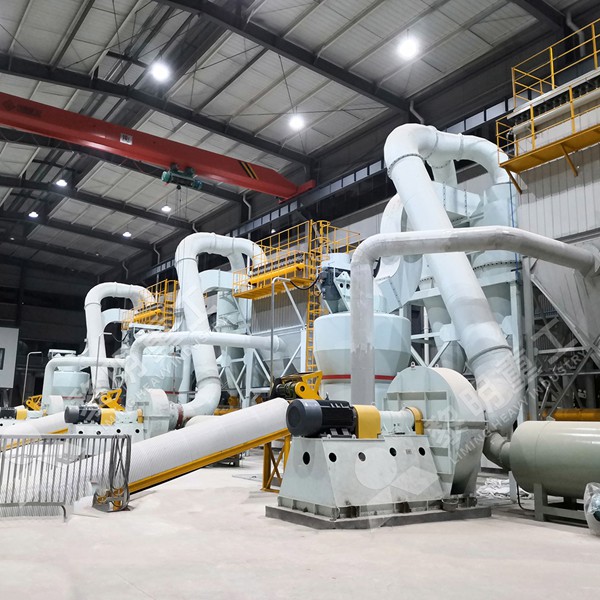
In practice, optimizing separator speed for kaolin involves initial testing and continuous monitoring. Starting with manufacturer-recommended baseline settings for a given target fineness is standard. Operators then make fine adjustments while sampling the output. Advanced plants may utilize particle size analyzers for real-time feedback. The goal is to find the speed that delivers the specification with the most stable mill operation (e.g., steady amperage on the main motor) and the lowest specific energy consumption (kWh per ton). It's a testament to the enduring relevance of the Raymond mill that such a fundamental mechanical control remains so powerful in determining product quality and operational economics in kaolin processing.
Frequently Asked Questions (FAQ)
Q1: What is the primary function of the separator in a Raymond mill?
A1: The separator, or classifier, is responsible for sizing the ground powder. It uses centrifugal force generated by a rotating cage to separate fine particles (finished product) from coarse ones, which are returned to the grinding zone for further milling.
Q2: How does increasing the separator speed affect the final kaolin product?
A2: Increasing the separator speed generates greater centrifugal force, allowing only finer particles to pass. This results in a finer overall product fineness but may reduce the mill's throughput capacity.
Q3: Can separator speed adjustments compensate for changes in raw kaolin feed?
A3: Yes, to some extent. If the feed material becomes harder or coarser, a slight reduction in separator speed can help maintain a target product size by allowing marginally larger particles to pass, preventing excessive recirculation and mill overload.
Q4: Is the separator the only factor controlling fineness in a Raymond mill?
A4: No, it is the primary control, but it works in conjunction with other parameters. Grinding roller pressure, air volume from the blower, and feed rate all interact with separator speed to determine the final particle size distribution and system balance.
Q5: Why is a stable and precise separator drive mechanism important?
A5: Any fluctuation or inconsistency in the separator's rotational speed directly translates into variation in product fineness. A robust and precise drive system ensures consistent classification, which is crucial for producing uniform, high-quality kaolin powder that meets strict specifications.


