Published: October 26, 2023
The production of ultra-fine kaolin, a critical industrial mineral, demands precision grinding and classification technologies to achieve the stringent particle size distributions required by high-value applications such as premium paper coatings, advanced ceramics, specialty polymers, and high-performance paints. As a leader in industrial grinding equipment manufacturing since 1987, Liming Heavy Industry Co., Ltd. provides a comprehensive portfolio of milling systems engineered specifically for the rigorous demands of non-metallic mineral processing. Our solutions, ranging from high-capacity vertical roller mills to sophisticated micro-powder grinding systems, are designed to deliver exceptional fineness control, operational efficiency, and consistent product quality, enabling producers to meet the exacting specifications of modern ultra-fine kaolin markets.
The journey to ultra-fine kaolin begins with effective comminution, but the defining stage is precise classification within the grinding circuit. Traditional methods often struggle with efficiency and narrow particle size distribution (PSD) control. Modern systems integrate grinding and air classification seamlessly. For instance, in our MTW European Type Trapezium Mill, the ground material is conveyed by air flow to an integrated high-efficiency separator. Particles meeting the target fineness pass through for collection, while coarser particles are rejected and returned to the grinding zone for further processing. This closed-circuit, internal classification mechanism is fundamental for achieving uniform PSD and reducing energy waste from over-grinding.
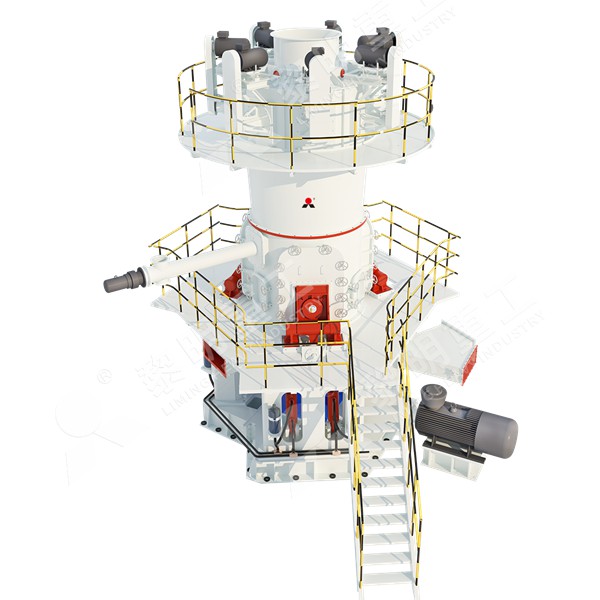
Selecting the optimal equipment depends on the target fineness, required capacity, and the physical characteristics of the feed material. For high-volume production of kaolin powders in the range of 325 to 800 mesh (approximately 45 to 20 microns), the LM Vertical Roller Mill presents an outstanding solution. Its unique grinding principle, combining compression and shear forces between rollers and a rotating table, offers high grinding efficiency with lower energy consumption per ton compared to traditional ball mills. The integrated drying capability is another significant advantage, allowing it to handle kaolin with varying moisture content directly.
When the application calls for superfine or ultrafine kaolin powders exceeding 1250 mesh (10 microns) and reaching down to 5 microns (d97), the MW Micro Powder Mill emerges as the technology of choice. This system incorporates advanced grinding mechanics and classifier design, partially inspired by refined European technologies. Its ability to precisely adjust fineness between 325 and 3250 mesh provides unparalleled flexibility. The system operates with a high-recirculation rate of oversize particles, ensuring that the final product has a very tight particle size distribution, which is crucial for properties like opacity, gloss, and viscosity in coating applications.
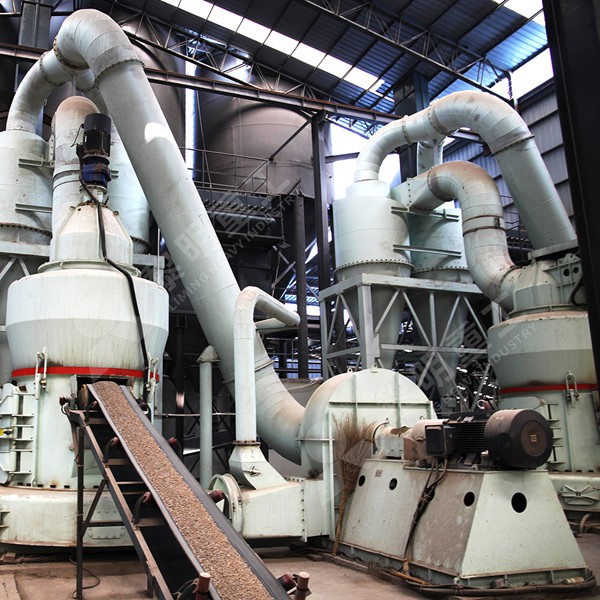
Beyond the core mill, the entire system's design dictates performance and reliability. A complete grinding line from Liming Heavy Industry is a synergized unit comprising the crusher, feeder, mill, classifier, blower, dust collector, and automated control system. The pulse-jet dust collector is not merely an environmental add-on; it is a critical component for product recovery and maintaining a stable, negative-pressure environment within the mill, which directly influences classification efficiency and product yield. Our commitment to a "production, learning, and research" philosophy ensures that each system benefits from continuous technological improvement aimed at enhancing energy efficiency, wear resistance of parts, and the intelligence of control systems for stable, long-term operation.
Ultimately, achieving superior ultra-fine kaolin classification is an engineering challenge that balances fineness, throughput, energy use, and system stability. With over three decades of specialization in crushing and grinding equipment, Liming Heavy Industry provides not just machines, but integrated process solutions. Our engineers work closely with clients to analyze raw material properties and product goals, recommending the most suitable technological path—be it the robust capacity of an LM Vertical Mill, the precision of an MW Micro Powder Mill, or the balanced performance of an MTW European Mill—to build a competitive advantage in the demanding field of industrial minerals.
Frequently Asked Questions (FAQs)
1. What is the primary advantage of an integrated classifier in kaolin grinding mills?
Integrated classifiers, like those in the MTW and MW mills, allow for real-time, closed-circuit classification. This ensures only particles meeting the target fineness exit the system, leading to a tighter particle size distribution, higher energy efficiency by minimizing over-grinding, and more stable product quality compared to open-circuit or external classification setups.
2. Can your equipment handle kaolin with natural moisture content?
Yes, several of our mills are equipped with integrated drying capabilities. The LM Vertical Roller Mill, for example, can simultaneously dry and grind materials by introducing hot air into the grinding chamber. This eliminates the need for a separate, energy-intensive drying step for many feedstocks.
3. What fineness range can be achieved for ultra-fine kaolin production?
Our equipment portfolio covers a very wide range. Raymond Mills can achieve 44-613 microns, while the MW Micro Powder Mill is specifically designed for superfine processing, producing powders with a top size (d97) as fine as 5 microns (approx. 2500 mesh). The exact achievable fineness depends on the raw material properties and system configuration.
4. How does your company ensure the grinding system remains environmentally compliant?
All our complete grinding lines are designed with environmental protection as a core principle. They are equipped with high-efficiency pulse-jet baghouse dust collectors that capture over 99.9% of process dust, ensuring emissions meet stringent national and international standards. The closed-system design also minimizes material loss and environmental footprint.
5. What kind of after-sales support accompanies your grinding systems?
Our support extends from initial site planning and installation guidance to comprehensive operator training and readily available spare parts. We adhere to a modern scientific management system, ensuring technical support and service are part of our long-term partnership to guarantee optimal system performance and longevity.


