Published: October 26, 2023
Effective viscosity control in adhesive-grade kaolin production is paramount for product consistency and performance. Achieving the precise particle size distribution and fineness required to meet stringent rheological specifications demands advanced, reliable grinding technology. Liming Heavy Industry, with over three decades of engineering excellence in mineral processing equipment, provides a suite of specialized grinding mills designed to tackle the unique challenges of kaolin processing. From coarse crushing to ultra-fine classification, our integrated solutions ensure optimal viscosity control, enhanced production efficiency, and superior product quality for adhesive manufacturers worldwide.
The journey to perfect kaolin viscosity begins with understanding the material's inherent properties. Kaolin, a soft white clay, must be processed to a specific fineness and particle shape to function effectively as a rheology modifier and extender in adhesives. Inconsistent grind leads to unpredictable viscosity, which can compromise adhesive application, bonding strength, and shelf stability. Traditional grinding methods often struggle with heat sensitivity, contamination, and inadequate control over the top-size particle cut, resulting in batch-to-batch variations.
This is where Liming Heavy Industry's engineered approach makes a definitive difference. Our research and development philosophy, centered on scientific problem-solving and technological innovation, has produced a range of mills that offer precise, adjustable, and repeatable grinding outcomes. For initial size reduction of raw kaolin lumps, our robust Jaw Crushers and Hammer Crushers provide the first critical step, ensuring a consistent feed size for downstream milling processes—a fundamental prerequisite for stable viscosity.
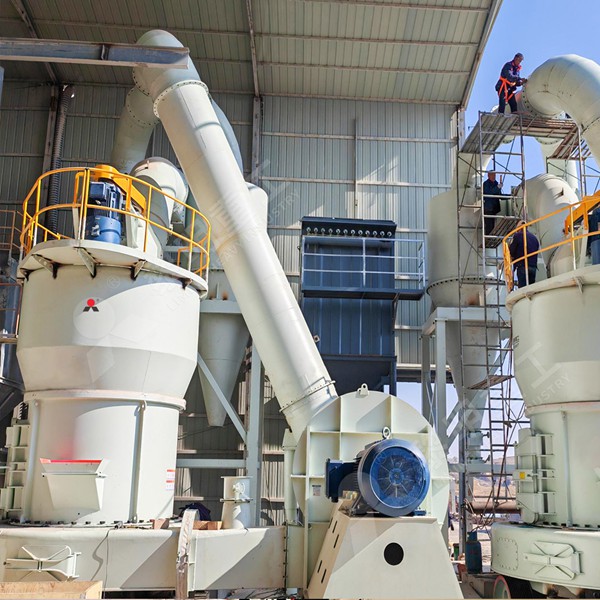
For the core grinding stage to achieve adhesive-grade fineness, several of our mills stand out. The MTW European Type Trapezium Mill represents a significant advancement. Its patented technology and efficient closed-circuit system with an integrated high-efficiency separator are ideal for large-scale production. The system allows for precise control over the particle size cut-point. Materials are ground between the ring and rollers, with the airflow carrying particles to the separator. Oversize particles are efficiently rejected and returned for regrinding, ensuring a tight particle size distribution that is crucial for predictable viscosity. This closed-loop, negative pressure operation also minimizes dust, supporting a cleaner production environment.
When the application demands ultra-fine kaolin powder to act as a high-performance thixotrope, the MW Micro Powder Mill is the technology of choice. Absorbing advanced grinding technology, this mill excels in producing superfine powders up to d97 ≤ 5μm. Its ability to finely adjust fineness between 325 to 3250 mesh gives formulators unparalleled control over the final product's rheological behavior. The mill's design minimizes over-grinding and heat generation, preserving the kaolin's crystalline structure and brightness, which can be critical for certain adhesive applications. Equipped with a pulse dust collector, the entire process remains clean and environmentally compliant.
For operations requiring high-capacity, versatile dry grinding, the LM Vertical Roller Mill integrates drying, grinding, powder selection, and conveying in a single unit. This is particularly beneficial if the kaolin feedstock has variable moisture content. The LM mill's ability to simultaneously dry and grind with low energy consumption, coupled with its stable material bed grinding principle, produces a uniform product with less fine-particle agglomeration—a common culprit in viscosity fluctuation.
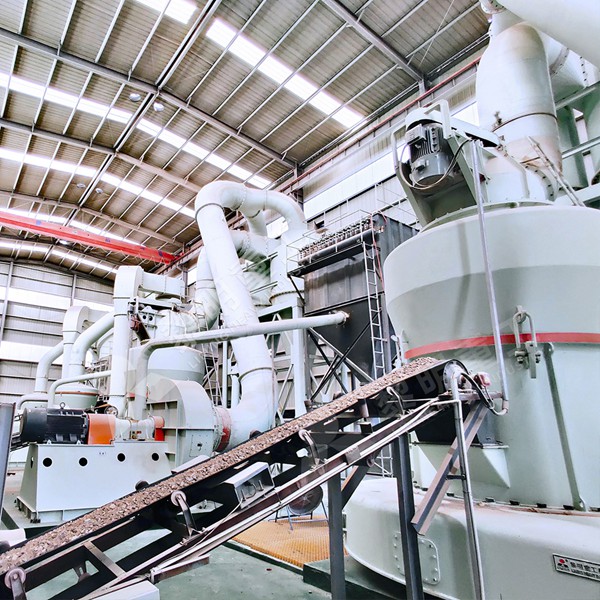
Finally, the classic Ball Mill remains a reliable workhorse for certain kaolin processing circuits, especially where versatile grinding of various materials is needed. Its cascading action of steel balls is effective for achieving consistent fineness. When paired with modern classification systems, it can contribute effectively to a viscosity-controlled product stream.
Beyond the machinery, Liming Heavy Industry provides comprehensive system engineering. We consider the entire process flow—from feed hopper and vibrating feeder to grinding mill, separator, air blower, and dust collection. This holistic view ensures that every component is optimized for kaolin processing, eliminating bottlenecks and points of variability that could impact the final product's viscosity. Our modern manufacturing facilities in Zhengzhou's HI-TECH Industry Development Zone and Shangjie Industry Park are equipped to produce these precision-engineered systems, backed by a mature scientific research team committed to continuous improvement.
In conclusion, mastering adhesive kaolin viscosity is not a matter of chance but of precise engineering. By leveraging Liming Heavy Industry's specialized grinding solutions—from the high-capacity MTW Mill to the ultra-fine MW Micro Powder Mill—producers can achieve the exact particle characteristics needed for superior, consistent adhesive formulations. This control translates directly into enhanced product performance, reduced waste, and a stronger competitive position in the market.
Frequently Asked Questions (FAQs)
- What is the most important factor in your grinding mills for controlling kaolin viscosity?
The integrated high-efficiency classifier or separator is critical. It precisely controls the top-size particle cut and ensures a narrow, consistent particle size distribution, which is the primary determinant of rheological behavior in the final adhesive product. - Can your equipment handle kaolin with varying moisture content?
Yes, particularly our LM Vertical Roller Mill and certain configurations of our MTW Mill. They integrate drying and grinding functions, effectively stabilizing the feed material condition before fine grinding to prevent moisture-related processing issues. - How does your MW Micro Powder Mill preserve kaolin's properties during ultra-fine grinding?
The MW Mill utilizes a medium-speed grinding principle and advanced internal circulation design. This minimizes excessive heat generation and mechanical energy input that can degrade kaolin's crystal structure, thereby preserving its brightness and functional properties. - Is the grinding process a closed system to prevent contamination?
Yes, our advanced mills like the MTW and MW series operate on a closed-circuit, negative pressure system. This prevents external contamination and ensures all material and air flow is contained, filtered, and recycled, maintaining product purity. - What kind of technical support do you offer for integrating a new mill into an existing kaolin processing line?
We provide full-process analysis and custom engineering support. Our team can design the integration points, including feed systems, product collection, and automation controls, to ensure the new mill operates seamlessly with your existing infrastructure for optimal viscosity control.


