Published: October 26, 2023
Proper roller clearance adjustment in Raymond Mills is a critical operational parameter that directly influences grinding efficiency, product fineness, and equipment longevity, especially when processing delicate materials like kaolin. This technical article explores the importance of precise roller-to-ring clearance in LIMING HEAVY INDUSTRY's Raymond Mill systems, detailing adjustment methodologies, operational impacts, and maintenance best practices derived from decades of engineering expertise in mineral processing equipment. Mastering this fundamental setting allows operators to maximize throughput while achieving the consistent, ultra-fine particle size distribution demanded by high-value kaolin applications.
At the heart of every Raymond Mill's grinding mechanism lies the dynamic interaction between the grinding rollers and the bull ring. For kaolin processing, where the target fineness often falls within a narrow band between 44μm and 613μm, the physical gap between these components is not merely a static installation setting but a vital process variable. LIMING HEAVY INDUSTRY engineers emphasize that optimal clearance is a function of both the feed material characteristics—such as moisture content, hardness, and initial particle size—and the desired product specifications. Too wide a gap reduces grinding pressure and yields coarse, inconsistent powder, while excessively tight clearance increases power consumption, generates excessive heat, and accelerates wear on grinding elements.
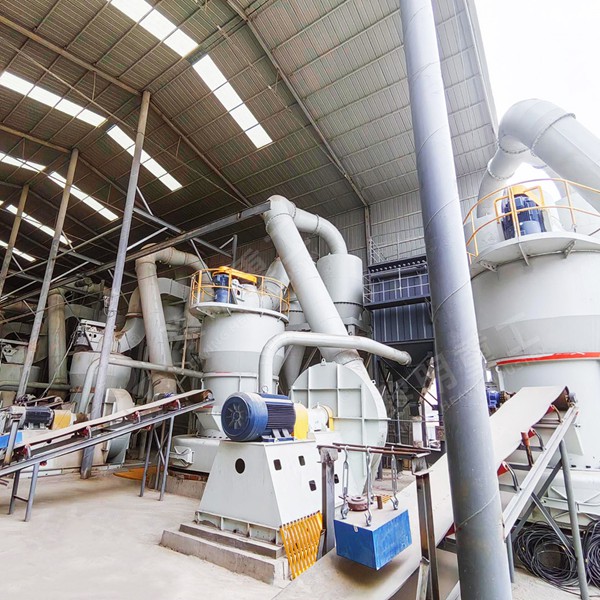
The adjustment procedure itself is a precise mechanical operation. LIMING's Raymond Mill design incorporates a centralized hydraulic or mechanical spring loading system that allows for controlled adjustment of all grinding rollers simultaneously, ensuring balanced pressure distribution. Technicians must first ensure the mill is completely shut down and isolated. Using feeler gauges or laser measurement tools, the baseline clearance is measured at multiple points around the roller circumference to check for uniformity. The adjusting mechanism—typically a set of bolts or a hydraulic ram—is then engaged to bring the rollers to the recommended initial setting, which for standard kaolin is often between 5 and 15 millimeters, depending on the model and expected feed size. After adjustment, a manual rotation of the main shaft confirms smooth, friction-free movement before restarting.
Operational feedback is essential for fine-tuning. Once the mill is running with material feed, operators monitor key indicators: amperage draw on the main motor (which increases with grinding pressure), outlet temperature, and the fineness of the product sampled from the classifier. A persistent high amperage with low output fineness may indicate the need to slightly increase clearance. Conversely, if the product is too coarse despite normal power consumption, a minor reduction in gap may be warranted. LIMING's modern control systems can integrate these sensor readings to provide real-time recommendations, but the experienced operator's judgment remains invaluable, particularly when processing kaolin from different deposits with varying mineralogy.
The consequences of improper clearance extend beyond product quality. Chronic misalignment or overly aggressive settings lead to asymmetric wear on the grinding ring and rollers, necessitating premature and costly replacements. It also forces the main bearing and drive train to operate under uneven loads, risking mechanical failure. For kaolin, which is generally non-abrasive, wear is slower than for harder minerals, but the pursuit of super-fine grades can push equipment to its limits. Regular inspection schedules, as outlined in LIMING's maintenance manuals, include checking clearance as part of routine shutdowns and documenting any changes to build a history that predicts future wear patterns.
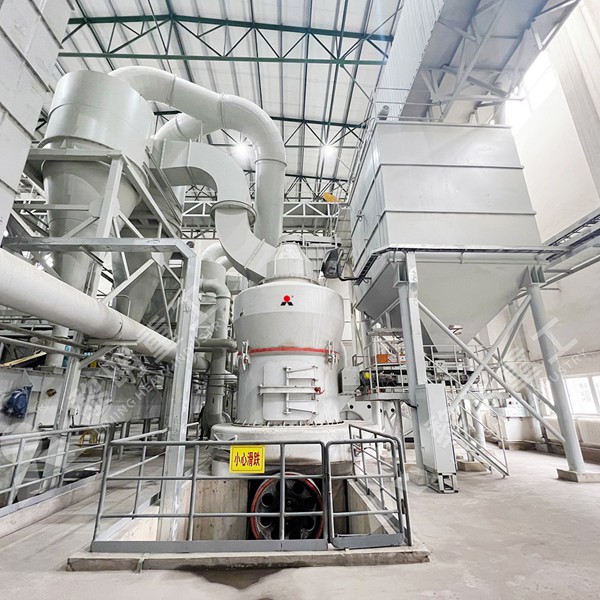
Integrating roller clearance management into a broader process optimization strategy yields the best results. For instance, the clearance setting must be compatible with the classifier's speed and the air volume from the blower. A tighter grind may require higher classifier RPM to separate finer particles effectively. Similarly, the feed rate must be stable and appropriate for the set clearance; a sudden surge of raw kaolin can overload a tightly set mill, causing plugging. LIMING's holistic approach to system design ensures all components—from jaw crusher for initial size reduction to the pulse dust collector—are balanced to work in harmony, with the roller clearance acting as the primary tuning knob for the grinding stage itself.
In conclusion, the meticulous calibration and ongoing management of roller clearance in a Raymond Mill is a cornerstone of efficient, high-quality kaolin processing. It embodies the principle of precision engineering that LIMING HEAVY INDUSTRY has championed since 1987. By treating this parameter with the technical respect it deserves, plant managers can achieve the dual goals of exceptional product uniformity and sustainable, low-cost operation, leveraging the full potential of their grinding investment for years to come.
Frequently Asked Questions (FAQs)
Q1: How often should I check and adjust the roller clearance on my Raymond Mill when grinding kaolin?
A1: For continuous kaolin processing operations, a formal clearance inspection and measurement is recommended during every scheduled major maintenance shutdown, typically every 6 to 12 months. However, operators should monitor indirect indicators like product fineness and motor current daily. Adjustments are only needed if a persistent deviation from the target product specification occurs and other causes (e.g., feed rate, classifier speed) have been ruled out.
Q2: Can the roller clearance be adjusted while the mill is running?
A2: Absolutely not. All adjustments to the grinding roller clearance must be performed with the mill completely shut down, locked out, and all pressure released from the hydraulic system (if equipped). Attempting adjustment during operation is extremely dangerous and will cause severe damage to the mill's internal components.
Q3: What are the primary signs that my roller clearance may be incorrectly set?
A3: The key signs include: a consistent inability to reach the target product fineness despite correct classifier settings; unusual fluctuations or sustained high amperage on the main motor; increased abnormal metallic noises from the grinding chamber; and excessive vibration. A visible increase in the size of unground particles in the reject stream from the classifier is also a telltale sign.
Q4: Does the recommended clearance differ for calcined kaolin versus hydrated kaolin?
A4: Yes, it typically does. Calcined kaolin is harder and more abrasive. A slightly larger initial clearance might be used to reduce excessive wear and heat generation, possibly relying more on multiple passes or classifier settings to achieve fineness. For softer hydrated kaolin, a somewhat smaller clearance can be effective for efficient fine grinding. Always consult your mill's manual and consider pilot testing for new materials.
Q5: Is specialized tooling required for accurate clearance measurement and adjustment?
A5: Basic adjustments can be made using the mill's built-in mechanical system and standard feeler gauges for measurement. For the highest precision and consistency, especially in large industrial mills, laser alignment tools and dial indicators are recommended. LIMING's service technicians often use such precision instruments during professional commissioning and overhaul services to ensure optimal setup.


