Published: October 26, 2023
Surface modification of kaolin represents a critical process step to unlock its full potential in high-value industrial applications, transforming its inherent properties to meet specific functional requirements. This article explores the technological advancements in kaolin processing, focusing on how modern grinding and milling equipment from LIMING HEAVY INDUSTRY enables precise particle size control, surface area optimization, and consistent quality—key factors for successful modification. We will examine the synergy between mechanical activation through advanced grinding and subsequent chemical or physical surface treatments, highlighting how tailored milling solutions can significantly enhance the efficiency and outcomes of kaolin modification for sectors ranging from polymers and composites to paints, coatings, and advanced ceramics.
The journey of kaolin from a mined mineral to a performance-engineered material begins with its particle morphology. Unmodified kaolin particles often exhibit irregular shapes and broad size distributions, which can limit their compatibility with polymer matrices, affect rheological properties in suspensions, and reduce reinforcement capabilities. Surface modification, which typically involves coating the particles with coupling agents like silanes or stearic acid, aims to improve hydrophobicity, dispersion stability, and interfacial adhesion. However, the efficacy of this treatment is profoundly influenced by the substrate—the kaolin particle itself. This is where precision grinding technology becomes indispensable.
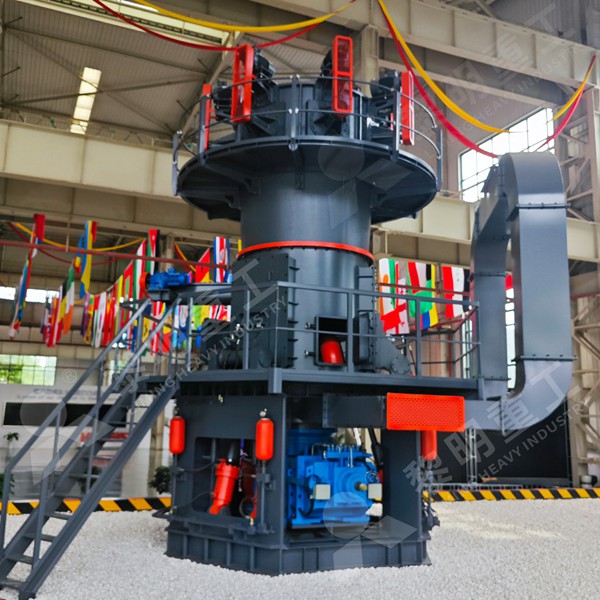
LIMING HEAVY INDUSTRY's research and development philosophy, centered on scientific problem-solving and technological innovation, directly addresses these challenges. For kaolin processing, the choice of grinding mill is not one-size-fits-all; it depends on the target fineness, required throughput, and the need to preserve or alter crystal structure. The MW Micro Powder Mill, for instance, is exceptionally adept at producing superfine kaolin powders down to d97 ≤ 5μm. Its advanced Swedish-derived technology allows for precise fineness adjustment between 325 to 3250 mesh. This ultra-fine grinding dramatically increases the specific surface area of kaolin, providing more active sites for surface modifying agents to bond. The increased surface area can lead to more complete and uniform coating, thereby improving the modified kaolin's performance in composite materials.
For large-scale production of modified kaolin used in applications like paper filling, plastics, or rubber, the MTW European Type Trapezium Mill offers an optimal balance of capacity, energy efficiency, and particle size control. Its closed-circuit grinding system with an integrated high-efficiency separator ensures a narrow particle size distribution. A consistent, controlled particle size is crucial for surface modification, as it prevents larger particles from receiving insufficient coating and finer ones from over-treating, which can lead to agglomeration. The system's comprehensive design, including jaw crusher for primary size reduction, vibrating feeder, and pulse dust collector, ensures a clean, efficient, and environmentally compliant process—a necessity when handling fine powders and potentially volatile modifying chemicals.
In scenarios where kaolin requires calcination or thermal treatment alongside mechanical activation, the LM Vertical Roller Mill presents a unique advantage. Its integrated design combines drying, grinding, powder selection, and conveying in a single unit. For kaolin destined for modification, it can efficiently handle material with residual moisture and provide a dry, finely ground product ready for surface treatment. The ability to process non-metallic minerals like kaolin in capacities up to 400 T/H makes it a cornerstone for high-volume operations seeking to produce modified kaolin for the cement, chemical, and power plant desulfurization markets.
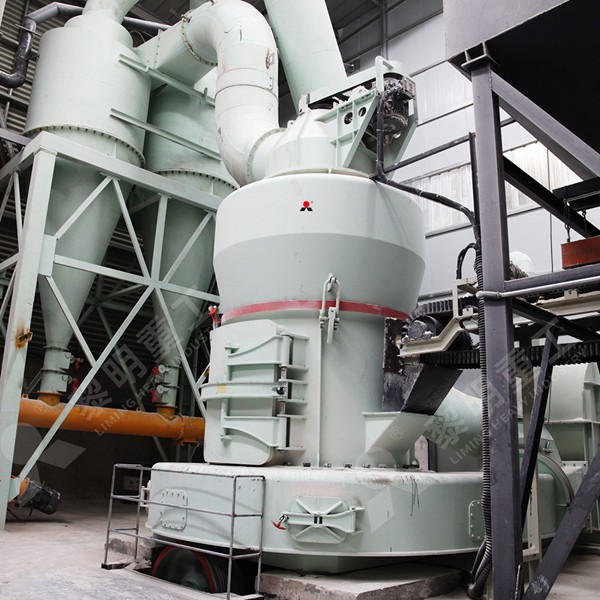
The working principles of these mills contribute directly to the quality of the kaolin substrate. For example, the layered grinding action in the MTW Mill or the roller-against-raceway mechanism in the MW Mill applies controlled shear and compressive forces. This can help in delaminating kaolin stacks, exposing fresh surfaces that are more chemically reactive and amenable to modification. Conversely, traditional ball milling, while versatile, may not offer the same level of fineness control or energy efficiency for the finest grades required in high-end applications, though it remains a robust solution for general grinding needs.
Ultimately, the goal of modified kaolin surface treatment is to create a material that performs predictably in its end-use. By leveraging LIMING HEAVY INDUSTRY's portfolio of grinding technologies—from the superfine capabilities of the MW Mill to the high-capacity efficiency of the LM Vertical Mill and MTW European Mill—producers can tailor the physical characteristics of kaolin to be the perfect canvas for surface modification. This synergy between precision mechanical processing and applied surface chemistry is what transforms ordinary kaolin into a high-performance, functional additive that enhances product durability, strength, and aesthetics across countless industries.
Frequently Asked Questions (FAQs)
- Why is particle size distribution so important for kaolin surface modification?
A narrow and consistent particle size distribution ensures uniform coverage of the modifying agent. If particles vary too widely, smaller ones may be over-treated and agglomerate, while larger ones may be under-treated, leading to poor performance in the final composite material. - Can your grinding equipment handle kaolin with different moisture contents before modification?
Yes, equipment like the LM Vertical Roller Mill is specifically designed with integrated drying capabilities. It can efficiently process kaolin with varying moisture levels, delivering a dry, finely ground powder that is ideal for subsequent surface treatment processes. - What is the primary advantage of using a superfine grinder like the MW Micro Powder Mill for modification purposes?
The primary advantage is the massive increase in specific surface area. Superfine grinding produces particles with exponentially more surface area, which provides vastly more active sites for chemical modifiers to attach, leading to a more effective and functional surface treatment. - How does the closed-system design of your mills benefit the modification process?
Closed grinding systems, like that of the MTW European Mill, minimize dust emission and material loss. This is critical for maintaining a clean working environment, ensuring operator safety when handling fine powders, and preventing product loss. It also allows for better control over the grinding atmosphere. - Is the crystal structure of kaolin preserved during your grinding processes?
Our milling technologies are designed to apply controlled mechanical forces. While the primary goal is size reduction, the operating parameters (such as roller pressure, speed, and airflow) can be adjusted to minimize excessive shear that might damage the platy crystal structure of kaolin, which is often desirable to retain for its reinforcing properties.


