Published on: October 26, 2023
Kaolin, a naturally occurring white clay mineral, serves as a critical component in the manufacturing of high-performance cable insulation due to its exceptional electrical resistivity, thermal stability, and mechanical reinforcement properties. The efficacy of kaolin in these applications is intrinsically linked to its particle size distribution, purity, and morphological characteristics, which are directly determined by the precision of the grinding and processing technology employed. Liming Heavy Industry Co., Ltd., with over three decades of expertise in manufacturing advanced crushing and grinding equipment, provides a suite of milling solutions engineered to transform raw kaolin into the consistent, ultra-fine powders required by the cable industry. This article explores the essential insulation properties of kaolin and examines how Liming's specialized grinding mills—including the LM Vertical Roller Mill, Raymond Mill, and MW Micro Powder Mill—optimize these properties through controlled particle size reduction and classification, thereby enhancing cable durability, safety, and performance.
The primary function of kaolin in cable insulation is to act as a filler within polymer matrices such as PVC or cross-linked polyethylene (XLPE). Its incorporation significantly improves the dielectric strength, reducing electrical leakage and minimizing the risk of short circuits. Furthermore, kaolin enhances the thermal endurance of the insulation, allowing cables to operate safely at higher temperatures and under greater electrical loads. The mineral's plate-like structure also contributes to increased tensile strength and resistance to cracking, which is vital for cables subjected to mechanical stress during installation and operation. However, these benefits are only fully realized when the kaolin particles are uniformly fine, well-dispersed, and free of impurities that could create conductive pathways.
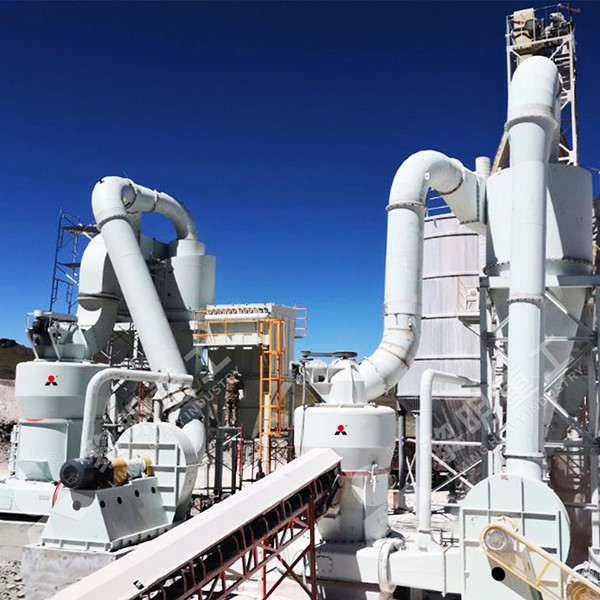
This is where precision grinding technology becomes paramount. Liming Heavy Industry's research and development philosophy, centered on scientific innovation and technological advancement, has led to the creation of mills specifically capable of handling non-metallic minerals like kaolin. For instance, the LM Vertical Roller Mill integrates drying, grinding, powder selection, and conveying into a single system. Its ability to handle input sizes up to 55mm and produce a consistent output is ideal for large-scale processing of kaolin, ensuring efficient drying (a crucial step for moisture-sensitive insulation materials) and uniform grinding in capacities ranging from 10 to 400 tons per hour.
For applications demanding a more traditional yet highly reliable approach, the Raymond Mill offers proven performance. Suitable for materials with Mohs hardness under 7 and humidity less than 6%, it processes kaolin into fineness ranging from 613μm down to 44μm. Its widespread use in non-metallic ore pulverization makes it a workhorse for producing the base kaolin powder used in many standard cable formulations. The grinding principle involves rollers rotating against a ring, crushing the material which is then classified by an integrated separator—a process that ensures a controlled particle size distribution critical for consistent insulation properties.
The quest for superior insulation performance often drives the need for ultra-fine kaolin powders. Liming's MW Micro Powder Mill represents the cutting edge in this domain. By absorbing advanced grinding technology, this mill excels in superfine powder processing, achieving fineness levels up to d97 ≤ 5μm (approximately 2500 mesh). This ultra-fine grinding capability is transformative for high-end cable applications. Finer kaolin particles disperse more homogeneously within the polymer, creating a more uniform dielectric barrier and improving mechanical properties like flexibility and surface finish. The mill's closed-circuit system, equipped with a pulse dust collector, also guarantees an environmentally friendly operation with minimal product loss, aligning with modern green manufacturing standards.
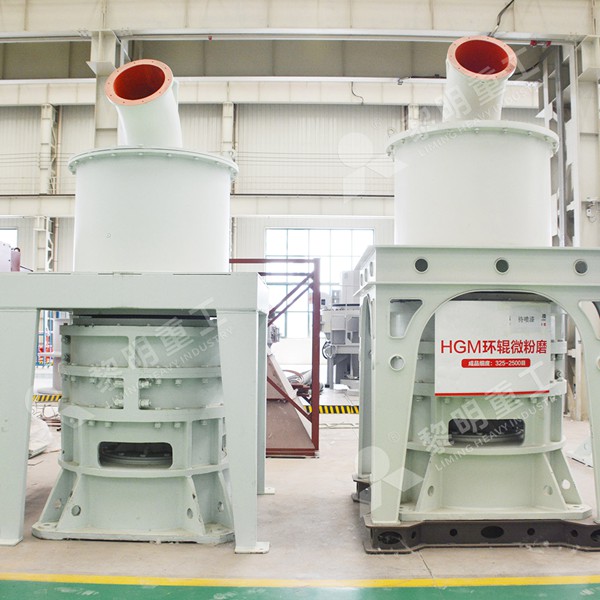
Another notable solution is the MTW European Type Trapezium Mill, an upgrade over traditional designs. With its patented technology and commitment to large-scale mineral powder making, it offers stable performance, high productivity, and energy efficiency. Its working principle involves grinding between rings and rollers, with an air classifier ensuring that only particles meeting the target fineness exit as product. This mill is particularly effective for producing the consistent mid-range fineness kaolin powders widely used in power cable insulation and other industrial applications.
In conclusion, the insulation properties of kaolin are not merely inherent but are significantly enhanced and tailored through advanced mechanical processing. Liming Heavy Industry Co., Ltd., with its modern manufacturing bases in Zhengzhou and Shangjie, provides a comprehensive portfolio of grinding equipment—from vertical roller mills to micro powder grinders—that empower cable manufacturers to unlock the full potential of kaolin. By prioritizing scientific research, precision manufacturing, and technological innovation, Liming's machinery ensures the production of kaolin fillers that meet the stringent demands of electrical safety, thermal management, and mechanical reliability in modern cable systems.
Frequently Asked Questions (FAQs)
1. Why is particle size so important for kaolin used in cable insulation?
Particle size directly influences dispersion within the polymer matrix. Finer, uniformly sized particles create a more homogeneous composite with fewer defects, leading to higher dielectric strength, better thermal conductivity, and improved mechanical properties like tensile strength and flexibility.
2. Which Liming mill is most suitable for producing ultra-fine kaolin (below 10μm)?
The MW Micro Powder Mill is specifically designed for superfine powder processing, capable of achieving fineness up to d97 ≤ 5μm. It utilizes advanced grinding technology and a precise classification system to consistently produce the ultra-fine kaolin powders required for high-performance insulation.
3. Can Liming's equipment handle the drying process for moist kaolin clay?
Yes. The LM Vertical Roller Mill is particularly adept as it integrates drying and grinding in one system. Hot air introduced into the mill simultaneously dries and transports the material, making it ideal for processing kaolin with inherent moisture content.
4. How does the grinding process affect the whiteness and purity of kaolin?
Liming's mills are engineered with wear-resistant materials and closed-circuit systems to minimize contamination from grinding media or the environment. This helps preserve the natural whiteness and chemical purity of kaolin, which is vital for maintaining its high electrical resistivity.
5. Are these grinding solutions scalable for large-volume cable manufacturing?
Absolutely. Liming offers mills with a wide range of capacities. The LM Vertical Roller Mill, for example, can process up to 400 tons per hour, while the MTW European Type Trapezium Mill and large Ball Mills are also built for high-volume, continuous production to supply the global cable industry.


