Published: October 26, 2023
In the modern agricultural industry, the efficacy of pesticide formulations is critically dependent on the quality and physical properties of their inert carriers. Kaolin, a naturally occurring aluminosilicate clay, has emerged as a premier carrier material due to its high adsorption capacity, chemical inertness, and favorable particle morphology. However, transforming raw kaolin into a high-performance carrier requires precise, controlled comminution to achieve the optimal particle size distribution, surface area, and flow characteristics. This article explores the specialized grinding solutions from LIMING HEAVY INDUSTRY, a leader in industrial milling technology for over three decades, that are engineered to produce superior kaolin carriers for pesticide applications, enhancing adhesion, dispersion, and active ingredient delivery.
LIMING HEAVY INDUSTRY CO., LTD., founded in 1987, has built its reputation on the research, manufacturing, and sales of large and medium-sized crushing and grinding equipment. With a corporate philosophy centered on scientific management, precision manufacturing, and continuous innovation, the company operates from expansive facilities in Zhengzhou's HI-TECH Industry Development Zone and Shangjie Industry Park, totaling over 147,000 square meters. Its enduring commitment to R&D, focusing on product competitiveness and technological frontiers, has positioned it as a leader in the global machinery manufacturing sector. This expertise is directly applicable to the demanding process of refining kaolin for agricultural uses.
The role of a kaolin carrier in a pesticide formulation is multifaceted. It must act as a diluent, a dispersant, and a substrate that ensures the uniform distribution and stable retention of the active ingredient on target surfaces. The particle size, shape, and surface properties of the milled kaolin directly influence key performance metrics: too coarse, and coverage is poor; too fine, and dustiness or aggregation becomes problematic. The ideal carrier exhibits a narrow, controlled particle size range, high porosity, and a large surface area—all attributes dictated by the grinding process.
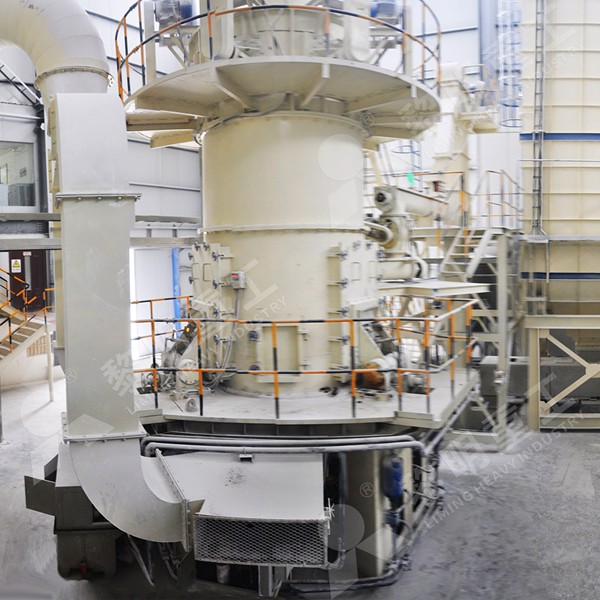
For high-volume production of kaolin carriers with consistent quality, the LM Vertical Roller Mill presents an optimal solution. This system integrates drying, grinding, powder selection, and conveying into a single, automated unit. Its ability to handle input sizes up to 55mm and deliver outputs from 10 to 400 tons per hour makes it suitable for large-scale operations. The grinding mechanism, which involves material being ground between rollers and a rotating table, allows for excellent control over particle size. Furthermore, its integrated drying capability is crucial for processing kaolin, which often requires moisture reduction to optimize its adsorption properties and prevent caking in the final pesticide blend.
When the application demands ultra-fine kaolin powders to maximize surface area for high-loading or specialized systemic formulations, the MW Micro Powder Mill is the technology of choice. Incorporating advanced Swedish grinding technology, this mill excels in superfine powder processing, achieving fineness levels up to d97 ≤ 5μm (approximately 2500 mesh). Its working principle, involving multiple rollers rotating against a stationary ring under centrifugal force, produces powders with a very uniform particle size distribution. This uniformity is vital for ensuring predictable flow and mixing behavior in pesticide production. The system is also equipped with a pulse dust collector, ensuring a clean, enclosed operation that protects both the product purity and the environment—a key consideration for agricultural chemical manufacturing.
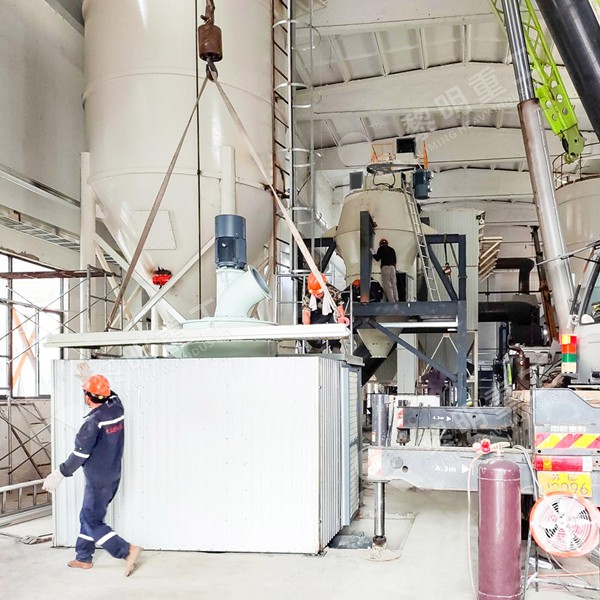
For operations seeking a balance between high capacity, fine grinding, and energy efficiency, the MTW European Type Trapezium Mill offers a compelling advantage. As an upgrade over traditional Raymond mills, it features patented technology that enhances stability and productivity. Its closed-circuit grinding system, comprising a mill, separator, blower, and dust collector, ensures high classification efficiency. Materials are ground between ring and rollers, with the air flow carrying fine particles to the separator. Oversized particles are returned for regrinding, guaranteeing a consistent final product. This mill is particularly effective for producing kaolin powders in the mid-to-fine range (typically from 44μm to 200 mesh), which are widely used in standard wettable powder and dust formulations.
The selection of the appropriate grinding technology from LIMING's portfolio depends on the specific requirements of the pesticide formulation. Factors such as the desired final particle size distribution, production capacity, moisture content of the raw kaolin, and energy consumption goals all play a role. LIMING's engineering team supports clients through this selection process, leveraging their mature scientific research team and a "production, learning and research" integrated approach to provide tailored solutions. By focusing on the technological frontier of industrial grinding, LIMING's equipment ensures that kaolin carriers are not merely inert fillers but engineered components that actively contribute to the safety, efficacy, and reliability of modern agricultural protections.
Frequently Asked Questions (FAQs)
- What is the primary advantage of using a Vertical Roller Mill for kaolin carrier production?
The LM Vertical Roller Mill offers integrated drying and grinding, high throughput (10-400 T/H), and excellent particle size control, making it ideal for large-scale, consistent production of kaolin carriers where moisture management is critical. - How fine can kaolin be ground using LIMING's technology for specialized pesticide formulations?
The MW Micro Powder Mill can process kaolin to an ultra-fine level of up to d97 ≤ 5μm (approx. 2500 mesh), significantly increasing surface area for enhanced active ingredient adsorption and delivery in high-performance formulations. - Why is a closed grinding system important for producing agricultural carriers?
Closed systems, like those in the MTW European Mill, prevent contamination, minimize dust emissions for worker safety and environmental compliance, and improve powder yield and classification efficiency. - Can LIMING's grinding mills handle the abrasive nature of kaolin minerals?
Yes, LIMING mills are constructed with wear-resistant materials and designed for the grinding of non-metallic minerals like kaolin. Their robust design and precise engineering ensure long service life and consistent output even with abrasive materials. - Does particle size distribution of the kaolin carrier affect pesticide performance?
Absolutely. A controlled, narrow particle size distribution ensures uniform mixing with active ingredients, consistent flowability, optimal adhesion to plant surfaces, and effective dispersion in spray tanks, directly impacting the efficacy and reliability of the pesticide application.


