Published on: October 26, 2023
Kaolin processing demands precision grinding equipment capable of maintaining dimensional stability under varying thermal conditions. The thermal expansion characteristics of Raymond mill components are critical factors influencing product fineness, operational longevity, and energy efficiency. This article examines how LIMING HEAVY INDUSTRY's engineering approach addresses thermal management in Raymond mill design for kaolin applications, ensuring consistent performance through advanced material selection, structural design, and operational protocols that mitigate thermal distortion effects on grinding precision.
Raymond mill technology has evolved significantly since its inception, particularly in handling thermally sensitive materials like kaolin. As a clay mineral with specific moisture content and particle structure requirements, kaolin presents unique challenges during grinding operations where frictional heat generation is inevitable. At LIMING HEAVY INDUSTRY, our research and development team has dedicated substantial resources to understanding the thermal dynamics within grinding chambers, recognizing that uncontrolled thermal expansion can lead to altered clearances between grinding rollers and rings, ultimately affecting particle size distribution and system throughput.
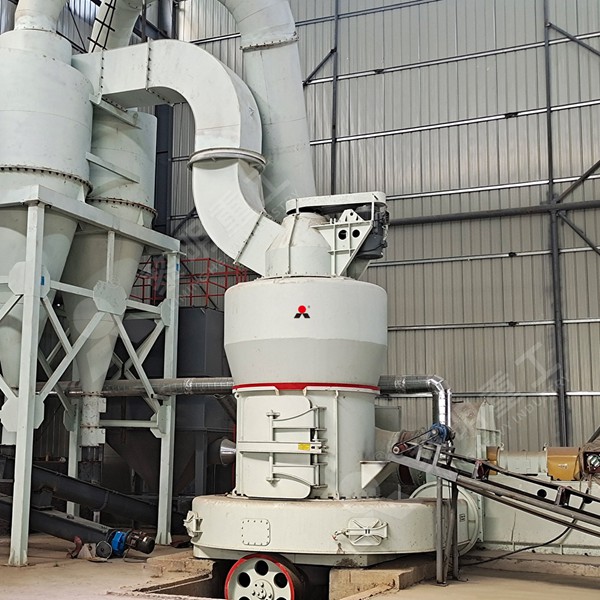
The fundamental design philosophy behind our Raymond mills incorporates thermal expansion compensation as a core principle rather than an afterthought. Our grinding rollers utilize graded materials with carefully matched thermal expansion coefficients to the main shaft and bearing assemblies. This material synchronization ensures that as operational temperatures rise during continuous processing—typically reaching 80-120°C in kaolin applications—the entire grinding assembly expands uniformly, maintaining the critical geometrical relationships necessary for consistent fineness between 613μm and 44μm. The grinding ring, manufactured from specially formulated alloy steel, undergoes thermal cycling treatment during production to stabilize its crystalline structure against repeated heating and cooling cycles.
Structural engineering plays an equally vital role in thermal management. The mill's base frame employs a modular design with expansion joints that accommodate thermal movement without transferring stress to precision grinding components. Our patented airflow system serves dual purposes: transporting ground kaolin particles while simultaneously providing convective cooling to key mechanical elements. This integrated cooling approach prevents localized hot spots that could cause uneven expansion and subsequent misalignment. The separator system, crucial for achieving the precise fineness required in premium kaolin products, features temperature-compensated adjustment mechanisms that automatically account for thermal expansion in its rotating components, ensuring classification accuracy remains stable throughout operational cycles.
Operational protocols developed by our technical team further enhance thermal stability. We recommend specific run-up sequences that gradually increase load to allow uniform temperature distribution before full-capacity operation. For kaolin processing, where moisture content typically remains below 6%, our mills incorporate temperature monitoring at multiple points within the grinding zone, with data fed to the automatic control system to make micro-adjustments to roller pressure and airflow rates. This real-time thermal compensation distinguishes our equipment in maintaining product consistency, particularly important when processing kaolin for paper coating, ceramics, or specialty chemical applications where particle size distribution tolerances are stringent.
Material selection extends beyond the grinding components to encompass the entire system. Ductwork and piping employ alloys with thermal expansion characteristics compatible with both the mill housing and dust collection system, preventing leakage points from developing as temperatures fluctuate. The gear transmission system utilizes lubricants with viscosity profiles engineered for thermal stability across the operational range, while bearing housings incorporate designs that accommodate axial expansion without compromising alignment. These comprehensive considerations ensure that our Raymond mills maintain the 1.2-4.5T/H capacity range for kaolin even under varying ambient conditions and continuous operation cycles.
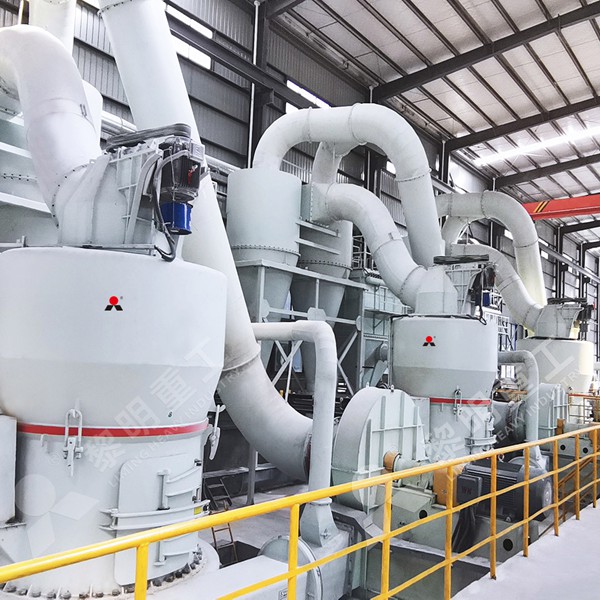
Maintenance practices significantly influence long-term thermal performance. Our technical documentation emphasizes regular inspection of thermal expansion clearances, with specific intervals recommended based on operational hours. Wear components are designed with thermal degradation parameters in mind, ensuring predictable replacement cycles before thermal effects compromise performance. The grinding roller refurbishment process includes thermal re-conditioning to restore original material properties, a service offered through our global support network that extends equipment lifespan while maintaining original thermal performance specifications.
Looking toward future developments, our research team at the Zhengzhou HI-TECH Industry Development Zone facility is exploring advanced thermal barrier coatings for grinding components and intelligent systems that predict expansion patterns using operational data analytics. These innovations aim to further enhance energy efficiency—reducing the thermal energy lost to the environment—while improving the precision of kaolin particle size control. As kaolin applications diversify into nanotechnology and advanced composites, the demand for tighter thermal control in grinding operations will only intensify, driving continued innovation in this fundamental aspect of mill design.
Through three decades of manufacturing experience, LIMING HEAVY INDUSTRY has developed a holistic understanding of thermal management in grinding equipment. Our Raymond mills for kaolin processing represent this accumulated knowledge, combining material science, mechanical engineering, and operational intelligence to deliver equipment that maintains precision despite the thermal challenges inherent in fine grinding operations. This commitment to thermal stability ensures our customers achieve consistent product quality with optimal energy utilization across diverse kaolin processing applications worldwide.
Frequently Asked Questions
Q1: How does thermal expansion affect kaolin fineness in Raymond mill operation?
A: Thermal expansion alters clearances between grinding components, potentially changing particle compression forces and airflow patterns. Uncompensated expansion can shift fineness outside the 613μm-44μm range. Our mills incorporate design features that maintain geometrical relationships during temperature fluctuations.
Q2: What maximum operating temperature can your Raymond mills withstand when processing kaolin?
A: Our mills are engineered for continuous operation at grinding zone temperatures up to 150°C, well above typical kaolin processing ranges. Critical components utilize materials with thermal stability validated through extensive testing at our research facilities.
Q3: Do you recommend specific warm-up procedures to manage thermal expansion?
A: Yes, we provide detailed operational protocols including graduated load increase sequences over 30-45 minutes. This allows uniform temperature distribution before full-capacity operation, minimizing thermal stress and ensuring immediate fineness consistency.
Q4: How often should thermal expansion clearances be inspected?
A: For continuous kaolin processing operations, we recommend formal inspection every 500 operating hours initially, extending to 750 hours once stable thermal patterns are established. Our maintenance manuals provide specific measurement procedures and tolerance ranges.
Q5: Can your mills handle kaolin with varying moisture content without thermal instability?
A: Absolutely. Our integrated drying and grinding systems automatically adjust for moisture variations up to 6%. The thermal design accommodates the additional latent heat load from moisture evaporation while maintaining grinding zone temperature stability.


