Published: October 26, 2023
The processing of refractory kaolin through calcination and subsequent fine grinding is a critical industrial process that transforms this versatile clay mineral into a high-performance material with enhanced whiteness, hardness, and thermal stability. The efficiency and final product quality are heavily dependent on the grinding technology employed post-calcination. This article explores the specific challenges of grinding calcined kaolin and examines how modern milling equipment from LIMING HEAVY INDUSTRY, engineered for precision and energy efficiency, provides optimal solutions for achieving the desired particle size distribution and purity required by advanced ceramics, refractories, and filler applications.
Calcined kaolin, produced by heating raw kaolin to high temperatures (typically between 1000°C and 1100°C), undergoes dehydroxylation, resulting in a more inert, porous, and abrasive material. This transformation presents distinct challenges for size reduction. The material becomes harder and more abrasive, demanding grinding systems with exceptional wear resistance. Furthermore, maintaining the brightness and chemical purity achieved through calcination is paramount; any contamination from grinding media or excessive heat generation can compromise the product's value. The goal is to achieve a consistent, ultra-fine powder, often in the range of a few microns, without introducing impurities or causing particle agglomeration.
Recognizing these precise demands, LIMING HEAVY INDUSTRY has developed and refined a suite of grinding mills that excel in handling thermally processed, non-metallic minerals like calcined kaolin. With over three decades of experience in manufacturing crushing and grinding equipment, the company's philosophy centers on scientific research, technological innovation, and precision engineering. Its large-scale production facilities and dedicated R&D teams focus on advancing milling technology to meet the evolving frontiers of the industry, particularly in the realm of non-metallic mineral processing.
For high-capacity production lines, the LM Vertical Roller Mill stands out. Its integrated design combines drying, grinding, powder selection, and conveying in a single unit. This is particularly advantageous if the calcined kaolin retains residual moisture or requires in-process drying. The grinding principle, which involves material being ground between rollers and a rotating table, offers high grinding efficiency with lower energy consumption compared to traditional ball mills. Its ability to handle feed sizes up to 55mm and produce outputs from 10 to 400 tons per hour makes it suitable for large-scale refractory kaolin processing plants. The controlled grinding environment helps preserve the material's whiteness and minimizes over-grinding.
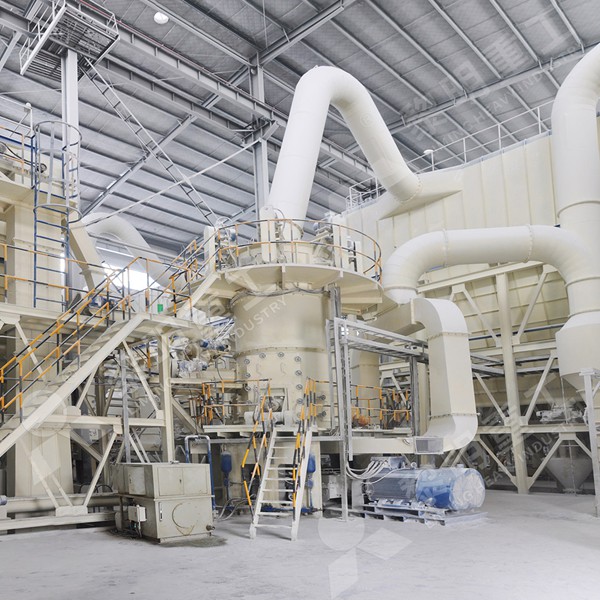
When the application demands fine to ultra-fine powders, the MW Micro Powder Mill is the technology of choice. This mill absorbs advanced grinding technology and is exceptionally proficient in superfine powder processing. It can produce calcined kaolin powder with a fineness up to d97 ≤ 5μm (approximately 2500 mesh), with adjustable settings between 325 and 3250 mesh. Its internal classification system ensures that only particles meeting the target fineness leave the grinding chamber, while coarser particles are recirculated. This results in a narrow particle size distribution, which is crucial for the performance of kaolin in coatings and high-grade ceramics. The fully enclosed system, coupled with an efficient pulse dust collector, guarantees a clean operation, protecting both the product purity and the plant environment.
Another robust contender is the MTW European Type Trapezium Mill. As an upgrade over traditional Raymond mills, it incorporates patented technology for stable performance and energy savings. Its grinding system—comprising a mill, separator, blower, and dust collector—forms a closed-circuit loop. Calcined kaolin is fed into the mill and ground between rings and rollers. The air flow carries the fine particles to a high-efficiency separator, which precisely controls the final product fineness. This mill is committed to large-scale powder making and is known for its reliability, making it a workhorse for processing refractory kaolin for applications like firebricks and investment casting molds.
While Raymond Mills and Ball Mills are also part of the product portfolio and can be applied to kaolin processing, their roles are often more specific. Raymond mills are excellent for producing powders in the mid-range fineness (44-613μm) with good efficiency. Ball mills, as a common grinding plant, offer versatility but may involve higher energy consumption and require more careful control to prevent iron contamination from grinding media when processing high-purity calcined kaolin. The selection ultimately depends on the target fineness, required capacity, and emphasis on energy efficiency and product contamination control.
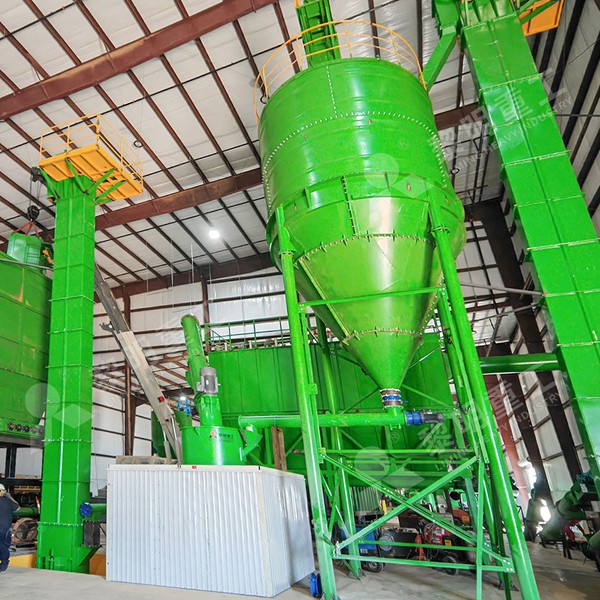
The working principles of these advanced mills share a common theme: precision, efficiency, and cleanliness. They utilize dynamic classification systems to immediately separate fine product from coarse material needing further grinding. This not only improves efficiency but also prevents excessive energy consumption on already-fine particles. The widespread use of positive pressure or negative pressure pneumatic conveying systems and high-efficiency pulse dust collectors ensures that the entire grinding process is enclosed, meeting stringent environmental protection standards while safeguarding the quality of the calcined kaolin powder.
In conclusion, the transformation of refractory kaolin into a high-value industrial material hinges on sophisticated calcination and grinding technology. LIMING HEAVY INDUSTRY's range of grinding mills, from high-capacity vertical roller mills to ultra-fine micro powder mills, provides tailored, technologically advanced solutions. By focusing on energy efficiency, precise particle size control, and contamination-free operation, this equipment empowers producers to meet the exacting specifications of modern industries that rely on the unique properties of calcined kaolin.
Frequently Asked Questions (FAQ)
Q1: What is the primary advantage of using an LM Vertical Roller Mill for calcined kaolin?
A1: The LM Vertical Roller Mill offers high grinding efficiency and lower specific energy consumption due to its integrated drying-grinding-classification design. It is ideal for large-capacity production and can handle slightly moist materials while maintaining product quality.
Q2: How fine can calcined kaolin be ground using LIMING's equipment?
A2: The MW Micro Powder Mill is specifically designed for superfine processing, capable of achieving a final product fineness up to d97 ≤ 5μm (approx. 2500 mesh), with adjustable settings to meet various application requirements.
Q3: How does the grinding process prevent contamination of the high-purity calcined kaolin?
A3: Key mills like the MW and MTW series utilize fully enclosed systems with internal classification. They are designed with wear-resistant materials in grinding zones and employ efficient, closed-circuit pneumatic conveying coupled with external pulse dust collectors to eliminate contamination and ensure a clean production environment.
Q4: Can these mills handle the abrasive nature of calcined kaolin?
A4> Yes. The grinding rollers, rings, and liners in mills like the LM, MTW, and MW series are manufactured from high-chromium or other advanced wear-resistant alloys to withstand the abrasiveness of calcined materials, ensuring long service life and consistent product fineness.
Q5: Is the grinding system environmentally friendly?
A5> Absolutely. All the featured grinding systems are equipped with high-efficiency pulse jet bag dust collectors or other advanced dust removal equipment. This ensures that the entire process operates under negative pressure, with dust emissions far below national environmental standards, making the production both green and sustainable.


