Published: October 26, 2023
Effective air volume control within a Raymond mill system is a critical determinant of final product quality, operational efficiency, and energy consumption, especially for processing sensitive materials like kaolin. For over three decades, LIMING HEAVY INDUSTRY CO., LTD. has refined the design and control mechanisms of its Raymond Mill series, integrating advanced airflow management to ensure precise particle size distribution, optimal drying, and superior powder collection. This article delves into the principles, technological implementations, and benefits of sophisticated air volume control in our kaolin grinding solutions, highlighting how our engineering philosophy translates into reliable, high-yield production for customers worldwide.
At the heart of any efficient Raymond mill operation lies the delicate balance between grinding mechanics and pneumatic conveying. The system, fundamentally, is a closed-loop air circuit. A high-pressure centrifugal blower generates the primary airflow, which carries the kaolin particles from the grinding zone (between the grinding rollers and the ring) upward into the classifier or separator. Here, the role of air volume becomes paramount. The velocity and volume of this air stream directly influence two key outcomes: the fineness of the product and the internal circulation load. Insufficient air volume fails to lift adequately ground particles, causing them to fall back for regrinding. This leads to over-grinding, increased energy use per ton, and potential overheating—a particular concern for kaolin, which can discolor if thermally degraded. Conversely, excessive air volume carries coarse particles into the classifier, overwhelming it and resulting in an unacceptably wide particle size distribution or forcing the system to reject good material back to the mill, again wasting energy.
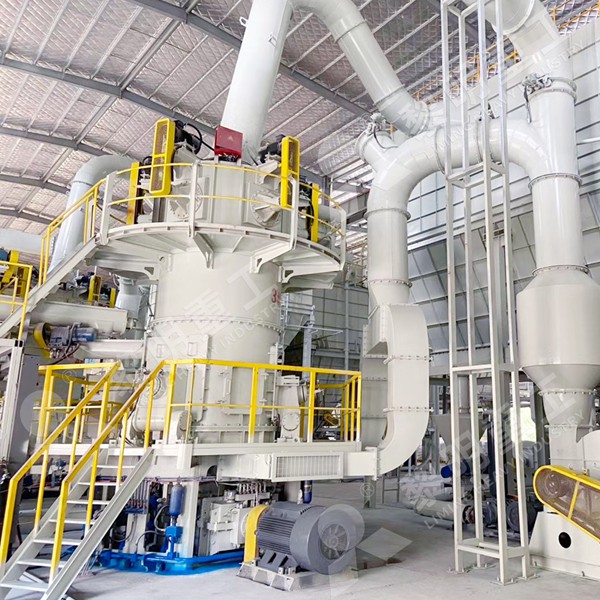
LIMING HEAVY INDUSTRY addresses this challenge through a multi-faceted approach to air volume control. Our Raymond Mills for kaolin application are engineered with variable-frequency drive (VFD) controlled blowers. This is not merely an on/off switch; it allows for precise, real-time adjustment of the blower's motor speed. Operators can fine-tune the air volume to match specific process parameters such as feed rate, material moisture content (crucial for kaolin, which often requires simultaneous drying and grinding), and target fineness—which for kaolin can range from 44μm to as fine as 613μm. This digital control interface is part of our automated electric control system, which integrates monitoring of key variables like inlet negative pressure and outlet temperature. By maintaining optimal negative pressure within the mill housing, the system ensures smooth material flow, prevents dust leakage, and maximizes the efficiency of the grinding impact.
The classifier itself is a precision component in airflow management. In our mills, the rotating speed of the classifier can be adjusted. Combined with controlled air volume, this allows for extremely precise cuts in particle size. The air volume dictates the carrying capacity and upward velocity, while the classifier's speed determines the centrifugal force that rejects coarse particles. Working in concert, they enable the production of a consistent, narrow particle size distribution essential for high-grade kaolin used in paper coating, ceramics, or paints. Furthermore, the entire air circuit is designed for minimal resistance. Streamlined ducts, optimally sized cyclones, and high-efficiency pulse jet baghouse dust collectors (which comply with stringent environmental standards) ensure that the blower's energy is used for productive material transport rather than overcoming system pressure drops.
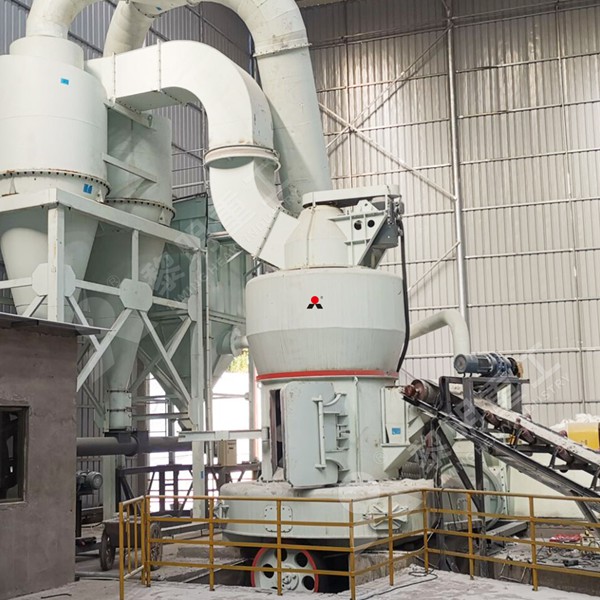
The benefits of such precise air volume control are substantial. First and foremost is product quality. For kaolin, consistent brightness, particle shape, and size are non-negotiable for end-use applications. Stable airflow prevents surges that cause quality fluctuations. Secondly, energy efficiency is drastically improved. By optimizing the air-to-material ratio, the mill operates at its peak specific energy consumption, reducing the kWh per ton of product. This aligns with LIMING's commitment to "environmental protection and energy saving" embedded in our R&D strategy. Thirdly, system stability is enhanced. Proper air volume control prevents material settling in ducts, reduces wear on the grinding elements by preventing unnecessary recirculation of already-fine powder, and ensures the dust collection system operates within its design parameters, extending filter life and reducing maintenance downtime.
Drawing from our extensive experience in manufacturing medium and large-scale grinding equipment since 1987, LIMING HEAVY INDUSTRY views air volume not as an auxiliary parameter but as a core process variable. Our Raymond Mills, backed by a mature scientific research team focused on "technological progress and technological improvement," are built to provide operators with the tools for exact control. From the HI-TECH Industry Development Zone of Zhengzhou to global installation sites, our equipment empowers kaolin processors to achieve higher yields, superior product specs, and more sustainable operations through intelligent engineering of every cubic meter of air within the grinding circuit.
Frequently Asked Questions (FAQ)
- Why is air volume so critical specifically for grinding kaolin in a Raymond Mill?
Kaolin often requires simultaneous drying and precise size reduction. Correct air volume ensures efficient moisture evaporation without overheating (which affects brightness) and provides the exact carrying force needed to achieve the narrow, fine particle distributions demanded by premium kaolin markets like ceramics and paper. - How does the Variable-Frequency Drive (VFD) on the blower contribute to operational cost savings?
The VFD allows the blower motor to run only at the speed needed for the current feed rate and product specification, rather than at full constant speed. This can reduce electrical consumption of the blower—a major system component—by 20-40%, leading to significant long-term energy savings. - Can the air volume control system compensate for changes in raw kaolin moisture content?
Yes, a key function of precise air volume control is process stability. If feed moisture increases, the system (often automated) can slightly increase inlet air temperature and/or volume to maintain the same drying efficiency and outlet product temperature, ensuring consistent final moisture content in the powder. - What is the relationship between air volume control and the system's dust collector?
They are integrally linked. Stable, optimized air volume delivers a consistent concentration of powder to the dust collector (like a pulse baghouse). This prevents overloading or underloading the filters, ensuring high collection efficiency (>99.9%), longer filter bag life, and guaranteed compliance with environmental emission standards. - Does LIMING provide support for optimizing air volume settings for a specific kaolin deposit?
Absolutely. As part of our "production, learning and research" ethos, our technical team can assist with initial system commissioning and parameter optimization based on sample testing. We provide guidelines and training to help operators find and maintain the ideal settings for their unique material characteristics.


