Published on: October 26, 2023
The integration of high-quality kaolin as a cement additive significantly enhances concrete performance, influencing workability, strength, and durability. Achieving the optimal particle size distribution and fineness of kaolin is paramount, which hinges entirely on the efficiency and capability of the grinding system. For over three decades, Liming Heavy Industry has been at the forefront of developing advanced grinding technologies tailored for the mineral processing sector. Our diverse portfolio, from high-capacity vertical roller mills to ultra-fine micro powder mills, provides engineered solutions for transforming raw kaolin into a highly reactive pozzolanic material. This article explores the critical considerations in selecting and operating a kaolin grinding system, detailing how modern milling technology from a dedicated manufacturer can optimize production, ensure consistent quality, and meet the evolving demands of the global cement industry.
Kaolin, or china clay, serves as a valuable supplementary cementitious material (SCM). Its incorporation reduces the clinker factor in cement production, lowering both carbon footprint and cost. However, its pozzolanic reactivity is directly correlated to its specific surface area and fineness. A suboptimal grinding process can lead to inconsistent particle size, reduced reactivity, and ultimately, compromised concrete properties. Therefore, investing in a grinding system designed for precision, reliability, and energy efficiency is not an operational expense but a strategic investment in product quality and sustainability.
Liming Heavy Industry's approach is rooted in scientific research and technological innovation. With headquarters and major production facilities spanning over 147,000 square meters, the company's commitment to precision manufacturing and R&D has established it as a leader in grinding machinery. The development philosophy centers on tackling key technological challenges to enhance product competitiveness, relying on a mature scientific research team to drive innovation at the industry's technological frontier.
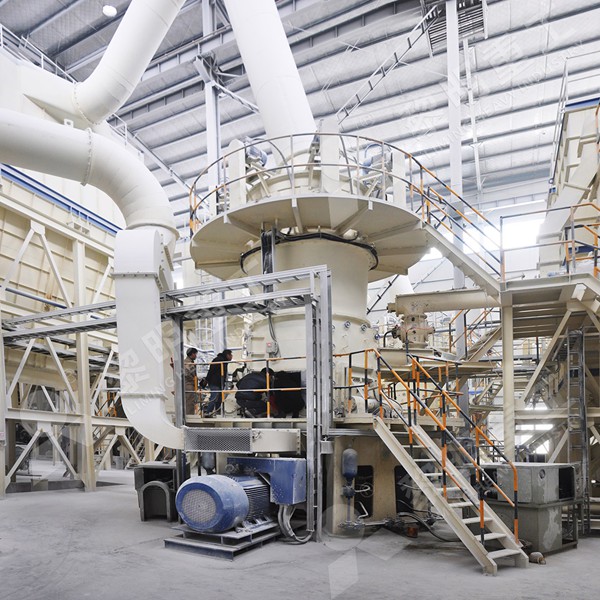
For large-scale production of cement-grade kaolin, the LM Vertical Roller Mill stands out. Its integrated design combines drying, grinding, powder selection, and conveying into a single, compact unit. This is particularly advantageous for kaolin, which may require drying if moisture content is variable. With a capacity range of 10-400 T/H, it handles substantial feed sizes (30-55mm) and operates with notable energy efficiency due to its grinding mechanism, where rollers compress and shear the material on a rotating table. The immediate internal classification ensures only particles meeting the fineness target are conveyed to the product collector, making it a robust choice for high-tonnage, consistent output.
When the application demands fine to ultra-fine kaolin powder, the MW Micro Powder Mill and the MTW European Type Grinding Mill are exemplary. The MW mill, incorporating advanced grinding technology, excels in superfine processing, achieving fineness up to d97 ≤ 5μm (approx. 2500 mesh). Its principle involves multiple rollers rotating against a stationary ring, creating intense shear and compression forces ideal for achieving the high surface area needed for maximum pozzolanic activity. The MTW mill, an evolution of traditional Raymond mill technology, offers a balance between high productivity and fine powder yields (fineness adjustable within a broad range). Its curved shovel blade and internal aerodynamic optimization promote efficient material circulation and classification, suitable for producing kaolin powder from 30-50mm feed at 3-55 TPH.
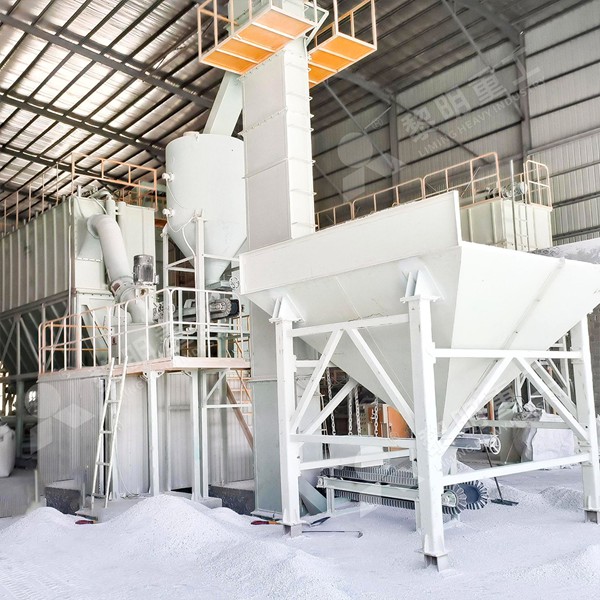
The Raymond Mill remains a reliable workhorse for standard fineness requirements (44μm to 613μm). It is a proven technology for processing non-flammable, non-explosive materials like kaolin under moderate hardness. Its simple, sturdy construction ensures operational stability and ease of maintenance, making it a cost-effective solution for many plants. Conversely, the traditional Ball Mill, while versatile, is often less energy-efficient for fine grinding applications compared to vertical roller or roller-race mills. Its tumbling action is effective but can be associated with higher specific energy consumption for achieving the same fineness level as more modern systems.
Selecting the right kaolin grinding system requires a holistic analysis. Key factors include the required production capacity, target fineness and particle size distribution, initial moisture content of the feed material, available plant space, and overall energy consumption goals. A system from Liming Heavy Industry is never just a standalone mill; it is a coordinated circuit. This typically includes preparatory crushing (e.g., Jaw Crusher), a variable-frequency controlled feeding system, the core grinding mill, an efficient powder separator (integral or external), a closed-loop air system with a blower, and a comprehensive pulse-jet dust collection system that ensures the operation meets stringent environmental standards. This integrated design guarantees a clean, closed-loop process that maximizes yield, protects equipment, and safeguards the workplace environment.
In conclusion, the transformation of kaolin into a high-performance cement additive is a technological process defined by its grinding stage. By partnering with an experienced manufacturer like Liming Heavy Industry, producers gain access to a spectrum of technologies—from high-capacity vertical mills to precision ultra-fine grinders—each backed by decades of engineering expertise. The optimal system aligns technical capabilities with specific production goals, ensuring the final kaolin product consistently delivers the enhanced strength, durability, and sustainability benefits expected in modern cement and concrete formulations.
Frequently Asked Questions (FAQs)
- What is the primary advantage of using a Vertical Roller Mill (LM series) for kaolin grinding in cement additive production?
The LM Vertical Roller Mill offers integrated drying and grinding, high energy efficiency due to its grinding mechanism, and a large capacity range. Its ability to handle moist feed and produce a consistent, narrowly graded powder makes it ideal for large-scale, continuous production of cement-grade kaolin. - How fine can kaolin be ground using the MW Micro Powder Mill, and why is this fineness important?
The MW Micro Powder Mill can achieve a fineness up to d97 ≤ 5μm (approximately 2500 mesh). This ultra-fine grinding significantly increases the specific surface area of the kaolin particles, which directly enhances their pozzolanic reactivity when mixed with cement, leading to stronger and more durable concrete. - Can your grinding systems handle kaolin with varying moisture content?
Yes. Systems like the LM Vertical Roller Mill have integrated drying capabilities where hot air (from a dedicated hot air generator or waste heat source) is introduced into the grinding chamber. This simultaneously dries and grinds the material, ensuring stable operation and consistent product quality even with variable feed moisture. - What measures are in place to ensure the grinding process is environmentally friendly?
All our grinding systems are designed as closed-circuit processes with negative pressure operation. They are equipped with high-efficiency pulse-jet baghouse dust collectors (cyclone + bag filter combinations) that capture over 99.9% of particulate matter, ensuring emissions are well below national and international environmental protection standards. - What support do you provide for system selection and optimization for a specific kaolin source?
We offer comprehensive technical support, including laboratory analysis of customer's kaolin samples, pilot-scale testing recommendations, and system simulation based on target capacity and fineness. Our engineering team assists in designing the complete circuit—from crushing to packaging—to ensure optimal performance and return on investment.


