Published: October 26, 2023
The kaolin processing industry is witnessing a significant evolution, driven by the demand for higher purity, finer particle sizes, and more energy-efficient production methods. Traditional grinding approaches often fall short in meeting these modern requirements, leading to increased operational costs and inconsistent product quality. This article explores the advancements in modified kaolin powder grinding technology, focusing on how contemporary milling systems address these challenges. By integrating sophisticated drying, grinding, classification, and conveying processes into cohesive, automated systems, manufacturers can achieve superior control over final product specifications—such as fineness ranging from coarse granules to sub-5-micron powders—while optimizing energy consumption and ensuring environmental compliance. The core of this technological shift lies in selecting and adapting the right grinding equipment, such as vertical roller mills, European-type trapezium mills, and advanced micro powder mills, each offering unique benefits for specific kaolin processing stages and desired outcomes.
Kaolin, or china clay, is a versatile industrial mineral whose value is intrinsically linked to its physical properties, including particle size distribution, brightness, and morphology. Conventional grinding methods can sometimes introduce impurities, generate excessive heat (which may degrade the clay's structure), or fail to deliver the narrow particle size distribution required for high-end applications in paper, ceramics, paints, and polymers. Modified grinding technology prioritizes a holistic system approach. It begins with the precise crushing of raw kaolin lumps to a uniform feed size, a critical step for stabilizing the subsequent grinding process. Modern jaw crushers and vibrating feeders ensure a consistent and controlled feed rate into the grinding mill, which is the heart of the operation.
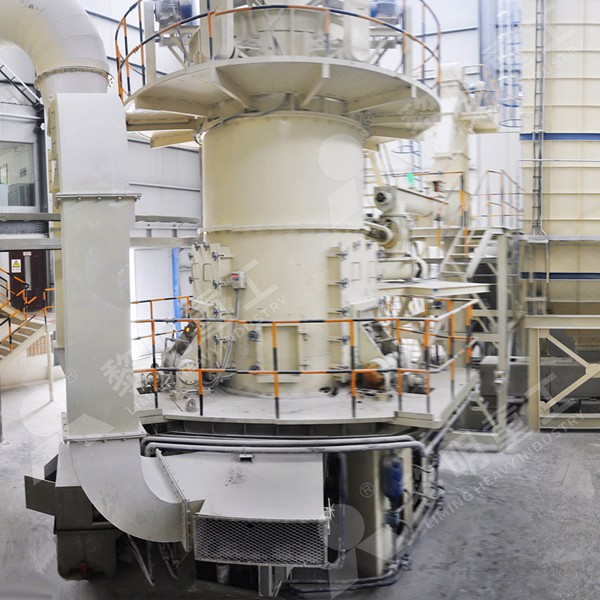
For primary and secondary grinding of kaolin, the LM Vertical Roller Mill represents a paradigm shift. Its modified design integrates drying, grinding, powder selection, and conveying into a single, compact unit. This is particularly advantageous for kaolin, which often requires drying to reduce moisture content. The mill's ability to handle feed sizes up to 55mm and deliver outputs from 10 to 400 tons per hour makes it suitable for large-scale operations. The grinding mechanism, where rollers compress and shear the material against a rotating table, allows for efficient energy use and produces a product with excellent particle shape. Furthermore, the integrated high-efficiency classifier ensures that only particles meeting the target fineness proceed, while coarser material is recirculated for further grinding, guaranteeing a consistent product.
When the application demands ultra-fine kaolin powders, modified Micro Powder Grinding Mill (MW Series) technology comes to the fore. This system, incorporating advanced grinding concepts, excels in producing superfine powders down to d97 ≤ 5μm. Its working principle involves multiple rollers rotating against a stationary ring raceway, creating numerous grinding points. The kaolin is fed centrally and, under centrifugal force, moves to the periphery where it is subjected to repeated compression and shear forces. The system's internal classifier allows for real-time fineness adjustment between 325 to 3250 mesh without stopping production. This technology is ideal for producing high-value, functional fillers where surface area and particle size are critical performance indicators.
Another cornerstone of modified kaolin technology is the MTW European Type Trapezium Mill. As an evolution of traditional Raymond mill designs, it offers enhanced stability, productivity, and energy efficiency. Its patented curved surface duct and internal streamlining reduce air flow resistance, directly lowering energy consumption. The bevel gear overall drive provides a more reliable and quieter operation compared to traditional worm gear drives. For kaolin processing, this mill offers a robust solution for producing powders in the medium-fineness range (typically from 30 to 400 mesh) with high whiteness retention, as its efficient grinding action minimizes iron contamination. The entire system operates as a closed-circuit, negative-pressure loop, which is essential for containing fine kaolin dust and meeting stringent environmental standards through integrated pulse dust collectors.
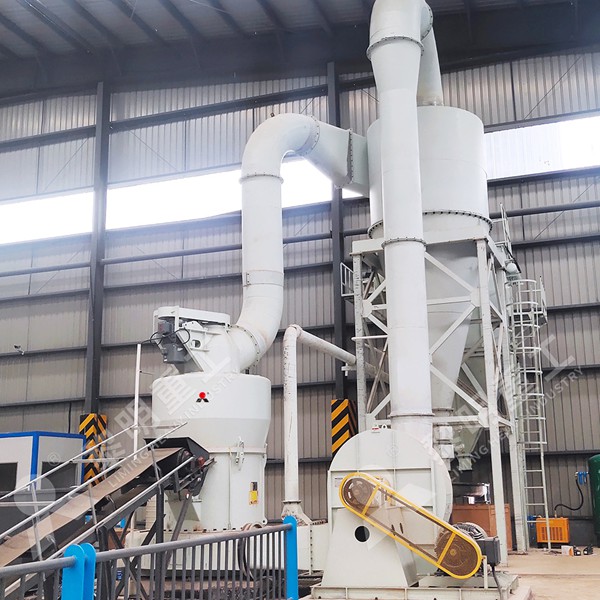
The modification and advancement of grinding technology are not merely about the mill itself but encompass the entire production line philosophy. Automation and intelligent control systems are now integral. Modern electric control systems monitor and adjust parameters like feed rate, grinding pressure, classifier speed, and temperature in real-time. This ensures optimal operation, maximizes throughput, and maintains product consistency batch after batch, even with variations in raw material characteristics. This level of control, pioneered by companies with decades of research and manufacturing expertise in crushing and grinding equipment, transforms kaolin processing from a brute-force operation into a precise, scientific endeavor.
In conclusion, the modification of kaolin powder grinding technology is a multi-faceted endeavor focused on precision, efficiency, and sustainability. By leveraging next-generation equipment like vertical roller mills for integrated processing, European-type trapezium mills for efficient medium-fine grinding, and micro powder mills for ultra-fine applications, producers can significantly enhance their product quality and market competitiveness. The continuous innovation in system design, driven by scientific research and a deep understanding of material science, ensures that kaolin grinding technology will continue to evolve, meeting the ever-growing and changing demands of global industries.
Frequently Asked Questions (FAQs)
- What is the key advantage of using an LM Vertical Roller Mill for kaolin processing?
The primary advantage is its integrated design that combines drying, grinding, classification, and conveying. This all-in-one system is highly energy-efficient, particularly for kaolin that requires moisture reduction, and provides excellent control over product fineness and consistency in large-scale production. - How fine can kaolin powder be ground using modified micro powder mill technology?
Advanced micro powder grinding mills, such as the MW series, are capable of producing superfine kaolin powders with a fineness up to d97 ≤ 5μm (microns). The fineness can be steplessly adjusted within a range of approximately 325 mesh to 3250 mesh. - Why is a closed-circuit, negative-pressure grinding system important for kaolin?
Kaolin dust is very fine and can be a handling and environmental concern. A closed-circuit, negative-pressure system prevents dust leakage, contains the material within the processing loop, and ensures all air is filtered through dust collectors before release, guaranteeing a clean working environment and compliance with environmental regulations. - Can modified grinding technology handle variations in raw kaolin hardness and moisture?
Yes, modern systems are designed with flexibility in mind. Automated control systems can adjust operational parameters like grinding pressure, classifier speed, and hot air flow (for drying) in real-time to compensate for variations in feed material, ensuring a stable and consistent final product quality. - What role does the classifier play in a modern kaolin grinding mill?
The classifier is a critical component that determines the final product's particle size. It separates fine particles that meet the target specification from coarser ones. The coarse particles are returned to the grinding chamber for further milling, creating a closed-loop system that maximizes efficiency and ensures a sharp, consistent particle size distribution.


