Published: October 26, 2023
This article explores the advanced noise reduction design principles implemented in Liming Heavy Industry's Raymond Mill, specifically for kaolin processing applications. We will detail the engineering strategies, from vibration isolation and acoustic enclosures to optimized grinding mechanics and intelligent control systems, that collectively transform operational noise from an industrial challenge into a managed parameter, ensuring compliance, safety, and enhanced workplace ergonomics without compromising the mill's renowned efficiency and fineness control for non-metallic minerals.
At Liming Heavy Industry, our commitment to pioneering crushing and grinding solutions extends beyond raw performance metrics. For over three decades, we have integrated modern scientific management with precision manufacturing, recognizing that superior machinery must also excel in environmental and operational stewardship. The application of Raymond Mill in kaolin grinding—a process demanding fineness between 613μm and 44μm—presents unique challenges, where mechanical noise from grinding, classifying, and conveying can impact both regulatory compliance and operator well-being. Our design philosophy addresses this holistically, viewing noise not as an inevitable byproduct but as a system characteristic to be engineered.
The core of our noise mitigation approach begins with vibration control at the source. The traditional Raymond mill structure has been re-engineered with finite element analysis (FEA) to optimize the rigidity and dynamic balance of the mainframe and the grinding roller assembly. By minimizing resonant frequencies and uncontrolled vibrations transmitted from the grinding zone (where rollers grind materials against the ring), we significantly reduce the structure-borne noise. Furthermore, the foundation design incorporates high-damping materials and isolation pads, decoupling the mill's vibrations from the plant floor.
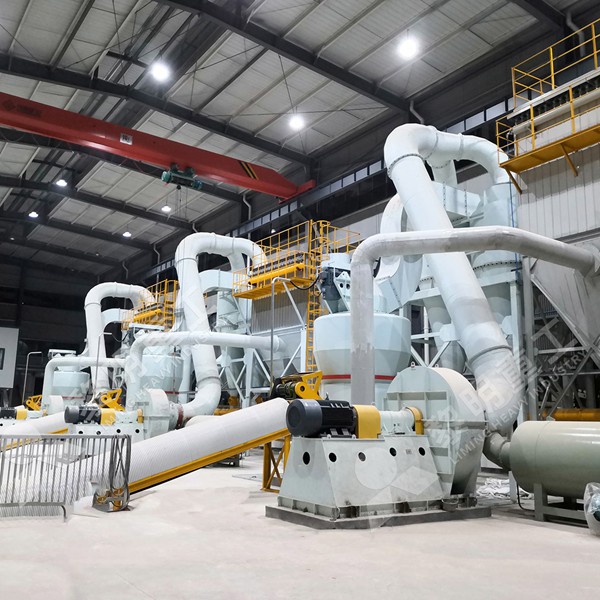
A second critical layer involves acoustic treatment of the air system. The Raymond mill operates as a closed-circuit air system with a blower and cyclone separator. Turbulent airflow and powder impact within pipes and collectors are major noise contributors. Our design integrates internally lined ducts with sound-absorbing materials and optimized airflow paths to reduce turbulence. The high-efficiency pulse dust collector, a standard for environmental compliance, is also selected and configured with noise emission as a key criterion, often housed within its own insulated enclosure if necessary.
Operational intelligence plays a pivotal role. The automated electric control system does more than ensure stable operation; it allows for optimized start-up sequences and steady-state running that avoid noisy peak loads. By maintaining consistent feed rates (for materials with input size of 15-25mm) and optimal grinding pressure through automated adjustments, the system prevents the erratic, high-noise operation associated with manual or suboptimal control. This intelligent regulation ensures the mill operates at its most acoustically efficient point for the target kaolin fineness.
Material handling and internal mechanics are also refined. The design of the grinding roller and ring profiles is not only for wear resistance and grinding efficiency but also for smoother material contact and reduced impact noise. Premium bearing assemblies with superior tolerances are used throughout the drive train to minimize mechanical whine. For direct drive components, encapsulated gearboxes or specially designed belt drive systems with noise-dampening covers are employed.
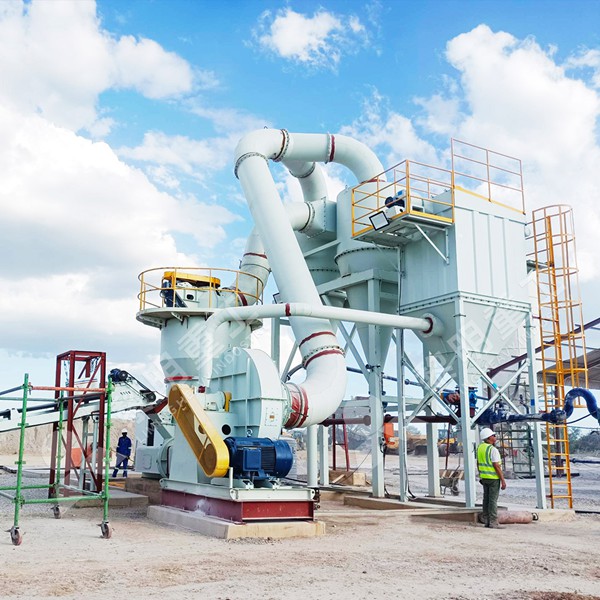
Finally, we offer modular acoustic enclosure solutions as a comprehensive perimeter control. These custom-fit panels, constructed with composite noise-absorbing and barrier materials, can be installed around the mill with necessary access points for maintenance and inspection. They are designed to integrate seamlessly with the mill's operation and maintenance routines, providing a final, highly effective barrier that reduces sound propagation to the surrounding environment.
In summary, Liming Heavy Industry's noise reduction design for the Kaolin Raymond Mill is a multi-faceted engineering triumph. It embodies our corporate strategy of scientific research and technological improvement, tackling the key problem of industrial noise without sacrificing the mill's capacity (1.2-4.5T/H), reliability, or its suitability for processing non-flammable, non-explosive materials under 7 Mohs hardness. This results in a solution that protects both the workforce and the community, aligning with the highest standards of modern, responsible industrial machinery manufacturing.
Frequently Asked Questions (FAQ)
- Does the noise reduction design affect the grinding efficiency or fineness of the kaolin?
No, the design focuses on mitigating noise from mechanical vibration, airflow, and structure-borne transmission. The core grinding mechanics, roller speed, and classifier efficiency remain unchanged, ensuring the output fineness (613μm ~ 44μm) and capacity are fully maintained. - Are the acoustic enclosures standard or optional? Do they hinder maintenance?
The modular acoustic enclosures are typically offered as an optional upgrade to suit specific plant requirements. They are designed with removable panels and strategic access points to allow for routine maintenance, lubrication, and inspection without significant added time or complexity. - Can this noise-reduced Raymond Mill be used for materials other than kaolin?
Absolutely. The noise reduction features are integral to the mill's construction and are beneficial across its entire application range, including calcium carbonate, gypsum, power plant desulfurization, and other non-metallic mineral pulverizing operations under 7 Mohs hardness. - How is the noise level measured and guaranteed?
Noise levels (dB(A)) are measured at standardized distances around the operating mill under rated load conditions. While specific guarantees depend on final configuration and installation environment, our technical data provides expected noise emission values, and our engineers can support site-specific acoustic planning. - Does the design require special foundations or additional space?
The vibration isolation system is designed to work on standard industrial foundations. The acoustic enclosures do add to the mill's footprint; however, our layouts are optimized for compactness. Detailed space requirement drawings are provided during the planning phase to facilitate seamless integration into your plant.


