Published: October 26, 2023
Producing high-quality agricultural kaolin powder requires a sophisticated and reliable grinding system capable of delivering ultra-fine, consistent particle sizes while maintaining operational efficiency and environmental compliance. Liming Heavy Industry Co., Ltd., with over three decades of expertise in manufacturing crushing and grinding equipment, offers a suite of advanced milling solutions specifically engineered for the demanding requirements of non-metallic mineral processing, including kaolin for agricultural applications. From large-scale production lines to specialized superfine grinding, the selection of the right equipment—such as Vertical Roller Mills, Raymond Mills, European Type Grinding Mills, Micro Powder Mills, and Ball Mills—is critical to achieving the desired product fineness, purity, and throughput for crop protection and soil enhancement products.
Kaolin, a naturally occurring hydrated aluminum silicate clay, has gained significant traction in sustainable agriculture as an effective physical pesticide and plant stress mitigator. Its efficacy is highly dependent on particle size distribution and purity, making the comminution process the cornerstone of value-added kaolin powder production. Liming Heavy Industry's research and development philosophy, centered on product competitiveness and technological innovation, directly addresses these challenges. The company's modern facilities, spanning over 147,000 square meters in Zhengzhou's HI-TECH Industry Development Zone and Shangjie Industry Park, are dedicated to the precision manufacturing of equipment that transforms raw kaolin clay into a versatile agricultural input.
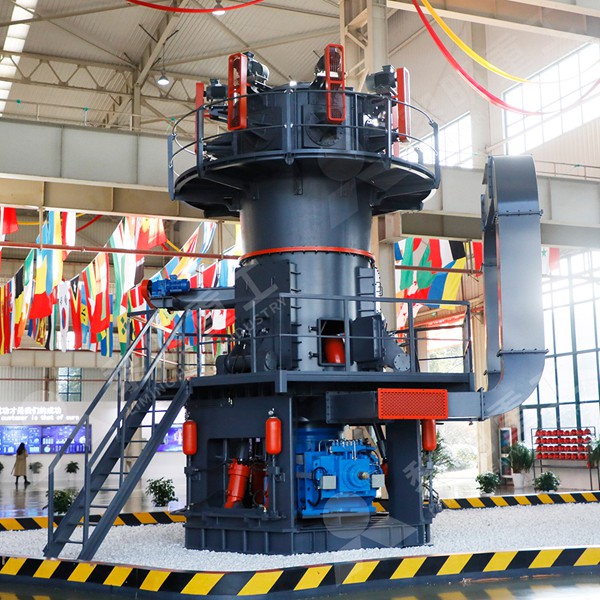
For high-capacity production lines, the LM Vertical Roller Mill stands out. Its integrated design combines drying, grinding, powder selection, and conveying into a single, compact unit. This is particularly advantageous for kaolin, which often requires drying alongside size reduction. The mill's ability to handle feed sizes up to 55mm and deliver outputs ranging from 10 to 400 tons per hour makes it ideal for large-scale agricultural kaolin processing plants. Its grinding mechanism applies pressure and shear force to the material bed, promoting efficient particle breakdown with lower energy consumption compared to traditional ball mills.
When the application demands fine to moderately fine powder in the range of 44μm to 613μm, the classic Raymond Mill remains a workhorse. Known for its reliability and wide application in non-metallic minerals, it is perfectly suited for processing non-explosive, low-humidity materials like kaolin. Its grinding ring and roller assembly provides consistent fineness, which is crucial for ensuring uniform coverage when the kaolin powder is mixed with water and sprayed onto crops. With capacities from 1.2 to 4.5 T/H, it serves medium-scale production needs effectively.
The MTW European Type Trapezium Mill represents the next generation of Raymond mill technology. It incorporates patented advancements that enhance stability, productivity, and energy efficiency. For agricultural kaolin producers targeting the premium market where exceptional powder uniformity and whiteness are required, this mill offers superior performance. Its closed-circuit system with an efficient separator ensures precise particle size control, while the integrated pulse dust collector maintains a clean working environment and minimizes product loss—a key consideration for both economics and workplace safety.
For the highest value agricultural formulations, such as advanced adjuvant or nano-particle enhanced kaolin products, achieving superfine or even ultra-fine particle sizes is mandatory. The MW Micro Powder Mill excels in this domain. Leveraging advanced grinding technology, it can produce powders as fine as d97 ≤ 5μm (approximately 2500 mesh). This level of fineness increases the surface area and reactivity of the kaolin, potentially enhancing its protective barrier properties on plant surfaces. Its environmentally friendly design with a pulse precipitator aligns with the green principles of modern sustainable agriculture.
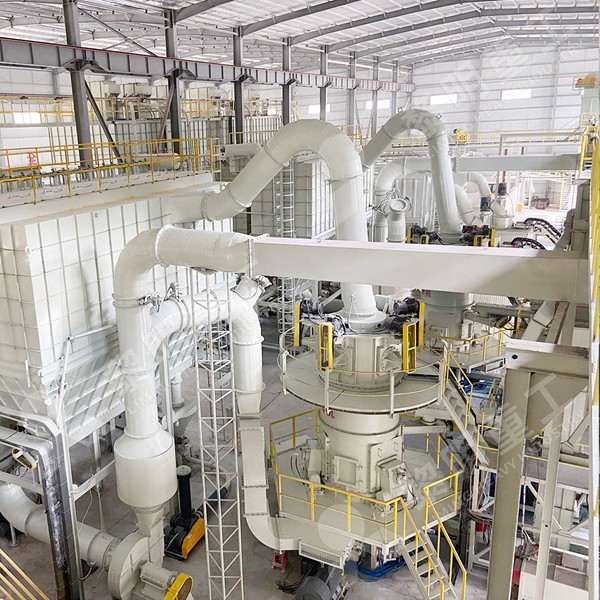
Finally, the versatile Ball Mill provides a robust solution for both wet and dry grinding of kaolin. As a key equipment for milling after primary crushing, it operates on the principle of impact and attrition as the grinding chamber rotates and steel balls cascade onto the material. It is highly effective for achieving a wide range of fineness and is often used in applications where simultaneous grinding and mixing with other additives is beneficial. Its simplicity and durability make it a common choice across the mineral processing industry.
Selecting the optimal agricultural kaolin powder production equipment from Liming Heavy Industry's portfolio requires a careful analysis of raw material characteristics, target fineness, required capacity, and overall plant design. The company's commitment to "scientific research tackling key problems" ensures that each mill is not just a piece of machinery but a integrated system designed for performance, longevity, and minimal environmental impact, empowering producers to contribute to more sustainable and productive farming practices worldwide.
Frequently Asked Questions (FAQs)
1. What is the primary advantage of using a Vertical Roller Mill for kaolin processing?
The primary advantage is its highly efficient integrated system that performs drying and grinding simultaneously, significantly reducing energy consumption and floor space for high-capacity production lines, which is ideal for moist kaolin clay.
2. Can your grinding mills handle kaolin with varying moisture content?
Yes, particularly our LM Vertical Roller Mill and certain configurations of our other mills are designed with or can be equipped with integrated drying systems to handle materials with a range of initial moisture levels effectively.
3. What fineness range is achievable for agricultural kaolin powder with your equipment?
Our equipment portfolio covers a very broad spectrum. Raymond and MTW Mills can achieve 44μm-613μm, while the specialized MW Micro Powder Mill can produce superfine powder down to 5μm (d97), suitable for advanced agricultural applications.
4. How does your equipment ensure consistent particle size, which is critical for spray applications?
Consistency is achieved through advanced internal classification systems (separators) in mills like the MTW and MW series. These systems continuously recycle oversized particles back to the grinding zone, allowing only particles meeting the target size to pass as finished product.
5. Are your grinding systems environmentally friendly for agricultural product manufacturing?
Absolutely. Our modern mills, such as the MTW and MW series, are designed as closed-circuit systems and are standardly equipped with high-efficiency pulse jet dust collectors. This ensures near-zero dust emission, protects the working environment, and maximizes product yield.


