Published: October 26, 2023
In the specialized field of catalysts carrier production, kaolin grinding represents a critical process demanding exceptional precision, consistent particle size distribution, and high purity. Liming Heavy Industry Co., Ltd. leverages over three decades of engineering expertise to provide a comprehensive portfolio of advanced grinding mills specifically engineered to meet these rigorous demands. Our solutions, ranging from high-capacity vertical roller mills to ultra-fine micro powder systems, are designed to transform raw kaolin into the precisely controlled powders essential for high-performance catalyst substrates, ensuring optimal porosity, surface area, and chemical inertness. This article explores the technical specifications and operational advantages of our key equipment lines for this sophisticated application.
Kaolin, a naturally occurring hydrated aluminum silicate, is a cornerstone material for catalyst carriers due to its thermal stability, moldability, and chemical resistance. The transformation from raw clay to a functional carrier begins with meticulous size reduction. The grinding process must achieve not only a target fineness but also preserve the mineral's crystalline structure and avoid contamination. Liming Heavy Industry's equipment is built with this balance in mind. Our modern joint-stock corporation, founded in 1987 and headquartered in Zhengzhou's HI-TECH Industry Development Zone, integrates research, manufacturing, and sales to develop machinery that aligns with the scientific management and precision manufacturing principles required by the chemical and petrochemical industries.
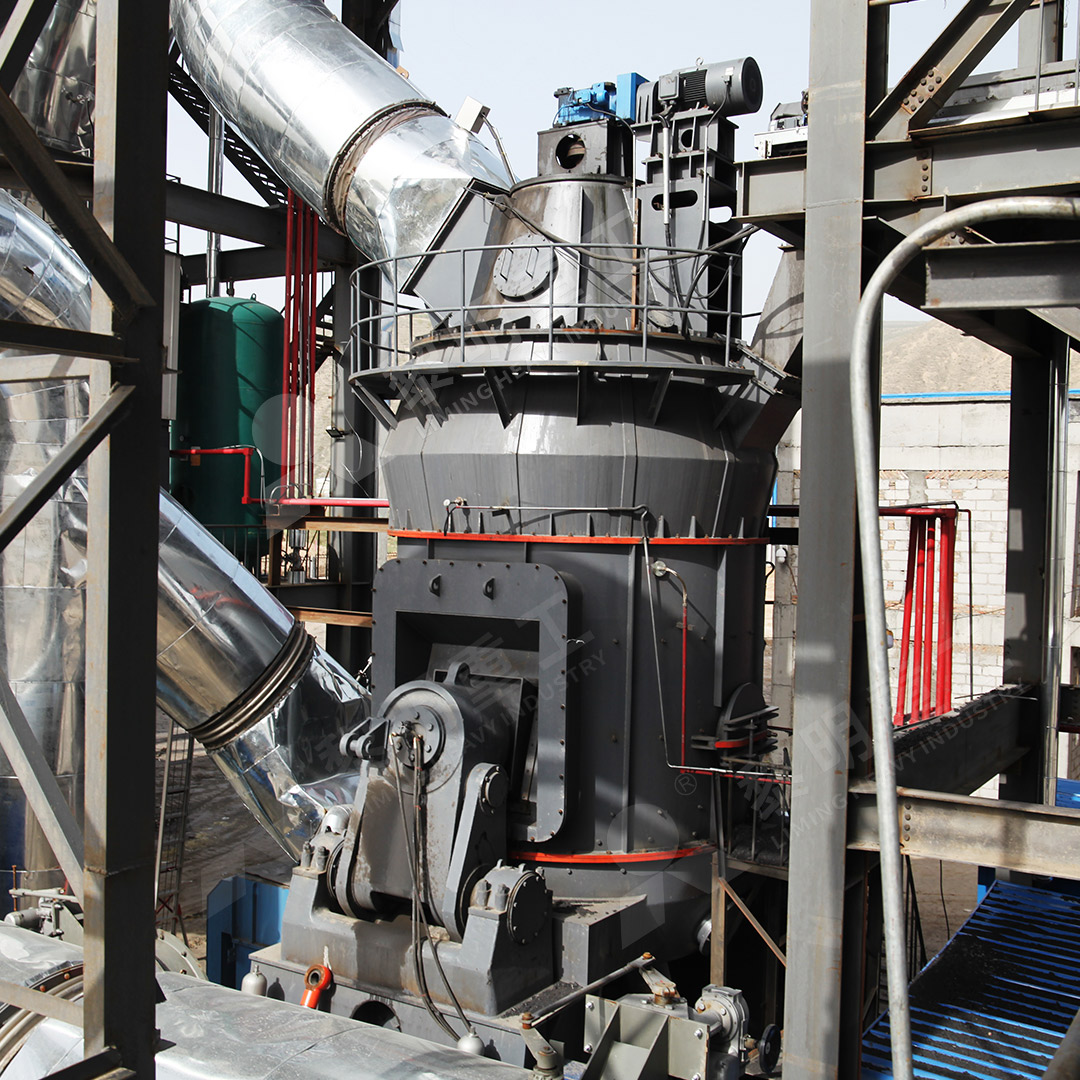 For large-scale production of catalysts carrier kaolin, the LM Vertical Roller Mill stands as a premier choice. Its integrated system combines drying, grinding, powder selection, and conveying into a single, efficient unit. This is particularly beneficial for kaolin, which often requires drying alongside grinding. The mill's ability to handle input sizes up to 55mm and deliver outputs ranging from coarse to fine powders (with capacities from 10 to 400 T/H) makes it ideal for primary and secondary grinding stages. The grinding mechanism, which involves rollers pressing against a rotating table, applies both compression and shear forces, efficiently breaking down kaolin aggregates while minimizing over-grinding and energy consumption. The automatic electric control system ensures stable operation and consistent product quality, a non-negotiable requirement for catalyst carrier consistency.
When the application calls for fine to moderately fine kaolin powders, the classic Raymond Mill (pendulum roller mill) offers proven reliability. Suitable for materials with Mohs hardness under 7 and humidity less than 6%, it processes kaolin into fineness ranging from 44μm to 613μm. Its widespread use in minerals grinding translates directly to kaolin processing for catalysts, where controlled, uniform particle size is key to defining the carrier's pore structure. The mechanical design, where grinding rollers swing outward under centrifugal force to press against the grinding ring, provides a stable grinding force and consistent output. This mill is often employed in dedicated processing lines for catalyst-grade kaolin where specific, repeatable fineness is the primary goal.
The pursuit of higher efficiency and finer products led to the development of the MTW European Type Trapezium Mill. As an advanced upgrade of traditional Raymond mills, it incorporates patented technology for enhanced stability, productivity, and energy savings. Its commitment to large-scale non-metallic mineral powder making aligns perfectly with industrial-scale catalyst carrier production. The working principle involves a closed-circuit grinding system: kaolin is fed into the mill, ground between the ring and rollers, and carried upward by airflow to a separator. Oversize particles are returned for regrinding, while finished product is collected. This closed-loop system, equipped with efficient pulse dust collectors, guarantees a clean production environment and prevents product loss, which is crucial for maintaining high-purity standards. Its capacity range of 3-55 TPH accommodates significant production needs.
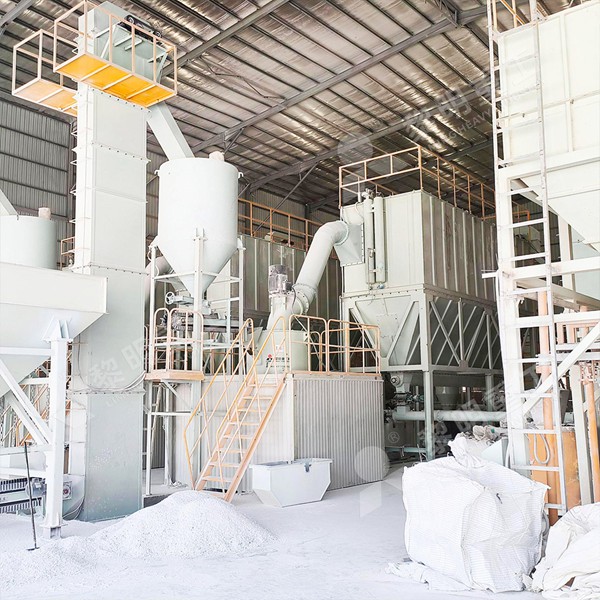 For catalysts requiring an ultra-fine or nano-scale carrier base, the MW Micro Powder Mill is the technological frontier. This mill absorbs advanced grinding technology and excels in superfine powder processing, achieving fineness up to d97 ≤ 5μm (3250 mesh). This capability allows for the production of kaolin powders with dramatically increased surface area, a vital characteristic for maximizing catalyst active site loading and reactivity. The mill's working principle, utilizing dozens of rollers rotating against a raceway ring driven by a central gear, creates multiple grinding zones for ultra-fine pulverization. Coupled with its integrated pulse precipitator, the MW series enables the production of high-purity, ultra-fine kaolin in an environmentally friendly manner, meeting the most stringent requirements for advanced catalyst synthesis.
Finally, the versatile Ball Mill remains a fundamental tool in kaolin processing circuits, especially for wet grinding processes which are sometimes employed for catalyst carrier preparation. As a key equipment for milling after crushing, it can grind all kinds of ores and materials. In a ball mill, kaolin is ground by the impact and attrition of steel balls within a rotating chamber. This method is excellent for achieving a very uniform particle size distribution and can be used for both mixing and grinding in slurry form. Its robustness and adaptability make it suitable for various stages in a comprehensive kaolin processing plant dedicated to serving the catalysts industry.
Liming Heavy Industry's persistence in scientific R&D, with a core focus on product competitiveness, ensures that our grinding equipment evolves with the technological demands of the catalyst industry. From our 80,000 m² headquarters and 67,000 m² workshop in Shangjie Industry Park, we develop and innovate, aiming at the industry's technological frontier. Choosing the right grinding equipment for catalysts carrier kaolin is not merely a question of size reduction; it is an investment in the performance and efficiency of the final catalytic process. Our range of mills provides tailored solutions to meet the precise specifications of this demanding field.
Frequently Asked Questions (FAQ)
- What is the most important factor when selecting a mill for catalyst-grade kaolin?
The paramount factors are the required final particle size distribution (PSD) and the need to maintain chemical purity. Equipment must deliver consistent, controllable fineness without introducing metallic contamination from wear parts. - Can your grinding systems handle kaolin with varying moisture content?
Yes, several of our mills, notably the LM Vertical Roller Mill, integrate drying functionality. The system can use hot air from a separate furnace to dry and grind the material simultaneously, making it suitable for kaolin with higher initial moisture. - How is product fineness controlled and adjusted during operation?
Fineness is primarily controlled by the speed of the integrated classifier or separator. In mills like the MTW or Raymond Mill, adjusting the classifier rotor speed changes the cut point, allowing operators to fine-tune the product size without stopping the mill. - Are your mills designed for continuous, automated operation suitable for modern chemical plants?
Absolutely. Our modern mills, especially the LM Vertical Mill and MTW European Mill, are designed with full automation in mind. They feature advanced electric control systems that monitor and adjust key parameters for stable, continuous, 24/7 operation with minimal manual intervention. - What measures are in place to ensure the final kaolin powder is not contaminated?
We employ several strategies: using wear-resistant materials for grinding components, designing closed-circuit systems with internal air recycling, and equipping lines with high-efficiency pulse dust collectors. This minimizes external contamination and ensures a clean production stream.


