Published: October 26, 2023
The production of cosmetic-grade kaolin demands an exacting balance of ultra-fine particle size distribution, exceptional whiteness, chemical purity, and microbiological safety. Meeting these stringent specifications requires grinding technology engineered for precision, consistency, and contamination control. Liming Heavy Industry, with over three decades of specialization in crushing and grinding equipment, provides a suite of advanced mill systems—including the LM Vertical Roller Mill, Raymond Mill, MTW European Type Grinding Mill, MW Micro Powder Mill, and Ball Mill—specifically adapted to transform raw kaolin into a superior cosmetic ingredient. This article details the critical grinding specifications for cosmetic applications and explores how Liming's technology is configured to achieve the necessary fineness, brightness, and hygienic processing standards essential for global personal care brands.
The foundational requirement for cosmetic kaolin is a controlled and consistent particle size. Fineness directly influences texture, spreadability, oil absorption, and the final product's sensory feel on the skin. While general industrial kaolin may target coarser grinds, cosmetic applications often require powders in the range of 44μm (325 mesh) down to superfine levels below 5μm. Liming's portfolio offers a graduated technological approach to this challenge. The traditional workhorse, the Raymond Mill, provides reliable grinding from 613μm to 44μm, suitable for foundational grades. For higher-end formulations demanding ultra-fine particles, the MW Micro Powder Mill, incorporating advanced Swedish grinding technology, excels. It can achieve a remarkable fineness up to d97 ≤ 5μm (approximately 2500 mesh), with adjustable output between 325 and 3250 mesh, making it ideal for creating the silky-smooth powders required in premium face powders, blushes, and masks.
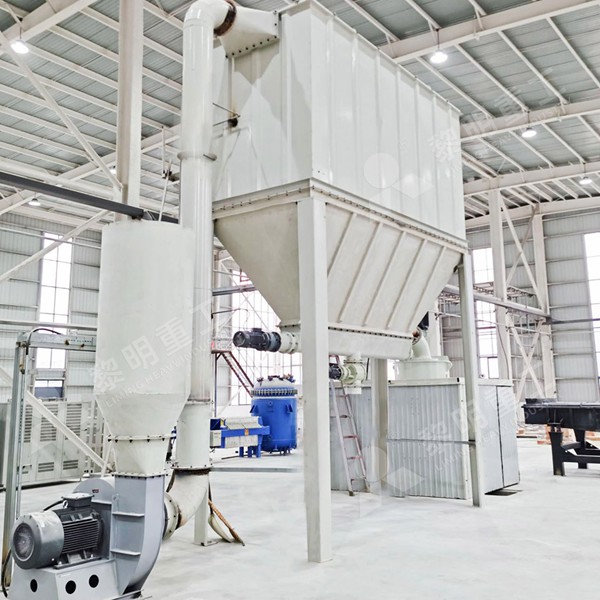
Beyond mere fineness, preserving the inherent brightness and minimizing contamination are non-negotiable. Kaolin's value in cosmetics is tied to its whiteness and purity. Any introduction of iron or other metallic impurities from the grinding process can cause discoloration, rendering the batch unsuitable. Liming's mills address this through meticulous material selection and intelligent system design. Grinding rollers and rings are manufactured from high-wear-resistant, non-contaminating alloys. Furthermore, systems like the MTW European Type Trapezium Mill and LM Vertical Roller Mill operate on a principle where the grinding elements do not directly metal-to-metal contact the material bed during stable operation, significantly reducing wear-induced contamination. The fully enclosed, negative-pressure grinding chambers and integrated high-efficiency pulse dust collectors (standard in models like the MW and MTW mills) prevent external pollutants from entering and ensure a clean production environment, safeguarding the kaolin's chemical and microbiological integrity.
The choice of grinding system also hinges on desired capacity and integrated processing needs. For large-scale production of cosmetic kaolin, the LM Vertical Roller Mill presents a highly efficient solution. Integrating drying, grinding, powder selection, and conveying in a single tower, it can process moist feed material with capacities from 10 to 400 T/H. Its ability to simultaneously dry and grind using hot air is a significant advantage, as controlling moisture is critical for both processability and final product stability. For dedicated superfine powder lines, the system built around the MW Micro Powder Mill or the MTW European Mill is often selected. The working principle of the MTW mill, for instance, ensures precise classification: ground particles are carried by air flow to a separator; oversized particles are rejected and returned for regrinding, while only in-spec powder passes to collection. This closed-circuit system guarantees a uniform particle size distribution, a key specification for consistent cosmetic performance.
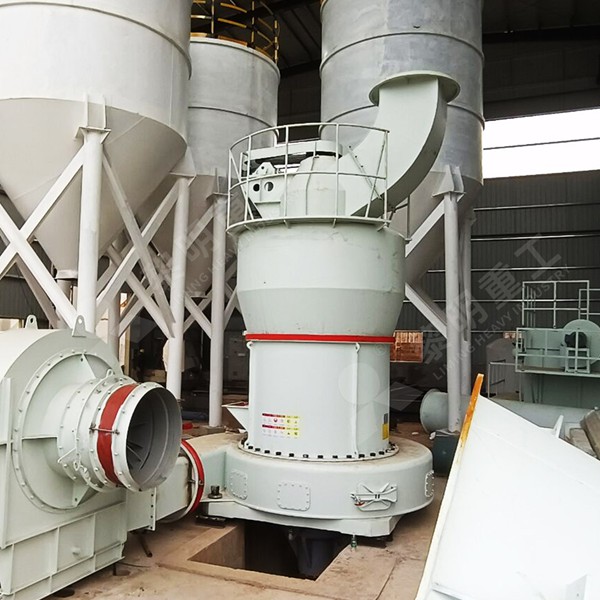
Finally, the overarching principle at Liming Heavy Industry is providing tailored solutions. While our core grinding technologies are robust and proven, we understand that cosmetic kaolin specifications can vary. Our engineering team engages in "scientific research tackling key problems," working closely with clients to configure the optimal system—whether it's a standalone MW Micro Powder Mill for a specialized superfine line or a complete plant based on the MTW European Type Trapezium Mill incorporating jaw crushers, vibrating feeders, and sophisticated dust collection. Our modern manufacturing facilities in Zhengzhou's HI-TECH Industry Development Zone and Shangjie Industry Park are equipped for precision manufacturing, ensuring every mill delivers the performance, reliability, and purity required by the discerning cosmetic industry. By focusing on technological innovation and scientific management, Liming empowers producers to meet and exceed the exacting specifications of global cosmetic-grade kaolin markets.
Frequently Asked Questions (FAQ)
Q1: What is the most critical grinding specification for kaolin used in facial masks and powders?
A1: The most critical specifications are ultra-fine and consistent particle size (often targeting d97 below 10μm) and absolute freedom from metallic contamination. Fineness ensures a smooth, non-abrasive feel, while purity guarantees whiteness and safety. Liming's MW Micro Powder Mill is specifically engineered to meet these dual demands.
Q2: Can your mills handle kaolin with varying moisture content from the mine?
A2: Yes. Specifically, our LM Vertical Roller Mill is designed as an integrated grinding and drying system. It can efficiently process kaolin feed with significant moisture by utilizing hot air introduced into the grinding chamber, making it ideal for direct processing of raw material without a separate, pre-drying stage.
Q3: How do you prevent the kaolin from being contaminated by wear metals during the grinding process?
A3> Our mills use wear-resistant alloys for grinding components. More importantly, designs like the MTW European Mill and LM Vertical Mill utilize a bed-grinding principle that minimizes direct metal-to-material contact under normal operation. Furthermore, all systems are enclosed and employ non-contaminating seals and liners to protect product purity.
Q4: We need a very narrow particle size distribution. How is this achieved in your grinding systems?
A4> Achieving a narrow particle size distribution is a function of precise internal classification. In mills like the MTW European Type Trapezium Mill and MW Micro Powder Mill, an integrated dynamic separator or classifier continuously removes fine product and returns coarse particles for regrinding. This closed-circuit operation within a single mill ensures a tight and consistent final fineness.
Q5: Are your grinding plants compliant with strict industrial environmental and safety standards?
A5> Absolutely. Environmental protection is a core design principle. All our modern grinding systems, especially for sensitive applications like cosmetics, are equipped with high-efficiency pulse-jet baghouse dust collectors. These systems ensure that the plant operates under negative pressure, with all airborne particles captured, resulting in emissions that meet stringent international environmental standards and providing a clean, safe working environment.


