Published on: October 26, 2023
Producing high-quality kaolin powder for rubber filler applications demands precision engineering, consistent particle size control, and efficient large-scale processing. Liming Heavy Industry Co., Ltd., with over three decades of expertise in manufacturing crushing and grinding equipment, provides integrated production line solutions tailored specifically for transforming raw kaolin into fine, functional fillers that enhance rubber products' mechanical properties, durability, and processing characteristics. This article explores the technological advancements, equipment selection, and process flow that define a modern, high-yield kaolin powder production line.
Founded in 1987, Liming Heavy Industry has evolved into a leader in domestic and overseas machinery manufacturing, operating from its 80,000 m² headquarters in the HI-TECH Industry Development Zone of Zhengzhou and a 67,000 m² workshop in Shangjie Industry Park. The company's philosophy centers on scientific research, precision manufacturing, and technological innovation. This commitment is directly applied to developing production lines for non-metallic minerals like kaolin, where the goal is to achieve optimal brightness, particle size distribution (especially in the micron and sub-micron ranges), and chemical purity to meet stringent rubber industry standards.
A complete rubber filler kaolin production line is more than just a grinding unit; it is a synchronized system. The process typically begins with the primary crushing of raw kaolin ore to a manageable size. Following this, the heart of the operation lies in the milling and classification stages. Here, Liming Heavy Industry's portfolio offers several technologically distinct paths. For general filler grades requiring a fineness between 44μm to 613μm (325 mesh to approx. 30 mesh), the Raymond Mill presents a robust and energy-efficient solution. Its design is proven for processing non-flammable, non-explosive materials like kaolin under 6% humidity, making it suitable for initial size reduction.
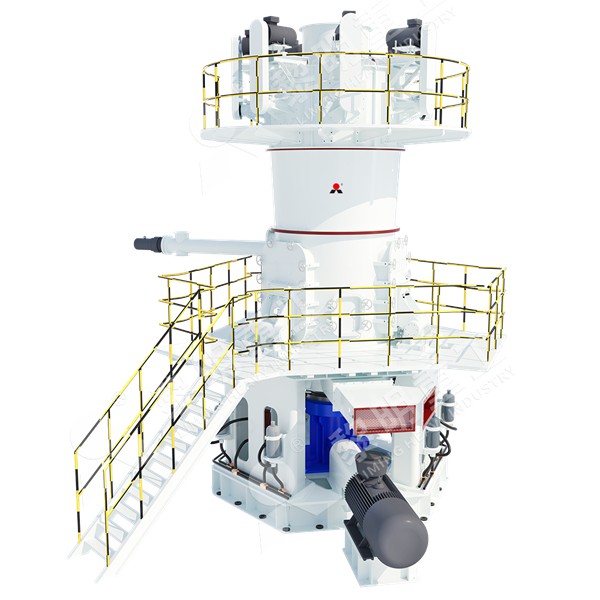
For higher-value applications demanding superfine kaolin powder (often d97 ≤ 5μm or 2500 mesh and above), the MW Micro Powder Mill is the technology of choice. This mill absorbs advanced grinding technology and excels in superfine processing. Its internal classification system ensures that only particles meeting the target fineness exit as product, while oversize material is recirculated for further grinding. This is critical for rubber fillers, as ultra-fine particles provide better reinforcement, smoother surface finish, and improved dispersion within the rubber matrix. The system is enclosed and equipped with pulse dust collectors, ensuring a clean production environment and minimal product loss.
When the project requires large-scale production of high-quality kaolin powder with superior particle uniformity, the MTW European Type Grinding Mill stands out. As an upgrade over traditional Raymond mills, it incorporates patented technology for stable performance, high productivity, and significant energy savings. Its trapezium grinding chamber and curved air duct design promote smoother material flow and more efficient separation. This mill is particularly committed to large-scale non-metallic mineral powder making, handling capacities up to 55 TPH, and is ideal for establishing a high-volume supply line for rubber manufacturers.
Integration and automation are key differentiators. A modern line from Liming includes not just the core mill but also auxiliary equipment such as jaw crushers, vibrating feeders, bucket elevators, turbo classifiers, screw conveyors, silos, and advanced pulse-jet baghouse dust collectors. The entire process can be managed through an automatic electric control system that integrates drying (if moisture control is needed), grinding, precise powder selection, and conveying into a seamless operation. This level of integration maximizes yield, ensures consistency from batch to batch, and reduces labor costs.
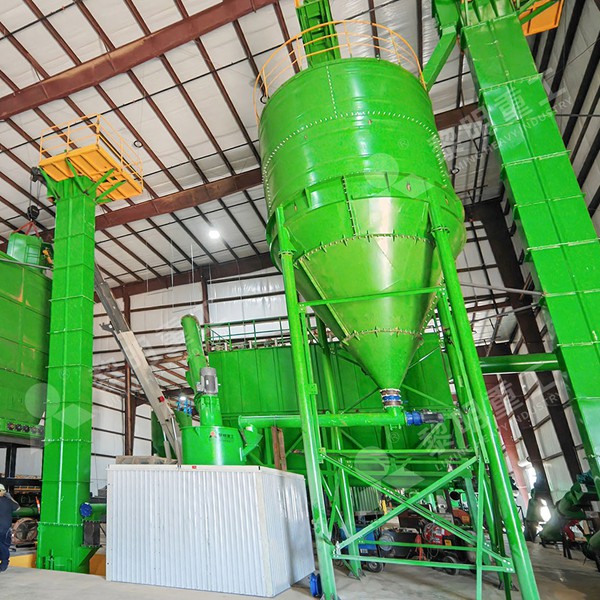
The working principle of these systems emphasizes efficiency and a closed loop. Material is fed evenly into the grinding chamber where it is ground between rollers and a ring. The ground powder is carried by an air stream to a classifier. Coarse particles are rejected and returned for regrinding, while fine product passes through. The air is then recycled back to the blower, creating a negative pressure, dust-free system that complies with environmental standards. For kaolin, which is often abrasive, the selection of wear-resistant materials for grinding components is a critical design consideration that Liming addresses through its material science expertise.
Ultimately, selecting the right configuration—whether based on the LM Vertical Roller Mill for combined drying and grinding, the Ball Mill for certain wet process routes, or the superfine MW mill—depends on the specific characteristics of the feed kaolin and the exact technical specifications required by the end rubber product. Liming Heavy Industry's role extends beyond equipment supply; it provides comprehensive technical support, from laboratory testing and process design to installation supervision and after-sales service, ensuring the production line delivers optimal performance, reliability, and a high return on investment for years to come.
Frequently Asked Questions (FAQ)
1. What is the typical fineness range achievable for rubber-grade kaolin powder with your mills?
Our MW Micro Powder Mill can produce superfine kaolin powder up to d97 ≤ 5μm (approx. 2500 mesh), while our Raymond Mill and MTW European Mill efficiently produce powders in the 44μm to 613μm range. The exact fineness is adjustable to meet specific rubber compound requirements.
2. How does your system handle the abrasiveness of kaolin to minimize maintenance?
We utilize high-chromium alloy or ceramic wear-resistant materials for key grinding components like rollers, rings, and liners. This design significantly extends the service life of wearing parts and reduces downtime for replacements in abrasive kaolin processing.
3. Is the production line environmentally friendly?
Yes. All our proposed systems are negative pressure, closed-circuit designs equipped with high-efficiency pulse jet baghouse dust collectors. This ensures dust emissions are far below national environmental protection standards, creating a clean workshop.
4. Can you provide a complete turnkey production line, not just individual machines?
Absolutely. We specialize in engineering and supplying complete turnkey solutions, including system design, equipment manufacturing, installation guidance, commissioning, and operator training for the entire kaolin processing line from raw ore to packaged powder.
5. Do your mills require a pre-drying step for kaolin with moisture content?
Our LM Vertical Roller Mill integrates grinding and drying in one unit, capable of handling materials with certain moisture. For other mill types, if the feed moisture exceeds the recommended limit (e.g., 6% for Raymond Mill), we can integrate a separate dryer into the system layout based on your raw material analysis.


