Published: October 26, 2023
For Australian mining operations focused on limestone processing, selecting the right grinding equipment is critical to achieving optimal productivity, energy efficiency, and product quality. This article explores advanced grinding solutions from LIMING HEAVY INDUSTRY, detailing how specific mill technologies—including Vertical Roller Mills, European Type Grinding Mills, Raymond Mills, Micro Powder Mills, and Ball Mills—are engineered to meet the rigorous demands of Australia's diverse and often remote mining environments. We will examine key factors such as capacity, fineness control, system integration, and adaptability to local conditions, providing a comprehensive guide for operators seeking to enhance their limestone processing circuits.
The Australian mining sector, with its stringent operational and environmental standards, requires robust and reliable grinding machinery. LIMING HEAVY INDUSTRY, with over three decades of experience in manufacturing crushing and grinding equipment, designs its product line with a core focus on scientific innovation and improving product competitiveness. Our modern R&D facilities and commitment to "production, learning, and research" enable us to deliver solutions that address the specific challenges of processing limestone, from coarse crushing to ultra-fine powder production.
One of the flagship solutions for high-capacity limestone grinding is the LM Vertical Roller Mill. This system integrates drying, grinding, powder selection, and conveying into a single, compact unit. For Australian mines dealing with varying moisture content or requiring large-scale production (from 10 to 400 T/H), the LM mill offers significant advantages. Its design promotes efficient energy use by grinding and drying materials simultaneously with hot air, a feature particularly valuable in operations aiming to reduce their carbon footprint. The ability to handle input sizes up to 55mm also simplifies the upstream crushing circuit.
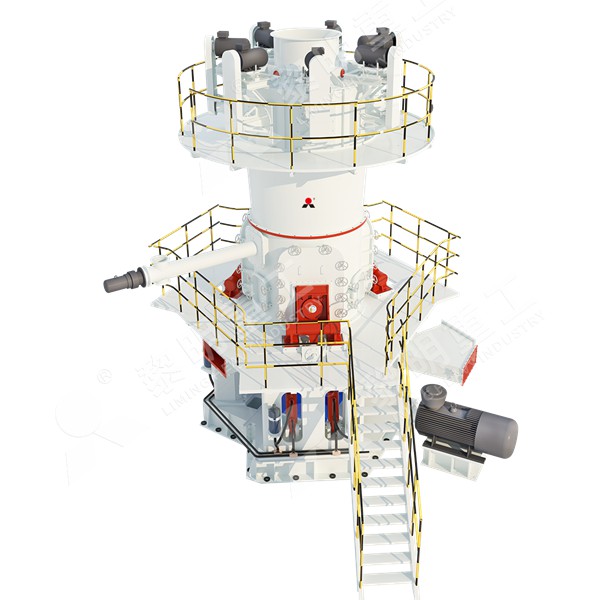
For applications requiring fine to medium-fine limestone powder, the MTW European Type Trapezium Mill represents a technological evolution. As an upgrade over traditional Raymond and pendulum mills, it incorporates patented technology for greater stability and productivity. Its closed-circuit grinding system, comprising the mill, separator, blower, and dust collector, ensures high collection efficiency and minimal environmental impact—a key consideration for Australian mines operating under strict emission regulations. The system is well-suited for producing powders for power plant desulfurization (FGD) or high-quality fillers, with capacities ranging from 3 to 55 TPH.
The classic Raymond Mill remains a versatile and cost-effective choice for many operations. It is exceptionally reliable for processing non-flammable, non-explosive materials like limestone with Mohs hardness under 7. Its simplicity of operation and maintenance makes it suitable for sites where technical support may be limited. Meanwhile, for ultra-fine limestone products demanded by industries such as plastics, paints, and advanced chemicals, the MW Micro Powder Mill is the ideal technology. Utilizing advanced grinding mechanics, it can produce powders as fine as 5μm (d97). Its integrated pulse dust collector ensures the process is clean and meets environmental standards, which is paramount for sustainable mining practices in Australia.
Finally, the Ball Mill continues to be a cornerstone grinding plant for limestone, especially where versatility is key. It can grind various ores and materials reliably and is often integral to beneficiation and chemical processes. Its working principle, using steel balls to impact and grind material within a rotating chamber, is well-understood by plant operators worldwide. When paired with appropriate classifiers, it can deliver a consistent product for cement, construction, and agricultural applications.
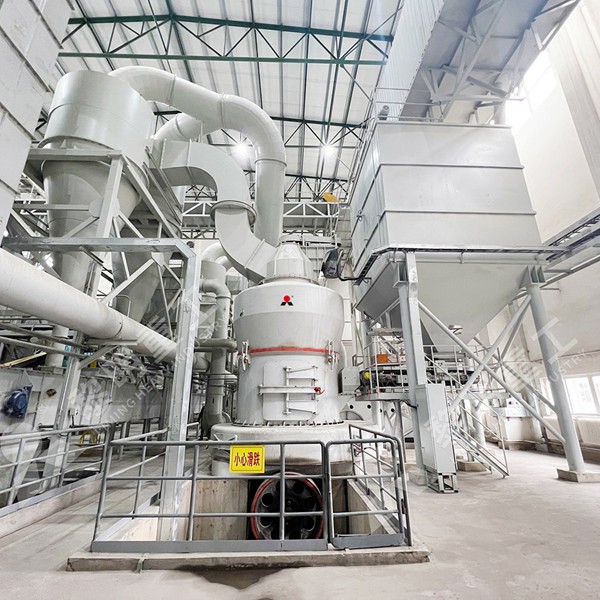
Selecting the optimal limestone grinding equipment for an Australian mine involves a detailed analysis of the ore characteristics, desired product specifications, site infrastructure, and long-term operational goals. LIMING HEAVY INDUSTRY supports this process by offering a range of technologies backed by continuous innovation and a global perspective on best practices in mineral processing. By partnering with a manufacturer dedicated to scientific research and precision manufacturing, Australian miners can build grinding circuits that are not only productive but also sustainable and future-proof.
Frequently Asked Questions (FAQ)
- What is the primary advantage of a Vertical Roller Mill over a traditional Ball Mill for limestone grinding?
The LM Vertical Roller Mill integrates multiple processes (drying, grinding, separation) into one unit, offering significantly higher energy efficiency, especially for materials requiring drying, and a more compact plant footprint compared to a traditional ball mill system. - Which grinding mill is most suitable for producing ultra-fine limestone powder (below 10μm)?
The MW Micro Powder Mill is specifically designed for superfine powder processing, capable of achieving fineness up to d97 ≤ 5μm, making it the ideal choice for high-value, ultra-fine limestone products. - How does the MTW European Type Grinding Mill ensure environmental compliance?
It operates as a fully closed-circuit system equipped with an efficient pulse dust collector. This design contains dust effectively, ensuring emissions meet stringent environmental protection standards common in regions like Australia. - Can your grinding equipment handle the abrasive nature of Australian limestone?
Yes. Our mills are constructed with wear-resistant materials and designed for easy maintenance of grinding components. The selection of mill type (e.g., roller vs. ball) and internal linings can be optimized based on the specific abrasiveness of the feed material. - Do you provide complete system design, including auxiliary equipment?
Absolutely. We offer complete system solutions that typically include jaw crushers, vibrating feeders, grinding mills, classifiers, blowers, and dust collection systems, all engineered to work together seamlessly for optimal performance and reliability.


