Published on: October 26, 2023
Limestone processing is a cornerstone of numerous European industrial sectors, from construction and agriculture to environmental protection and manufacturing. The selection of an efficient, reliable, and technologically advanced grinding mill is paramount for plant productivity and product quality. Among the various solutions available, Raymond Mill technology, particularly in its modern evolved forms, stands out for its proven performance in handling limestone. This article explores the application of Liming Heavy Industry's grinding equipment, specifically focusing on Raymond Mill and its advanced successor, the MTW European Type Grinding Mill, within the European industrial context. We will delve into their operational principles, key advantages, and how they address the specific demands of European plants regarding efficiency, environmental compliance, and fine powder production.
The European industrial landscape is characterized by stringent environmental regulations, a strong emphasis on energy efficiency, and a demand for high-precision products. Processing limestone, a fundamental raw material, requires equipment that can meet these rigorous standards. Traditional Raymond Mills have long been valued for their reliability in producing fine powders. However, modern advancements have significantly enhanced their capabilities. Liming Heavy Industry's MTW European Type Trapezium Mill represents this evolution. Building upon the classic Raymond Mill design, it incorporates patented technological improvements that deliver higher productivity, greater energy savings, and more consistent fineness control, making it exceptionally well-suited for European operations.
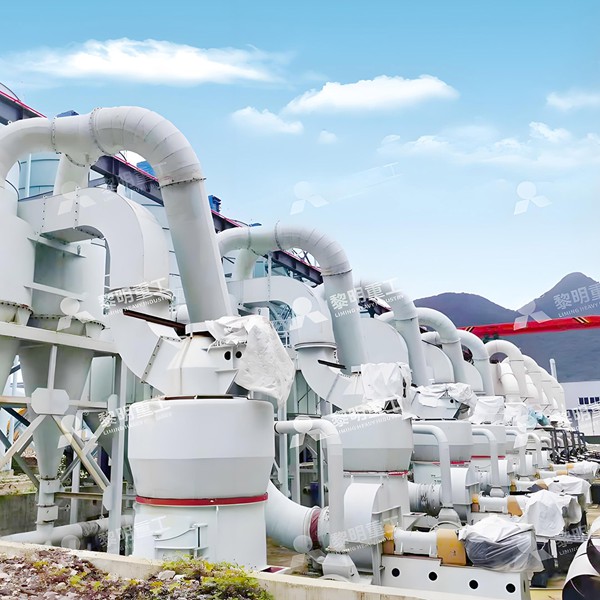
The working principle of these mills ensures precise limestone processing. In the MTW European Type Grinding Mill system, large limestone lumps are first reduced in size by a jaw crusher. A vibrating feeder then uniformly supplies the material into the grinding chamber. Here, the core action takes place: materials are ground between the grinding rollers and the ring. The ground powder is carried upward by an airflow to a classifier. Particles that meet the required fineness pass through and are collected as the final product, while coarser particles fall back for regrinding. This closed-circuit system, coupled with an efficient pulse dust collector, ensures minimal dust emission and high collection efficiency, aligning perfectly with European environmental directives.
For European plants involved in power generation, the MTW European Type Grinding Mill plays a critical role in flue gas desulfurization (FGD). Here, limestone is ground into a very fine powder to create an absorbent slurry. The efficiency of the desulfurization process is directly linked to the fineness and reactivity of the limestone powder. The mill's ability to produce a consistent, ultra-fine product (with adjustable fineness) maximizes the surface area of the limestone, leading to more effective sulfur capture and helping power plants meet strict EU emission limits. Its stability and large capacity (up to 55 TPH) support continuous, large-scale operations required by the energy sector.
Beyond desulfurization, the applications are vast. In the construction industry, finely ground limestone is essential for producing high-quality cement, concrete, and asphalt. The chemical and manufacturing industries use it as a filler, pigment, or raw material. Liming Heavy Industry's grinding solutions, from the classic Raymond Mill to the advanced MTW series and the superfine MW Micro Powder Mill, offer a complete range to cover all these needs. The MW Micro Powder Mill, for instance, is ideal for producing high-value calcium carbonate powders with fineness up to 3250 mesh (d97 ≤ 5μm), catering to the paper, paint, and plastics industries which demand extremely fine and uniform fillers.
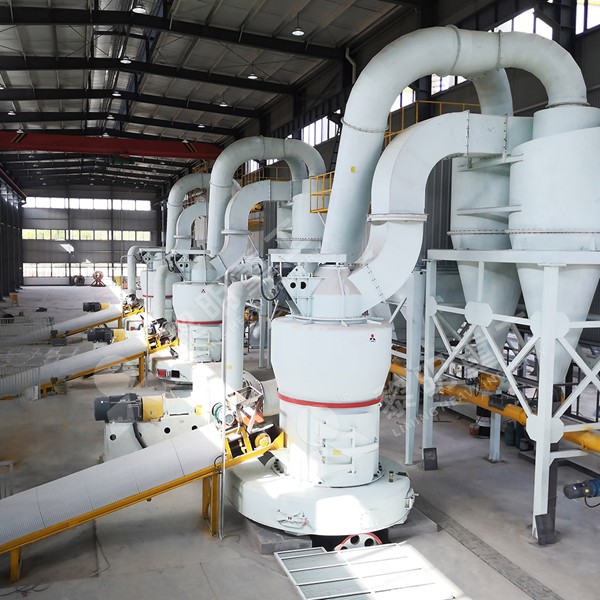
The advantages of choosing Liming Heavy Industry's equipment extend beyond the product specifications. With a foundation dating back to 1987 and a commitment to scientific research and technological innovation, the company designs its mills for durability, ease of maintenance, and operational cost-effectiveness. The modern manufacturing facilities in Zhengzhou, covering a significant area, ensure quality control from raw materials to finished machinery. For a European plant, this translates into a reliable partner capable of providing not just a machine, but a comprehensive grinding solution backed by decades of engineering expertise. The focus on "scientific research tackling key problems" ensures that the equipment incorporates the latest advancements in grinding technology, automation, and environmental protection.
In conclusion, the effective processing of limestone in Europe requires a harmonious blend of performance, efficiency, and environmental stewardship. Liming Heavy Industry's Raymond Mill technology, particularly as embodied in the advanced MTW European Type Trapezium Mill, provides a robust and sophisticated answer to this challenge. Its design philosophy aligns with European industrial values, offering a path to enhanced productivity, superior product quality, and sustainable operation. For plant managers and engineers seeking to optimize their limestone grinding circuits, these mills represent a proven and forward-looking investment.
Frequently Asked Questions (FAQ)
Q1: What is the main difference between a traditional Raymond Mill and the MTW European Type Grinding Mill?
A1: The MTW European Type Grinding Mill is a technological evolution of the traditional Raymond Mill. It features patented improvements such as a curved shovel blade for better feeding, a more efficient internal airflow channel, and an advanced sealing structure. These enhancements result in higher throughput, lower energy consumption per ton, more stable operation, and finer adjustable product fineness.
Q2: How does your grinding mill system ensure compliance with strict European environmental standards?
A2: Our grinding systems are designed as negative pressure, closed-circuit operations. They are integrally equipped with high-efficiency pulse jet bag dust collectors (precipitators) that capture over 99.9% of airborne particles. This ensures that dust emissions are far below regulatory limits, making the system clean and environmentally friendly.
Q3: Can your mills handle very hard or moist limestone?
A3: Our Raymond Mill and MTW European Mill are suitable for processing non-flammable, non-explosive materials with Mohs hardness under 7 and moisture content below 6%. For limestone with higher moisture, an integrated drying function can be considered, or a pre-drying stage may be recommended to ensure optimal grinding efficiency.
Q4: What level of automation do your grinding mill systems offer?
A4: Our systems can be equipped with advanced automatic electric control systems. These can integrate functions for start-up/shutdown sequencing, monitoring of key parameters (pressure, temperature, motor load), and automatic adjustment of feeders to maintain optimal operating conditions, reducing manual intervention and improving consistency.
Q5: For producing ultra-fine limestone powder (below 10μm), which of your mills is most appropriate?
A5: For ultra-fine powder production (e.g., d97 ≤ 5μm or 2500-3250 mesh), our MW Micro Powder Mill is the ideal choice. It incorporates advanced Swedish grinding technology specifically designed for superfine processing, delivering high yields of exceptionally fine and uniform limestone powder for high-value applications.


