Published on: October 26, 2023
The processing of limestone is a cornerstone of industrial development in the Middle East, supporting sectors from construction and cement to environmental desulfurization. For over three decades, LIMING HEAVY INDUSTRY CO., LTD. has been at the forefront of grinding technology, developing robust and efficient milling solutions tailored for such demanding applications. Among our portfolio, the Raymond Mill stands out as a proven, reliable workhorse specifically engineered for processing non-flammable, non-explosive materials like limestone with Mohs hardness under 7 and humidity less than 6%. Its ability to deliver a consistent fineness between 613μm and 44μm makes it an indispensable asset for Middle Eastern producers seeking to enhance productivity, ensure product quality, and meet stringent regional environmental standards. This article delves into the technical merits of the Raymond Mill and explores its pivotal role in the region's limestone value chain.
LIMING HEAVY INDUSTRY's journey, beginning in 1987, is built on a foundation of precision manufacturing, continuous R&D, and a deep understanding of global market needs. With major facilities in Zhengzhou's HI-TECH Industry Development Zone and Shangjie Industry Park, our commitment to "scientific research tackling key problems" has yielded a generation of advanced grinding equipment. The Raymond Mill embodies this philosophy. It is not merely a machine but a system designed for efficiency and durability, capable of handling the abrasive nature of limestone with minimal downtime. In the Middle East, where operational reliability is paramount due to harsh climates and continuous production cycles, the mill's simple yet robust construction offers a significant advantage. Its wide applicability—from producing raw material for cement to creating fine fillers for paints and plastics—aligns perfectly with the region's diversified industrial growth.
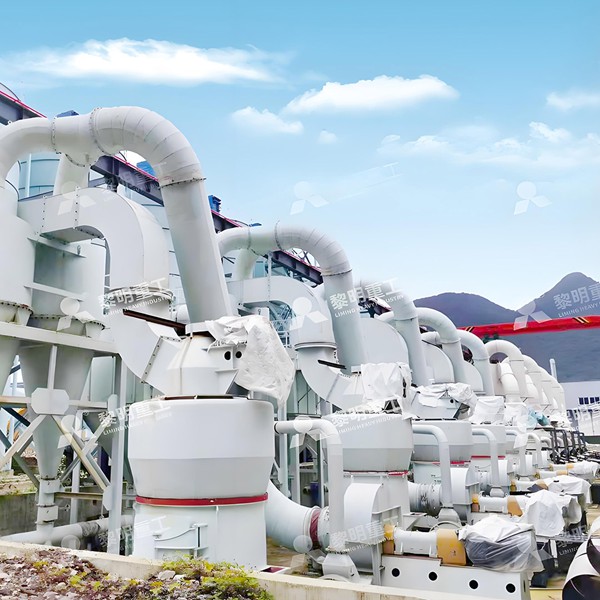
The core appeal of the Raymond Mill for limestone lies in its operational principle and output flexibility. The system grinds materials between the grinding rollers and the ring. Crushed limestone is fed into the grinding chamber where it is pulverized. The powdered material is then carried by the air flow to the classifier. Coarse particles are separated and returned for regrinding, while fine product meeting the fineness requirement is collected via a cyclone collector. This closed-circuit system ensures high powder collection efficiency and minimal dust emission, a critical feature for environmentally conscious operations. With a capacity range of 1.2 to 4.5 tons per hour for feed sizes of 15-25mm, it is ideally scaled for medium-capacity production lines common in the region. The adjustable fineness allows a single mill to produce everything from coarse agricultural lime to finer grades used in manufacturing, providing operational versatility.
In practical application, Middle Eastern plants utilize Raymond Mills for several key processes. A primary application is in the production of ground calcium carbonate (GCC). High-purity limestone is ground to various fineness levels for use as a filler in plastics, paints, adhesives, and sealants—industries experiencing rapid growth in the Gulf Cooperation Council (GCC) nations. Another significant use is in flue gas desulfurization (FGD) at power plants. Here, limestone is ground into a fine absorbent powder to capture sulfur dioxide emissions, helping utilities comply with increasingly strict environmental regulations. Furthermore, the Raymond Mill is essential for preparing raw meal in cement production and manufacturing lime-based construction materials.
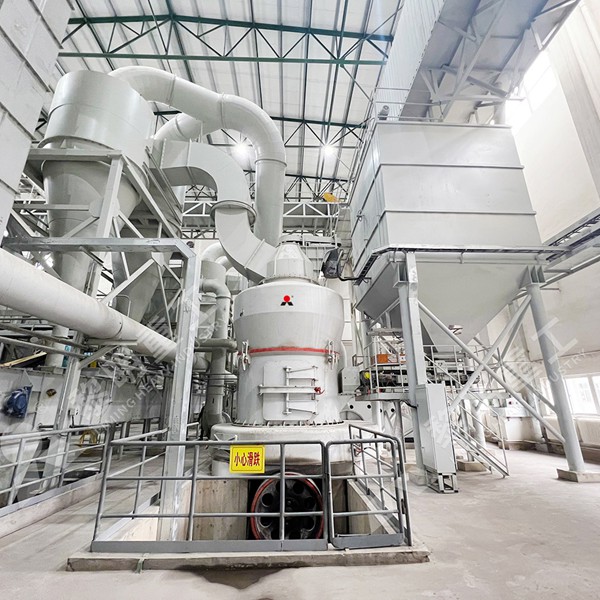
While the classic Raymond Mill is a stalwart solution, LIMING HEAVY INDUSTRY's innovation continues with more advanced models like the MTW European Type Grinding Mill. This mill represents an evolution, incorporating patented technology that enhances stability, productivity, and energy efficiency. For larger-scale limestone powder production projects, such as dedicated FGD absorbent plants or major GCC filler facilities, the MTW series, with capacities up to 55 TPH, offers a compelling upgrade. Its curved air duct and internal efficient classifier contribute to higher output and finer products. However, for many established and new entrants in the market, the simplicity, lower investment cost, and proven track record of the traditional Raymond Mill make it the preferred and most pragmatic choice, perfectly balancing performance with operational economics.
Choosing the right grinding equipment is a strategic decision. LIMING HEAVY INDUSTRY supports its clients in the Middle East not just with superior machinery but with comprehensive service, from initial site and material analysis to installation guidance and after-sales support. Our modern management system and dedication to technological frontiers ensure that our Raymond Mills are built to withstand the test of time and the unique challenges of the Middle Eastern industrial landscape. By investing in a LIMING Raymond Mill, producers secure more than a piece of equipment; they gain a reliable partner in building a more productive and sustainable future from the region's abundant limestone resources.
Frequently Asked Questions (FAQs)
1. What is the maximum feed size for limestone in a Raymond Mill?
The Raymond Mill is designed to handle limestone feed material with a size typically ranging from 15mm to 25mm. Proper pre-crushing to within this range is essential for optimal grinding efficiency and mill longevity.
2. How does the Raymond Mill control the fineness of the final limestone powder?
Fineness is primarily controlled by adjusting the speed of the analytical classifier. Increasing the classifier speed allows only finer particles to pass, resulting in a finer product, while decreasing it yields a coarser powder, all within the range of 613μm to 44μm.
3. Is the Raymond Mill suitable for processing wet or high-moisture limestone?
The standard Raymond Mill is suitable for materials with humidity less than 6%. For limestone with higher moisture content, integrating a drying system before or during the grinding process would be necessary to maintain efficiency and prevent clogging.
4. What are the key maintenance points for a Raymond Mill operating in a dusty environment like the Middle East?
Regular inspection and replacement of grinding rolls and rings due to wear, consistent lubrication of all bearings, and ensuring the integrity of the sealing system and dust collection pipes are critical. The closed-circuit design and pulse dust collector significantly help in managing the dusty operation.
5. Can one Raymond Mill produce multiple grades of limestone powder for different customers?
Yes, one of the advantages of the Raymond Mill is its adjustable fineness. By changing the classifier settings, operators can produce different product grades from the same mill, offering flexibility to supply various market segments, though not simultaneously.


