Published on: October 26, 2023
For industries requiring consistent, high-volume processing of limestone into precise powder specifications, batch-type Raymond grinding mills represent a cornerstone of modern material preparation. As a leading manufacturer with over three decades of expertise in crushing and grinding technology, Liming Heavy Industry Co., Ltd. engineers these robust systems to deliver reliable performance, operational efficiency, and adaptability across diverse industrial applications, from power plant desulfurization to the production of heavy calcium carbonate.
Founded in 1987 and headquartered in the HI-TECH Industry Development Zone of Zhengzhou, Liming Heavy Industry has built its reputation on a foundation of modern scientific management, precision manufacturing, and continuous innovation. Our commitment to "scientific research tackling key problems" and a "production, learning and research" model drives the development of our grinding equipment. We focus on enhancing product competitiveness by aiming at the technological frontier, a philosophy embodied in our Raymond mill series designed for materials like limestone.
The classic Raymond Mill, a workhorse in mineral processing, is exceptionally suited for batch-type limestone grinding. It is engineered to handle non-flammable, non-explosive materials with a Mohs hardness under 7 and humidity less than 6%. For limestone, which typically falls well within these parameters, the mill efficiently produces powders with a fineness range between 44μm and 613μm (approximately 325 mesh to 30 mesh). This versatility allows operators to adjust output to meet specific requirements for construction materials, chemical additives, or environmental scrubbing agents. The system's integrated design facilitates drying, grinding, classification, and conveying in a coordinated process, ensuring batch consistency.
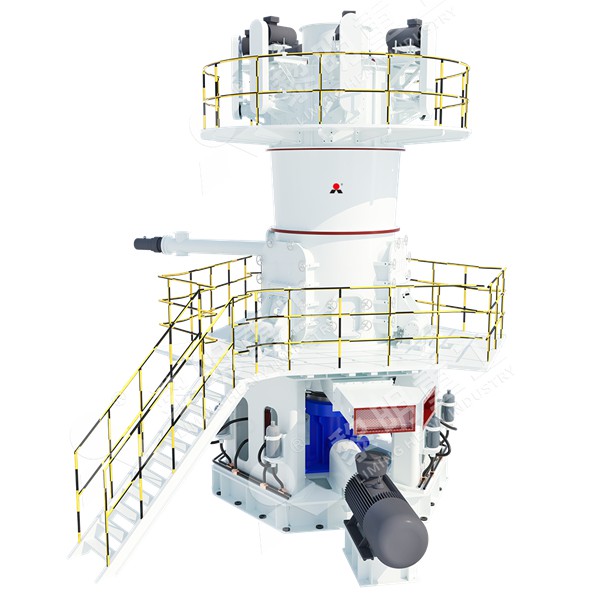
For operations demanding higher capacity or finer control within the Raymond milling principle, Liming Heavy Industry offers advanced iterations like the MTW European Type Grinding Mill. This mill is an evolutionary upgrade, incorporating patented technology that enhances stability, productivity, and energy efficiency. Its working principle is a refined version of the traditional Raymond system: crushed limestone is fed evenly into the grinding chamber where it is ground between rollers and a rotating ring. The ground material is pneumatically conveyed to an integrated classifier; oversize particles are recycled for regrinding, while in-spec powder is collected as finished product. This creates a closed, continuous circuit within the batch framework that minimizes dust emissions and maximizes yield. The system's compatibility with comprehensive auxiliary equipment—from jaw crushers and vibrating feeders to pulse dust collectors—allows for the creation of a fully integrated, environmentally compliant processing line.
The choice of a batch-type Raymond system for limestone is often driven by the need for flexible production schedules and the ability to switch between different material grades with minimal cross-contamination. The mechanical design, featuring durable grinding rolls and a precision classification system, ensures that particle size distribution remains tight and repeatable from one batch to the next. This is critical for downstream processes where powder reactivity or particle packing density is paramount.
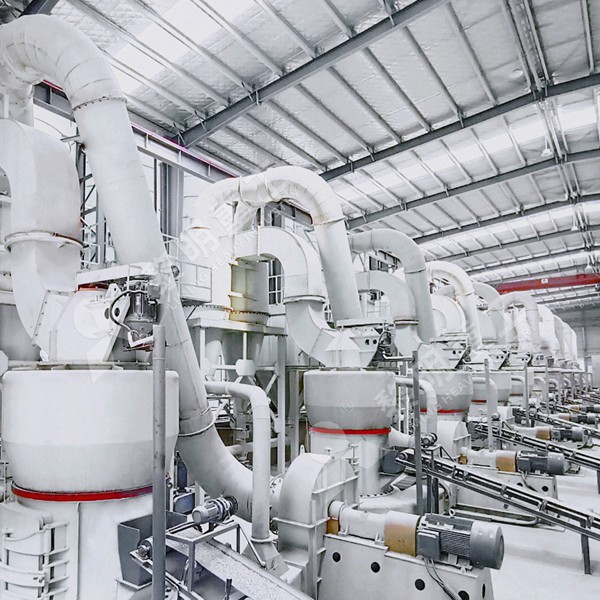
Liming's dedication to R&D ensures that our Raymond grinding solutions are not static. We continuously integrate advancements that promote greener operations, such as improved grinding dynamics for lower energy consumption per ton and highly efficient pulse-jet dust collection systems that ensure the workplace and environment are protected. Our mills are designed for ease of maintenance and long service life, key factors in reducing total cost of ownership for our clients in the mining, construction, and chemical industries worldwide.
In summary, selecting the appropriate batch-type limestone grinding equipment requires careful consideration of feed size, desired fineness, capacity, and overall system integration. Liming Heavy Industry provides proven Raymond mill technology, backed by extensive manufacturing experience and a customer-centric approach to engineering, to deliver solutions that grind, classify, and convey with precision and reliability.
Frequently Asked Questions (FAQ)
- What is the typical moisture content limit for limestone processed in a Raymond mill?
Our Raymond mills are designed to handle materials with humidity less than 6%. For limestone with higher moisture, integrated drying functions or pre-drying may be required for optimal grinding efficiency. - Can the fineness of the ground limestone be adjusted during operation?
Yes, the fineness is easily adjustable by modifying the speed of the classifier or the airflow within the system, allowing operators to produce different powder specifications from 44μm to 613μm without stopping the mill. - What auxiliary equipment is essential for a complete Raymond grinding line?
A typical line includes a jaw crusher for primary size reduction, a vibrating feeder for consistent material supply, the Raymond mill itself, a classifier, a cyclone collector, a pulse dust collector, piping, and an electrical control cabinet for integrated operation. - How does the MTW European Type Mill differ from the traditional Raymond mill for limestone?
The MTW mill features a curved shovel blade for better feed handling, a more efficient internal volute, and often incorporates advanced sealing and lubricating systems. These enhancements generally lead to higher throughput, lower energy consumption, and finer possible grinding compared to the basic Raymond design. - Is the grinding process a closed system?
Yes, the grinding and classification cycle operates as a closed, negative-pressure pneumatic system. This design significantly reduces dust leakage, improves working conditions, and ensures high collection efficiency of the final product.


