Published on: October 26, 2023
In the demanding world of mineral processing, achieving stable, high-efficiency, and continuous operation is the ultimate benchmark for grinding equipment. For limestone processing—a cornerstone material in construction, power plant desulfurization, and industrial manufacturing—this requirement is paramount. LIMING HEAVY INDUSTRY CO., LTD., with over three decades of engineering excellence in crushing and grinding solutions, has refined its Raymond Mill technology specifically to meet this challenge. Our advanced Raymond Mill systems are engineered for relentless, continuous-duty cycles, delivering consistent fineness between 44μm and 613μm while maintaining operational simplicity, robust construction, and minimal downtime. This article delves into the design philosophy, technological integrations, and practical applications that make our limestone Raymond Mill a model of continuous industrial productivity.
Founded in 1987, LIMING HEAVY INDUSTRY has grown into a leader in domestic and global machinery manufacturing by adhering to a core principle: integrating pioneering research with precision manufacturing. Our modern facilities, spanning over 147,000 square meters in Zhengzhou's HI-TECH Industry Development Zone and Shangjie Industry Park, are dedicated to the development of medium and large-scale processing equipment. We persist in a strategy of scientific R&D aimed squarely at enhancing product competitiveness, relying on a mature research team to innovate at the industry's technological frontier. This commitment is embodied in our Raymond Mill, a workhorse of mineral grinding.
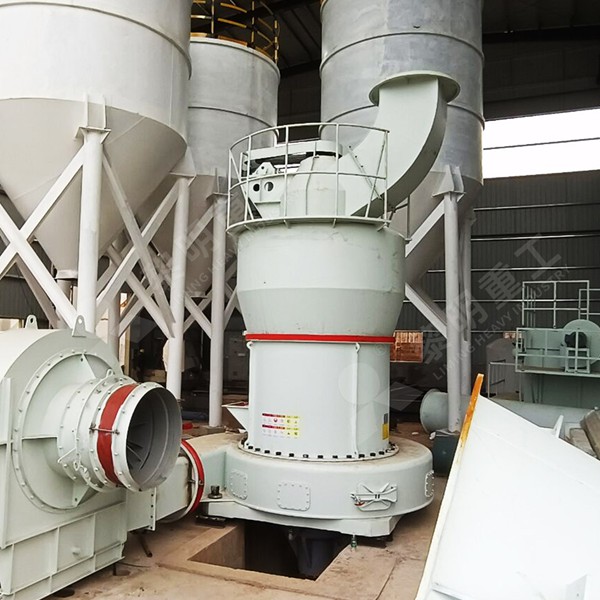
The classic Raymond Mill design, known for its reliability, has been systematically enhanced by Liming's engineers for continuous limestone grinding. The mill's core grinding mechanism—where rollers rotate against a stationary ring to crush and grind the feed material—is built with wear-resistant alloys and precision-balanced components to withstand 24/7 operation. For limestone, a material with moderate hardness (typically under 7 on the Mohs scale) and low abrasiveness, this design ensures a remarkably long service life for grinding parts, a critical factor for continuous runs. The system's aerodynamic design is equally crucial; ground particles are carried upward by the air flow from an integrated blower to a high-efficiency separator. Fine particles meeting the fineness specification pass through, while coarse particles fall back for regrinding in a continuous, closed-loop circuit that maximizes efficiency and product uniformity.
True continuous operation extends far beyond the grinding mill itself; it depends on a perfectly synchronized and automated system. A Liming continuous limestone grinding line is a turnkey solution. It begins with a jaw crusher that reduces large limestone lumps to the optimal feed size (15-25mm). A variable-frequency vibrating feeder then ensures a perfectly steady and controlled flow of material into the mill, preventing overload or starvation—the two main disruptors of continuous process stability. The heart of the system, the Raymond Mill, works in concert with the separator, blower, and a network of piping. Modern electric control cabinets, often featuring PLC-based automation, allow for centralized monitoring and control of the entire process, including start-up sequencing, operational parameter adjustment (like feed rate and classifier speed), and safety interlocking.

Environmental responsibility is a non-negotiable aspect of modern continuous operations. Our systems are equipped with high-efficiency pulse-jet baghouse dust collectors. This ensures that the internal air circuit remains balanced and that any potential fugitive dust is captured, guaranteeing that the workshop environment remains clean and that emissions comply with stringent international environmental standards. This closed-system approach not only protects the environment but also recovers valuable product, contributing directly to higher yield and operational economy.
The applications for continuously operating limestone Raymond Mills are vast and critical. In power generation, it is indispensable for producing the fine limestone powder used in flue gas desulfurization (FGD) scrubbers, helping plants operate cleanly and continuously to meet emission regulations. In the construction materials industry, it provides a steady supply of finely ground calcium carbonate for paints, plastics, sealants, and asphalt. The mill's ability to handle materials with moisture content below 6% without the need for an external dryer (in many cases) simplifies the process line and reduces energy consumption, further supporting uninterrupted production.
Ultimately, the choice of a Liming Raymond Mill for continuous limestone processing is an investment in predictable, long-term performance. It represents the culmination of 30 years of listening to industry needs, tackling technical challenges, and refining a proven technology. By focusing on system integration, durability, intelligent control, and environmental stewardship, we deliver not just a machine, but a reliable production partner engineered for the marathon, not just the sprint.
Frequently Asked Questions (FAQ)
- What is the key to ensuring truly continuous, uninterrupted operation in a limestone Raymond Mill system?
The key lies in system integration and control. A well-designed feed system with precise metering (like a variable-frequency feeder) prevents mill overload/under-feed. Robust construction of grinding components, a balanced aerodynamic design, and an automated control system that monitors critical parameters are all essential for maintaining stable 24/7 operation. - How does the system handle variations in the moisture content of the raw limestone?
The standard Raymond Mill is suitable for materials with humidity less than 6%. For limestone with slightly higher inherent moisture, the friction heat generated during grinding and the flow of hot air from the system blower can often provide sufficient in-mill drying. For very wet feedstock, integrated drying solutions can be considered in the system design phase. - What fineness range can be consistently achieved for limestone powder during long runs?
The Liming Raymond Mill is designed to produce a consistent output fineness adjustable between 44μm (325 mesh) and 613μm (30 mesh). The integrated high-efficiency separator allows for precise control, and its stable performance ensures the product fineness remains within specification throughout the continuous operation cycle. - Is the grinding process environmentally friendly, especially regarding dust emission?
Yes. The system operates as a negative-pressure, closed-loop air circuit. Any potential dust is effectively captured by a high-efficiency pulse-jet baghouse dust collector, ensuring workshop cleanliness and full compliance with environmental protection standards. There is no external emission of process dust. - What are the primary maintenance focuses to sustain continuous operation over the long term?
Regular inspection and scheduled replacement of wear parts like grinding rollers and rings are paramount. Additionally, routine checks on the lubrication system, classifier blades, fan blades, and the dust collector's filter bags are essential. A well-executed preventive maintenance plan, based on operational hours, is the best strategy to prevent unplanned downtime.


