Published: October 26, 2023
The closed-circuit limestone grinding process represents a cornerstone of modern mineral processing, combining efficiency, precision, and environmental responsibility. This system, where ground material is continuously classified, with oversize particles returned for further milling, is essential for producing consistent, high-quality limestone powders used in industries ranging from power plant desulfurization to construction materials. For over three decades, Liming Heavy Industry Co., Ltd. has been at the forefront of designing and manufacturing the advanced grinding equipment that makes these optimized closed-loop systems possible. Our expertise spans from large-scale vertical roller mills to precision micro-powder grinders, each engineered to enhance productivity, reduce energy consumption, and ensure operational stability within a fully enclosed, dust-controlled environment.
The heart of any efficient closed-circuit grinding line is the mill itself. Liming Heavy Industry offers a portfolio of technologies tailored to different fineness requirements and production scales. For large-capacity projects requiring coarse to medium-fine powders, such as limestone for flue gas desulfurization (FGD) in power plants, the LM Vertical Roller Mill is a premier choice. Its integrated design combines drying, grinding, powder selection, and conveying in a single unit. Material is ground between the rollers and the grinding table, with hot air simultaneously drying the feed. The internal classifier immediately separates fine product, while coarse particles fall back for regrinding, creating an intrinsic closed-circuit operation within the mill housing. This design significantly lowers specific energy consumption compared to traditional ball mills and is a testament to our commitment to "technological progress and technological improvement."
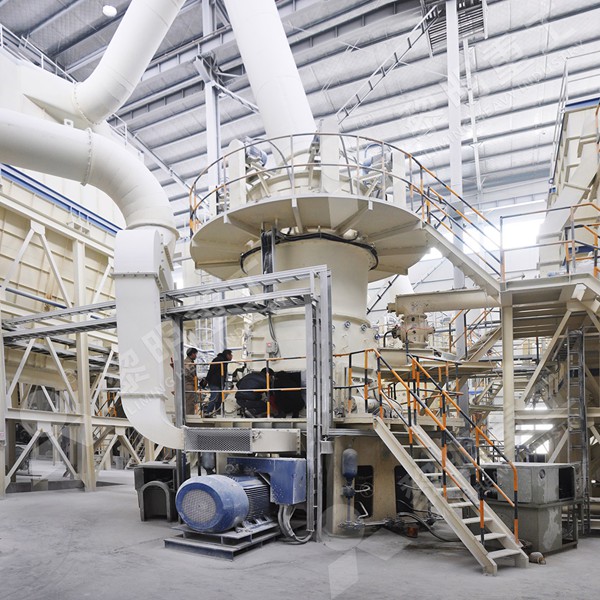
When the application demands finer powders in the 44-613 micron range, the Raymond Mill (MTW European Type Grinding Mill) excels. As an advanced upgrade of traditional pendulum mills, the MTW series embodies our philosophy of "scientific research tackling key problems." Its system configuration is a classic example of an external closed circuit. The process begins with a jaw crusher reducing limestone lumps, which are then fed via a vibrating feeder into the grinding chamber. Here, rollers grind materials against a stationary ring. The ground powder is pneumatically conveyed to a high-efficiency separator. Fine particles that meet the specification pass through and are collected by a pulse dust collector as final product. Coarse particles, rejected by the separator, are returned to the mill inlet for further grinding. The air blower recirculates the air, creating a negative-pressure, dust-free loop that "complies with national environmental protection standards." This system's stability and high productivity make it ideal for heavy calcium carbonate processing and non-metallic mineral powder making.
For ultra-fine limestone powders extending down to 5 microns (3250 mesh), the MW Micro Powder Mill is the technological solution. Incorporating advanced Swedish grinding technology, this mill operates on a similar closed-circuit principle but is engineered for superfine processing. Material is fed to the center of a rotating turnplate, flung under centrifugal force to the grinding raceway where multiple rollers pulverize it. A dynamic classifier integrated at the top ensures only particles of the target fineness escape the grinding zone. The entire milling and classification process occurs in a sealed environment, with a pulse precipitator ensuring zero dust emission. This "greener and environmentally friendly" design is crucial for high-value-added limestone applications in plastics, paints, and coatings.
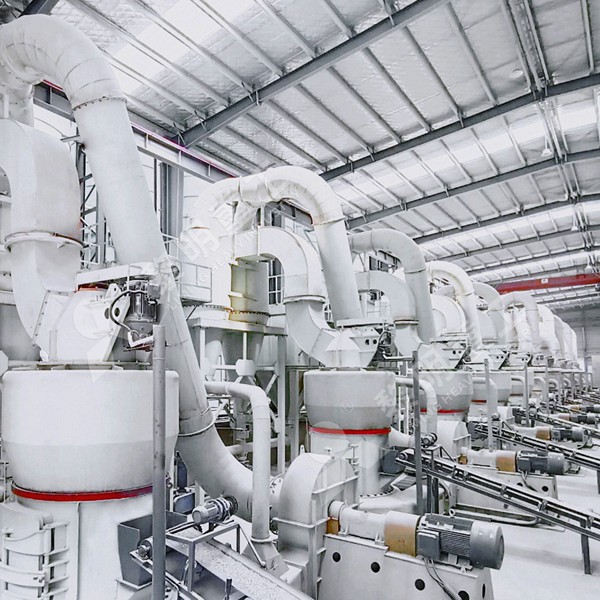
While the Ball Mill remains a reliable workhorse for various materials, its application in modern, efficient limestone closed circuits often involves an external classifier system. The ball mill's tumbling action grinds the limestone fed from the crusher. The discharge is then pumped to a slurry or air classifier in a dry system. The classifier returns the oversized grit to the mill feed, closing the loop. This configuration allows for flexible control over product fineness. Liming Heavy Industry's ball mills, with their robust construction and precise transmission systems, are key components in such circuits, particularly where versatility and proven reliability are paramount.
The success of a closed-circuit grinding process hinges on more than just the mill; it depends on the perfect synergy of all components—the crusher, feeder, classifier, blower, and dust collector—designed to work as one coherent system. Liming Heavy Industry, with its mature scientific research team and manufacturing prowess across two major industrial parks in Zhengzhou, provides not just equipment but integrated solutions. We aim "at the technological frontier of the industry" to deliver systems that maximize yield, minimize energy waste, and uphold the highest environmental standards. By choosing the appropriate grinding technology—be it the high-capacity LM Vertical Mill, the versatile MTW European Mill, or the ultra-fine MW Micro Powder Mill—operators can optimize their limestone grinding process for unparalleled efficiency and product quality in a truly closed, sustainable loop.
Frequently Asked Questions (FAQs)
- What is the primary advantage of a closed-circuit grinding system over an open-circuit one?
Closed-circuit systems continuously classify the ground material, returning oversize particles for further milling. This leads to a more uniform product size distribution, prevents over-grinding of fines (which wastes energy), and significantly increases overall mill throughput and efficiency compared to open-circuit systems where material passes through the mill only once. - Which Liming mill is most suitable for producing coarse limestone powder for power plant desulfurization?
The LM Vertical Roller Mill is highly recommended for this application. Its large capacity (up to 400 T/H), integrated drying capability (useful if the limestone has moisture), and efficient grinding mechanism make it ideal for producing the tonnages of coarse to medium-fine limestone powder required for flue gas desulfurization (FGD) processes. - How does the closed circuit in an MTW European Type Grinding Mill control product fineness?
Fineness is precisely controlled by the speed of the system's external separator or classifier. Increasing the classifier's rotational speed allows only finer particles to pass through to the product collection. Coarser particles are rejected and funneled back to the mill inlet for regrinding. This adjustable mechanism allows operators to dial in a specific fineness between 44μm and 613μm without stopping production. - Can the MW Micro Powder Mill handle the grinding of very hard limestone?
While the MW Mill excels at superfine processing, its suitability depends on the limestone's Mohs hardness. It is designed for materials of medium hardness and below. For very hard limestone varieties, a primary crushing stage to a very fine feed size and a careful assessment of wear parts is necessary. Consulting with our engineering team is advised for such specific applications. - Is dust control a challenge in a closed-circuit limestone grinding process?
Properly designed closed-circuit systems are inherently better for dust control. All our grinding systems, especially the LM, MTW, and MW mills, operate under negative pressure with air recirculation. They are equipped with high-efficiency pulse jet bag dust collectors that capture over 99.9% of particulate matter, ensuring a clean plant environment and full compliance with environmental regulations.


