Published: October 26, 2023
For industries requiring efficient and reliable fine grinding of dolomite and similar non-metallic minerals, LIMING HEAVY INDUSTRY's Raymond Mill stands as a proven, high-performance solution. This article explores the technical capabilities, operational principles, and application-specific advantages of our Raymond Mill technology for processing materials like dolomite, calcite, limestone, and gypsum. We will delve into its design philosophy, which balances productivity with energy efficiency, and examine how its robust construction ensures consistent output quality for diverse industrial needs, from construction materials to chemical production.
Since its founding in 1987, LIMING HEAVY INDUSTRY has dedicated itself to the research, manufacturing, and sales of large and medium-sized crushing and grinding equipment. Our modern facilities, spanning over 80,000 square meters in Zhengzhou's HI-TECH Industry Development Zone and an additional 67,000 square meters in Shangjie Industry Park, are the foundation of our precision manufacturing. For over three decades, a commitment to scientific management, technological innovation, and product competitiveness has positioned us as a leader in the global machinery manufacturing sector. Our Raymond Mill is a direct product of this philosophy, developed by a mature scientific research team aimed at the industry's technological frontier.
The Raymond Mill from LIMING HEAVY INDUSTRY is engineered for the grinding process of non-flammable and non-explosive materials with a Mohs hardness under 7 and humidity less than 6%. This makes it exceptionally suitable for dolomite and a vast range of similar minerals. The mill achieves an adjustable fineness between 613μm and 44μm, allowing it to meet precise specifications for different downstream applications. Its core strength lies in processing materials for calcium carbonate production, gypsum processing, power plant desulfurization, non-metallic ore pulverizing, and pulverized coal preparation.
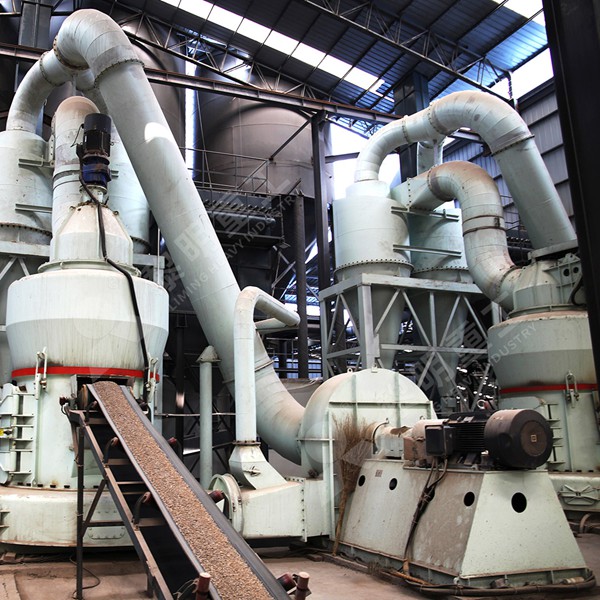
Operational reliability is a cornerstone of the design. The system's working principle ensures a stable and continuous grinding process. Materials are fed into the grinding chamber where they are ground between the rollers and the ring. The ground powder is then carried by the airflow to the classifier. Coarse particles that fail to pass the classifier are returned for regrinding, while fine particles meeting the size requirement are collected as the final product. This closed-circuit system, often integrated with a pulse dust collector, promotes high efficiency, minimizes loss, and ensures the production environment complies with stringent environmental protection standards.
When compared to other grinding solutions in our portfolio, such as the LM Vertical Roller Mill for higher capacity needs (10-400 T/H) or the MW Micro Powder Mill for ultra-fine processing (up to d97 ≤ 5μm), the Raymond Mill occupies a crucial niche. With a capacity range of 1.2 to 4.5 T/H and an input size of 15-25mm, it is the ideal workhorse for dedicated, medium-scale production lines focusing on fine powder in the 44-613 micron range. Its mechanical simplicity, ease of maintenance, and lower initial investment compared to more complex systems make it a preferred choice for many operators.
Our commitment to progress is embodied in the MTW European Type Grinding Mill, an advanced evolution of the traditional Raymond mill. Incorporating patented technology, it offers greater productivity, enhanced stability, and improved energy efficiency for large-scale non-metallic mineral powder making. However, the classic Raymond Mill remains indispensable for its proven track record, operational simplicity, and cost-effectiveness in specific project contexts. Choosing the right equipment depends on a thorough analysis of capacity requirements, desired fineness, and overall plant design.
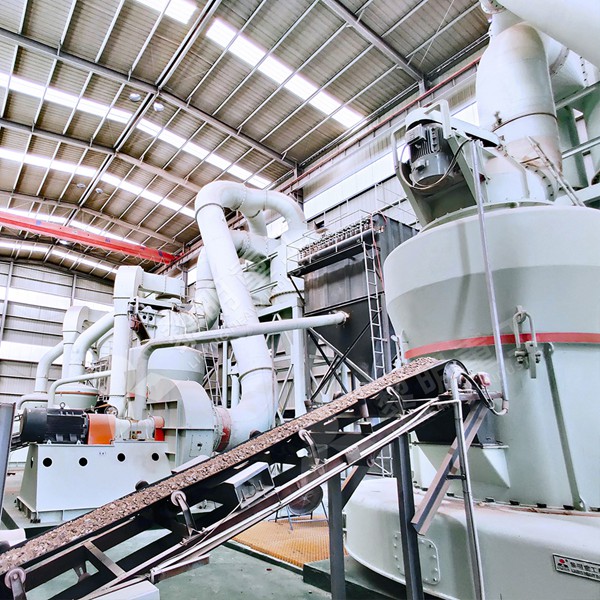
The versatility of our Raymond Mill extends beyond dolomite. It is equally effective for processing baryte, calcite, potash feldspar, talc, marble, limestone, ceramics, and glass. The final product's consistent granularity is critical for applications in paints, rubber, plastics, paper, and construction materials. By integrating drying, grinding, powder selection, and conveying into a cohesive unit, the mill simplifies plant layout and reduces operational complexity. At LIMING HEAVY INDUSTRY, we support each mill with comprehensive technical services, from initial design consultation to installation guidance and after-sales support, ensuring our clients achieve optimal performance throughout the equipment's lifecycle.
In conclusion, the Raymond Mill from LIMING HEAVY INDUSTRY represents a synthesis of robust engineering, practical design, and decades of grinding expertise. For businesses seeking a dependable solution for fine grinding of dolomite and similar mid-hardness materials, it offers a balance of performance, quality, and operational economy. As we continue to innovate and refine our technologies, the core principles of reliability and customer-centric development remain unchanged, powering industries worldwide with efficient grinding solutions.
Frequently Asked Questions (FAQ)
- What is the maximum feed size for the Raymond Mill when processing dolomite?
The Raymond Mill is designed to handle an input size of up to 15-25mm for optimal grinding efficiency and to protect the grinding rollers and ring. - Can the Raymond Mill handle materials with moisture content?
Yes, but it is recommended for materials with humidity less than 6%. For higher moisture content, integrating a dryer before the mill or considering our LM Vertical Roller Mill with integrated drying may be necessary. - How is the fineness of the final powder controlled?
The fineness is primarily adjusted by modifying the speed of the analytical classifier. This allows operators to precisely control the particle size distribution within the range of 44μm to 613μm. - What maintenance is typically required for the grinding rollers and ring?
These are key wear parts. Regular inspection for wear is recommended. The design allows for replacement of the grinding rollers and ring, which are manufactured from high-wear-resistant materials to extend service life. - Is the system environmentally friendly?
Absolutely. The grinding process operates in a negative pressure, closed-circuit system. When equipped with the optional pulse dust collector, dust emissions are effectively controlled, ensuring the plant meets modern environmental standards.


