Published: October 26, 2023
For enterprises seeking a robust and efficient solution for limestone processing, a complete production line centered around a high-performance Raymond mill represents the pinnacle of modern industrial grinding technology. This integrated system, far surpassing the capabilities of a standalone mill, transforms raw limestone into precisely graded powders for applications ranging from construction materials to industrial fillers and environmental desulfurization. By combining advanced milling machinery with synchronized feeding, crushing, classifying, and dust collection components, such a production line ensures maximum throughput, consistent product quality, energy efficiency, and full compliance with environmental standards. This article explores the architecture, core technology, and operational advantages of a complete limestone processing line, highlighting the engineering expertise behind its seamless integration.
The cornerstone of this production line is the Raymond mill, a technology refined over decades for mineral grinding. Modern iterations, such as those developed by LIMING HEAVY INDUSTRY, are engineered for processing non-flammable, non-explosive materials like limestone with a Mohs hardness under 7 and humidity below 6%. The mill's working principle involves grinding rollers applying centrifugal force to materials on a rotating grinding ring, with a built-in classifier ensuring that only particles meeting the target fineness (typically adjustable between 44μm and 613μm) are carried away by the air stream as finished product. This mechanism guarantees precise control over particle size distribution, a critical factor for product performance in downstream applications.
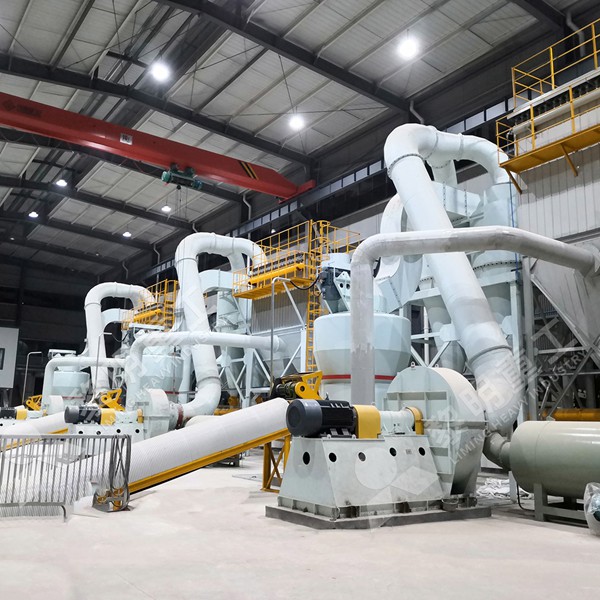
However, the mill's efficiency is exponentially increased when it is part of a meticulously designed system. A typical complete production line begins with primary crushing. Large limestone blocks are reduced to a manageable size (often below 30mm) by a jaw crusher. This pre-crushing stage is vital for protecting the mill from oversized material and optimizing grinding energy consumption. The crushed material is then conveyed to a storage hopper, from which a variable-frequency vibrating feeder ensures a steady, controllable flow into the Raymond mill. This consistent feeding is key to maintaining stable grinding pressure and preventing mill overload or underload.
Within the closed-circuit grinding system, the ground limestone powder is pneumatically transported to a high-efficiency separator or classifier. Here, coarse particles are rejected and returned to the grinding chamber for further processing, while the qualified fine powder proceeds. The heart of the system's environmental and product recovery performance is the pulse-jet baghouse dust collector. It captures over 99.9% of the airborne powder, ensuring a clean workshop atmosphere, recovering valuable product, and meeting stringent emission regulations. The collected finished powder is then transported via screw conveyors or airslides to storage silos, ready for packing or bulk loading.
The benefits of investing in such a complete line are multifaceted. First, it delivers superior operational stability and automation. Integrated electrical control cabinets allow for centralized monitoring and control of the entire process, from crusher startup to final product collection, minimizing manual intervention and human error. Second, it achieves remarkable energy savings. Each component, from the feeder to the mill's drive system and the fan, can be optimized for the specific material and output, reducing overall power consumption per ton of product. Third, product quality is consistently high and repeatable, thanks to the closed-loop grinding and precise classification process.
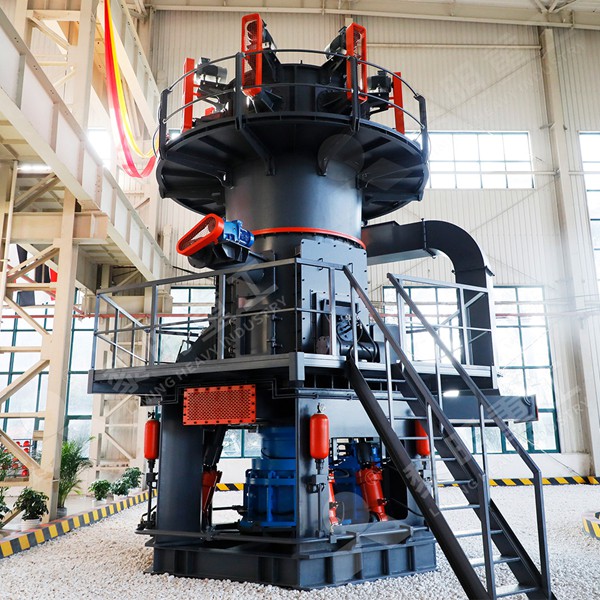
For projects requiring even finer powders or specialized applications, the core Raymond mill can be substituted or complemented with other advanced mills from the same technology ecosystem. For instance, the MTW European Type Grinding Mill offers an upgraded design with patented technology for larger-scale production of non-metallic minerals, featuring higher productivity and further energy savings. For superfine limestone powder (d97 ≤ 5μm), the MW Micro Powder Mill, incorporating advanced grinding technology, is the ideal choice. The principle of a complete, synchronized production line remains the same, demonstrating the modularity and scalability of the approach.
In conclusion, a complete production line with a limestone Raymond mill is not merely a collection of equipment but a synergistic engineering solution. It embodies the philosophy of modern industrial design: integrating precision machinery, intelligent control, and environmental stewardship to create a reliable, efficient, and profitable operation. For companies like LIMING HEAVY INDUSTRY, with over three decades of experience in manufacturing crushing and grinding equipment, providing such turnkey solutions represents the culmination of their commitment to scientific research, technological innovation, and empowering their clients' success in a competitive global market.
Frequently Asked Questions (FAQs)
1. What is the main advantage of a complete production line over a standalone Raymond mill?
A complete line integrates crushing, feeding, grinding, classifying, and dust collection into a single, automated system. This ensures optimal feed size for the mill, stable operation, superior energy efficiency, consistent product quality, and full environmental compliance, which a standalone mill cannot achieve independently.
2. What fineness range can be achieved for limestone powder using this system?
A standard Raymond mill-based system can typically produce limestone powder with a fineness ranging from approximately 44 microns (325 mesh) up to 613 microns. For finer requirements, alternative mills like the MW Micro Powder Mill can achieve superfine powders down to 5 microns (2500 mesh).
3. How does the system handle moisture in the raw limestone?
The Raymond mill itself can integrate a drying function when equipped with a hot air source. In a complete line, if raw material moisture is consistently high, additional drying equipment (like a rotary dryer) can be incorporated before the grinding stage to ensure the material humidity is below the mill's specified limit (usually 6%).
4. Is the production line environmentally friendly?
Yes. The system is designed as a negative-pressure closed circuit. The pulse-jet baghouse dust collector captures virtually all airborne particles, ensuring near-zero visible emissions. This makes the production line compliant with strict national and international environmental protection standards.
5. Can the production line be customized for different output capacities?
Absolutely. The complete line is modular. The capacity is determined by the selection of the core mill model (e.g., Raymond Mill, MTW Mill) and the matching capacity of auxiliary equipment like the crusher, feeder, and collector. Lines can be engineered to meet specific capacity requirements, from small pilot-scale projects to large-scale industrial production.


