Published on: October 26, 2023
For industries requiring fine, consistent soft limestone powder, selecting the right milling technology is paramount to operational efficiency, product quality, and cost-effectiveness. Liming Heavy Industry Co., Ltd., with over three decades of expertise in manufacturing crushing and grinding equipment, offers advanced Raymond Mill solutions specifically engineered to excel in this demanding application. Our mills are designed to process soft limestone with Mohs hardness under 7 and humidity below 6%, transforming it into high-quality powder ranging from 613μm to 44μm fineness. By integrating robust construction, intelligent control systems, and a commitment to sustainable innovation, our Raymond Mill provides a reliable, high-performance backbone for non-metallic mineral processing, cement production, power plant desulfurization, and numerous other industrial sectors.
At the heart of our production philosophy is a dedication to scientific research and technological advancement. Founded in 1987 and headquartered in the HI-TECH Industry Development Zone of Zhengzhou, Liming Heavy Industry has grown into a leader in domestic and overseas machinery manufacturing by persistently focusing on product competitiveness. Our mature R&D team continuously targets the industry's technological frontier, ensuring that our grinding solutions, including the Raymond Mill, incorporate patented innovations for stability, productivity, and environmental compliance. This commitment is embodied in our modern facilities spanning over 80,000 m², where precision manufacturing and rigorous testing guarantee equipment that meets the highest global standards.
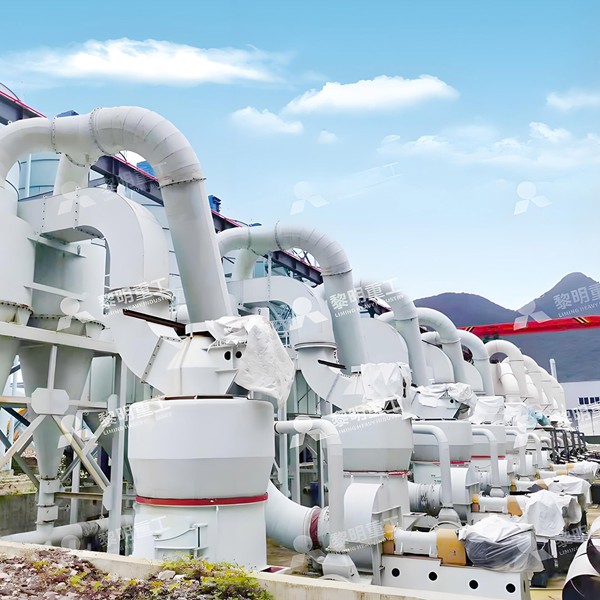
The classic Raymond Mill remains a cornerstone for soft limestone powder production due to its proven efficiency and adaptability. The mill operates on a principle where materials are ground between rollers and a grinding ring. The ground powder is carried by the air flow to the classifier, where oversized particles are separated and returned for regrinding, while the qualified fine powder is collected as the final product. This closed-circuit system ensures precise particle size control. For soft limestone, which is relatively easy to grind but requires careful handling to prevent over-grinding or moisture issues, the Raymond Mill's integrated drying and grinding capability is a significant advantage. The system can handle input sizes of 15-25mm and deliver a consistent output, making it ideal for producing powders for fillers, coatings, and construction materials.
To address more diverse and demanding production needs, Liming Heavy Industry has evolved the traditional Raymond Mill design. Our MTW European Type Grinding Mill represents a significant upgrade, featuring a curved shovel blade that increases throughput and an internally lubricated gearbox that enhances reliability. This mill is particularly effective for large-scale soft limestone powder making, offering higher capacity and improved energy efficiency. Its commitment to environmental protection is evident in its standard configuration with a high-efficiency pulse dust collector, ensuring that production meets stringent environmental standards.
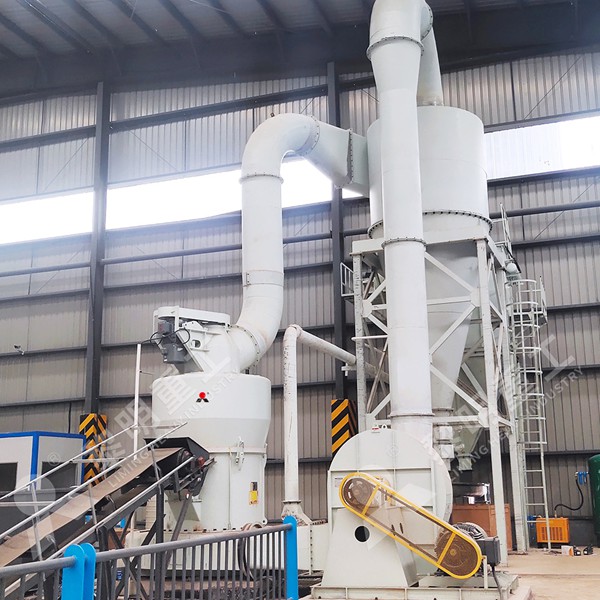
Choosing the optimal mill configuration depends on the specific project requirements for capacity, final fineness, and system integration. For instance, when the goal is to produce ultra-fine limestone powder (d97 ≤ 5μm) for high-value applications, our MW Micro Powder Mill, which incorporates advanced Swedish grinding technology, becomes the tool of choice. It excels in superfine processing with adjustable fineness between 325 to 3250 mesh. Conversely, for operations where limestone is part of a broader mix of materials or requires wet grinding processes, our robust Ball Mill offers unparalleled versatility. Ultimately, Liming Heavy Industry provides comprehensive support—from initial consultation and system design to installation and after-sales service—ensuring that every soft limestone powder production line achieves its maximum potential for productivity and profitability.
Frequently Asked Questions (FAQs)
1. What is the typical moisture content limit for soft limestone processed in a Liming Raymond Mill?
Our Raymond Mill is designed to efficiently handle materials with a moisture content below 6%. The integrated drying function within the grinding chamber allows it to process slightly damp soft limestone without compromising grinding efficiency or final powder quality.
2. Can your Raymond Mill system be automated for consistent product quality?
Yes. Our advanced Raymond Mill and MTW European Mill systems are equipped with automatic electric control systems. These systems allow for precise control over grinding parameters, feeder speed, and classifier settings, ensuring consistent fineness and stable, unmanned operation.
3. How does your equipment ensure environmental compliance during limestone powder production?
All our grinding mill systems, including the Raymond Mill, are designed with closed-circuit negative pressure operation and are typically equipped with high-efficiency pulse jet bag dust collectors. This configuration effectively contains dust, ensuring emissions meet national and international environmental protection standards.
4. What is the main difference between the traditional Raymond Mill and the MTW European Type Grinding Mill for limestone?
The MTW European Type Grinding Mill is a technological evolution featuring a curved shovel blade for better feeding, a more efficient gearbox, and an optimized grinding curve. It generally offers higher capacity, lower energy consumption per ton, and enhanced overall stability compared to the traditional Raymond Mill design, making it suitable for larger-scale production.
5. Do you provide complete production line solutions, or just the grinding mill?
Liming Heavy Industry provides turnkey solutions. We can supply and integrate all necessary components, including jaw crushers for primary size reduction, vibrating feeders, the main grinding mill (Raymond, MTW, MW, or Ball Mill), powder collectors, dust removal systems, and electrical control cabinets, ensuring a seamless and efficient production line.


