Published: October 26, 2023
In the demanding world of mineral processing, achieving consistent, high-quality limestone powder is paramount for industries ranging from construction to environmental desulfurization. For over three decades, LIMING HEAVY INDUSTRY CO., LTD. has been at the forefront of grinding technology, developing robust and efficient solutions tailored for dry-process limestone applications. Our Raymond Mill and its advanced derivatives, such as the MTW European Type Grinding Mill, represent the culmination of this expertise—engineered to deliver precise particle size distribution, exceptional energy efficiency, and reliable operation in continuous industrial settings. This article delves into the technical specifications, working principles, and strategic advantages of selecting our dry-process limestone grinding systems for your production needs.
Since its founding in 1987, LIMING HEAVY INDUSTRY has evolved from a domestic machinery manufacturer into a global leader, driven by a corporate philosophy centered on scientific research, precision manufacturing, and technological innovation. With sprawling facilities in Zhengzhou's HI-TECH Industry Development Zone and Shangjie Industry Park, our integrated approach—combining R&D, manufacturing, and sales—ensures complete control over product quality and performance. Our commitment to "scientific research tackling key problems" is vividly embodied in our grinding equipment portfolio, designed to tackle the specific challenges of processing non-metallic minerals like limestone.
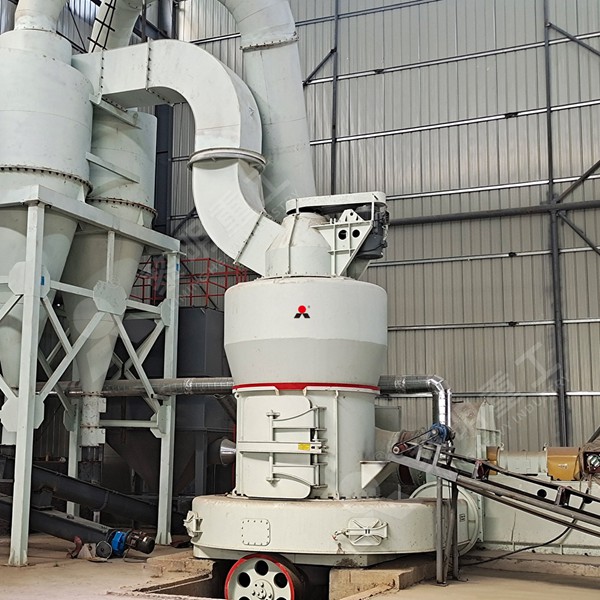
The cornerstone of our dry limestone grinding solutions is the classic Raymond Mill. This workhorse is engineered for materials with a Mohs hardness under 7 and humidity less than 6%, making it ideally suited for dry limestone. It operates on a principle where rollers grind the limestone against a stationary ring. The ground material is then carried by an air stream to a classifier; oversize particles are returned for regrinding, while the correctly sized powder is collected as the final product. With an output fineness adjustable between 44μm and 613μm (approximately 325 mesh to 30 mesh), it offers remarkable flexibility for applications such as cement raw meal preparation, soil stabilization, and filler material production. Its capacity range of 1.2 to 4.5 tons per hour makes it a perfect fit for medium-scale operations requiring consistent quality.
For larger-scale projects or applications demanding higher efficiency and finer control, our MTW European Type Trapezium Mill stands as a significant technological evolution. As an upgrade over traditional Raymond and pendulum mill designs, it incorporates patented technology that enhances stability, productivity, and energy conservation. This system is particularly acclaimed for large-scale non-metallic mineral powder production, including high-volume limestone processing for power plant flue gas desulfurization (FGD). The MTW mill's system is comprehensive, integrating a jaw crusher for primary size reduction, a variable-frequency feeder for precise material input, the grinding mill itself, a high-efficiency separator, and a closed-circuit air flow system with a pulse dust collector. This integrated design not only optimizes the grinding process but also ensures the entire operation meets stringent environmental standards, with minimal dust emission and noise pollution.
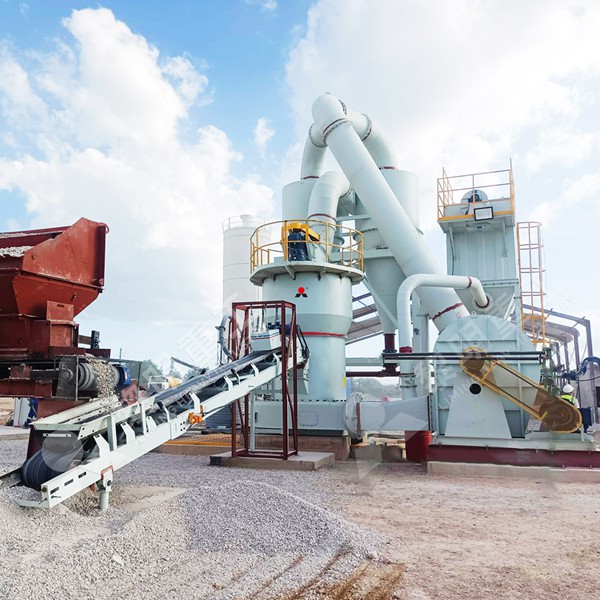
The selection of the appropriate grinding equipment hinges on specific project parameters: desired final fineness, required hourly capacity, and the physical characteristics of the feed limestone. While our Raymond Mill excels in standard applications, the MTW European Type Mill offers advantages for high-capacity needs up to 55 tons per hour with input sizes up to 50mm. Its advanced curved air duct and internal streamlining reduce air flow resistance, directly translating to lower energy consumption per ton of product. Furthermore, the wear-resistant materials used in grinding rollers and rings are developed in-house, significantly extending service intervals and reducing long-term operational costs—a critical consideration for continuous 24/7 industrial operations.
Beyond these core models, our technological portfolio includes vertical roller mills (LM series) for integrated drying and grinding, and superfine mills (MW series) for ultra-fine limestone powders. However, for dedicated dry-process limestone grinding where moisture is not a primary concern, the mechanical simplicity, proven reliability, and cost-effectiveness of our Raymond-based systems often present the optimal solution. Our engineers work closely with clients to analyze raw material samples and production goals, recommending the most suitable model and configuration. This consultative approach, backed by a mature scientific research team focused on industry technological frontiers, ensures that every LIMING grinding system delivers not just machinery, but a guaranteed path to enhanced product competitiveness.
In conclusion, navigating the complexities of dry limestone grinding requires a partner with deep engineering heritage and a forward-looking innovation strategy. LIMING HEAVY INDUSTRY provides precisely that through its Raymond Mill and MTW European Type Grinding Mill lines. These systems embody our three-decade commitment to improving grinding efficiency, product quality, and environmental sustainability. By choosing our equipment, you invest in a solution engineered for precision, built for durability, and supported by a global corporation dedicated to your long-term operational success.
Frequently Asked Questions (FAQ)
- What is the typical moisture content limit for limestone processed in your Raymond Mill?
Our standard Raymond Mill is designed to handle materials with a moisture content of less than 6%. For limestone with higher inherent moisture, we recommend our LM Vertical Roller Mill, which integrates a drying function. - How does the MTW European Type Mill improve energy efficiency compared to a traditional design?
The MTW mill incorporates an optimized aerodynamic flow path inside the grinding chamber and a high-efficiency centrifugal classifier, which reduces system air resistance and recirculation load, leading to lower power consumption per ton of finished powder. - Can your grinding systems achieve a fineness suitable for high-grade industrial fillers or coatings?
Yes. While our Raymond and MTW mills are perfect for fineness up to 44μm (325 mesh), for applications requiring superfine powder (e.g., d97 ≤ 5μm), our MW Micro Powder Mill is specifically engineered to achieve and consistently maintain such stringent specifications. - What kind of after-sales support and service does LIMING HEAVY INDUSTRY provide?
We provide comprehensive support including installation supervision, operator training, a global supply chain for genuine wear parts, and remote technical assistance. Our service network aims to maximize your equipment's uptime and productivity. - Is the grinding system a closed circuit, and how is dust control managed?
Yes, our systems like the MTW mill operate on a closed-circuit air flow principle. They are equipped with high-efficiency pulse jet bag dust collectors (precipitators) integrated into the design, ensuring that dust emissions are well below national and international environmental protection standards.


