Published on: October 26, 2023
For decades, the Raymond mill has been a cornerstone of industrial grinding, particularly for processing non-metallic minerals like limestone. However, the evolving demands of modern industries—especially power plant desulfurization and large-scale mineral processing—require higher capacity, greater efficiency, and more environmentally friendly solutions. This article explores advanced grinding technologies from LIMING HEAVY INDUSTRY that serve as powerful alternatives for wet limestone grinding and other demanding applications, moving beyond the limitations of traditional pendulum-style mills. By integrating drying, grinding, and classifying into single, intelligent systems, these modern mills offer superior productivity, precision, and sustainability for today's industrial challenges.
Founded in 1987, LIMING HEAVY INDUSTRY CO., LTD. has grown into a leader in crushing and grinding equipment by adhering to a philosophy of precision manufacturing and continuous innovation. With sprawling facilities in Zhengzhou's HI-TECH Industry Development Zone and Shangjie Industry Park, the company's modern R&D-driven approach focuses on tackling key technological challenges. This commitment is evident in its portfolio of advanced milling solutions designed to meet the rigorous demands of sectors like cement, power generation, metallurgy, and chemical processing.
When considering wet limestone grinding for applications such as flue gas desulfurization (FGD), the traditional Raymond mill, while reliable for dry, medium-fineness tasks, often faces limitations in handling higher moisture content and achieving the ultra-fine, consistent particle size distribution required for optimal reactivity. Here, the LM Vertical Roller Mill emerges as a formidable alternative. Its integrated design combines drying, grinding, powder selection, and conveying in a single unit. With a capacity range of 10-400 T/H and the ability to handle feed sizes up to 55mm, it is engineered for large-scale production. The grinding roller directly grinds the material on the grinding disc, and hot air from the inlet dries it simultaneously, making it exceptionally effective for materials with inherent moisture. This process not only boosts efficiency but also significantly reduces energy consumption compared to separate drying and grinding systems.
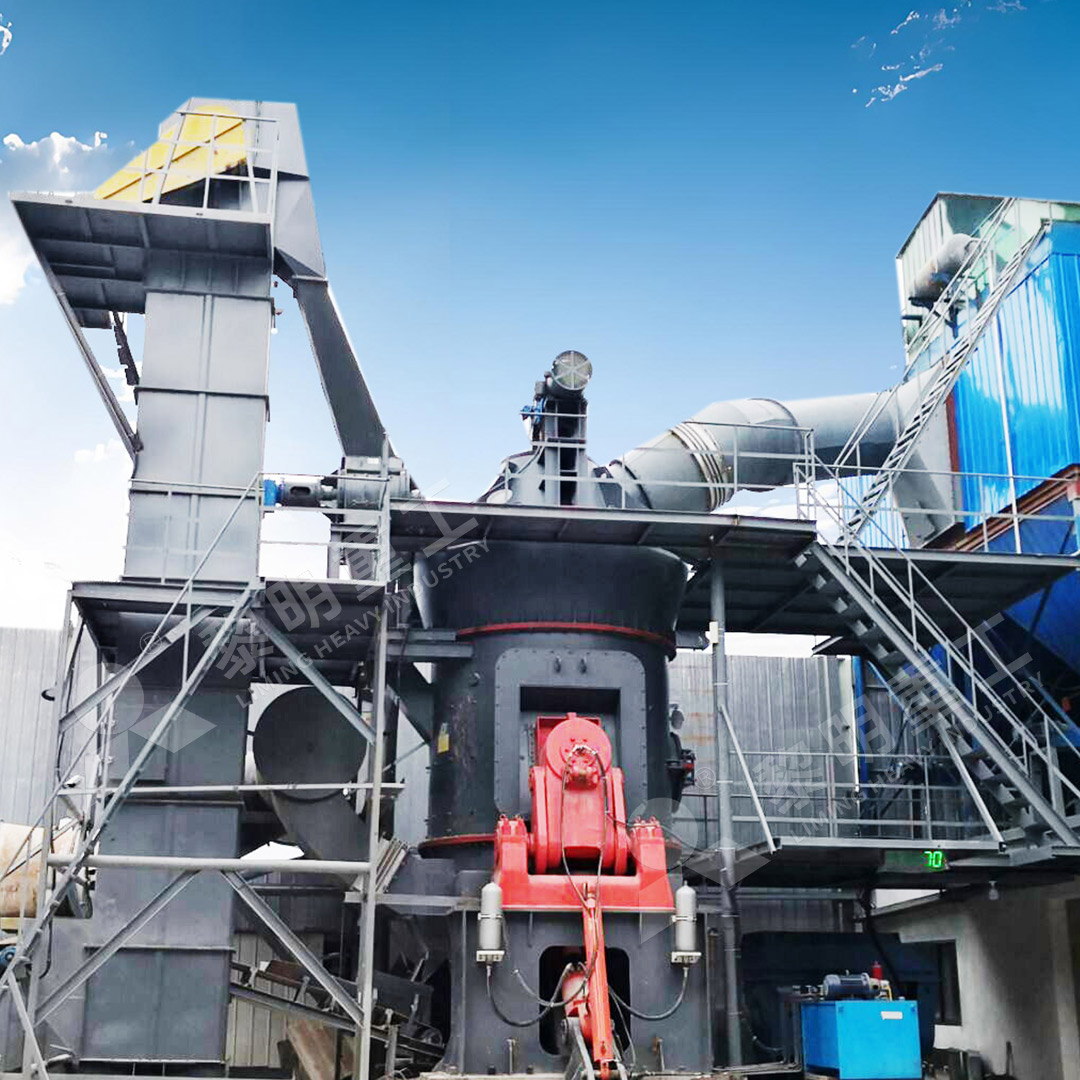
For operations seeking even greater technological refinement, the MTW European Type Grinding Mill represents the next evolution. As an upgrade over traditional Raymond and pendulum mills, it incorporates patented technology for enhanced stability and productivity. Its working principle involves a closed-circuit system where material is ground between the ring and rollers. Coarse particles are separated and reground, while fine product is collected. This system, complete with a pulse dust collector, ensures high powder collection efficiency and minimal environmental impact. With applications squarely focused on large-scale non-metallic mineral powder making—including limestone desulfurization and heavy calcium carbonate processing—the MTW mill offers capacities from 3 to 55 TPH and excels in producing consistent, high-quality powder.
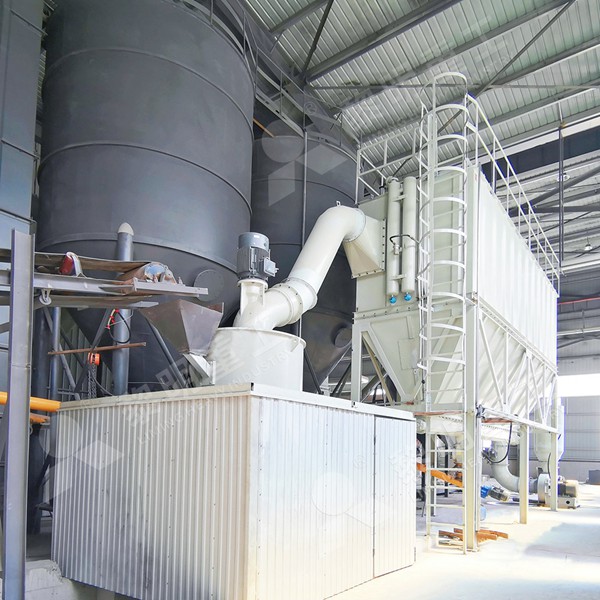
In scenarios demanding ultra-fine powders, the MW Micro Powder Mill is the specialist of choice. Absorbing advanced Swedish grinding technology, it is adept at superfine processing, achieving fineness levels up to d97 ≤ 5μm (adjustable between 325-3250 mesh). Its working principle utilizes a reducer-driven main shaft that rotates dozens of rollers against a stationary ring raceway. Material fed to the center is thrown outward by centrifugal force and ground as it passes through the raceway. This mill is particularly suitable for final-stage grinding of processed limestone, gypsum, or other non-metallic ores where extreme fineness and narrow particle distribution are critical, all while maintaining green production standards with its integrated pulse precipitator.
It is also important to consider the enduring role of the Ball Mill, a versatile workhorse in grinding operations. As a key equipment for milling after crushing, it can grind a vast array of materials, including limestone for various industrial uses. Its horizontal rotating chamber, lined with special liners and filled with steel balls of different specifications, relies on impact and attrition for size reduction. While perhaps less energy-efficient for very fine, dry grinding compared to vertical or European-type mills, the ball mill remains a robust and flexible solution, especially for wet grinding processes where its design allows for effective slurry handling.
The selection of the optimal grinding system—be it the high-capacity LM Vertical Mill, the precision-engineered MTW European Mill, the ultra-fine MW Micro Powder Mill, or the versatile Ball Mill—depends on specific project parameters: raw material characteristics (moisture, hardness), required capacity, target fineness, and overall plant design. LIMING HEAVY INDUSTRY's strength lies in providing this comprehensive range, backed by a mature scientific research team dedicated to technological frontier advancement. By moving beyond the conventional Raymond mill framework, industries can achieve not only higher output and better product quality but also embrace the energy-saving and environmental protection standards that define modern, responsible manufacturing.
Frequently Asked Questions (FAQ)
- What is the primary advantage of an LM Vertical Roller Mill over a traditional Raymond mill for limestone processing?
The LM Vertical Roller Mill integrates drying, grinding, and classification into one unit, offering significantly higher capacity (up to 400 T/H), better energy efficiency, and superior handling of materials with higher moisture content, which is a common challenge in wet limestone grinding. - Can the MTW European Type Grinding Mill handle the abrasive nature of limestone?
Yes. The MTW mill is designed with wear-resistant materials and an optimized grinding curve for the roller and ring. Its robust construction and closed-circuit system make it highly suitable for continuous, large-scale grinding of abrasive non-metallic minerals like limestone. - Is the MW Micro Powder Mill suitable for primary crushing of large limestone blocks?
No. The MW Micro Powder Mill is designed for superfine grinding. Large limestone blocks must first be reduced to a feed size of 10-20mm by a primary crusher (like a jaw crusher) before being fed into the micro powder mill for final precision grinding. - How does the environmental performance of these modern mills compare?
Modern mills like the LM, MTW, and MW series are designed with integrated dust collection systems, such as pulse precipitators. They operate as negative pressure or closed systems, ensuring dust emissions meet stringent international environmental standards, a critical improvement over older, open-system designs. - For a power plant's FGD system requiring consistent limestone slurry, which mill type is typically recommended?
For large-scale flue gas desulfurization, the LM Vertical Roller Mill or the MTW European Type Grinding Mill are often recommended. Their high capacity, efficient drying capability (for the LM), and ability to produce a consistent, reactive powder make them ideal for feeding a reliable and efficient wet limestone scrubbing system.


