Published on: October 26, 2023
For industries requiring high-quality crushed limestone powder, selecting the right milling equipment is paramount to achieving optimal particle size, production efficiency, and operational cost-effectiveness. Liming Heavy Industry, with over three decades of expertise in manufacturing crushing and grinding machinery, offers advanced Raymond Mill solutions specifically engineered for processing non-metallic minerals like limestone. This article delves into the technical capabilities of our Raymond Mill for limestone powder production, explores its working principles, and highlights its advantages in modern industrial applications, drawing upon our extensive portfolio of grinding technologies.
Liming Heavy Industry's Raymond Mill stands as a proven and reliable workhorse for limestone grinding. Designed to handle materials with a Mohs hardness under 7 and humidity less than 6%, it is exceptionally suited for transforming crushed limestone into fine powders ranging from 613μm to 44μm. This versatility allows it to meet diverse specifications for various downstream applications. The mill's robust construction ensures stable, continuous operation, making it a cornerstone for production lines in building materials, chemicals, and power plant desulfurization.
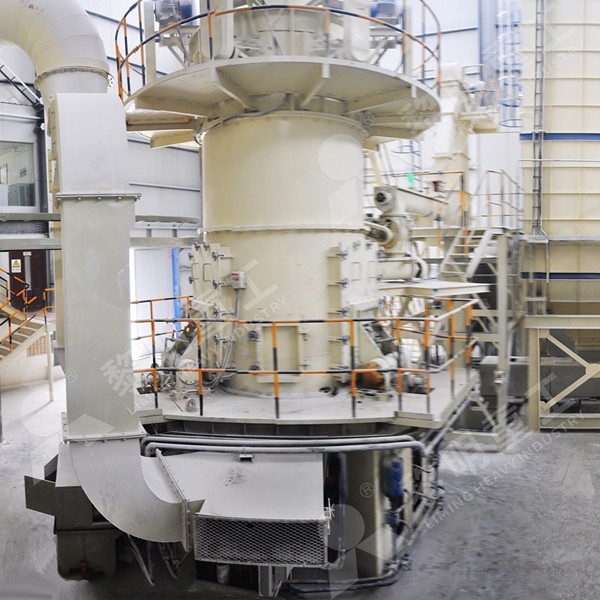
The operational principle of the Raymond Mill is a key factor in its efficiency. The system typically integrates a jaw crusher for primary size reduction, a vibrating feeder, the main grinding unit, a classifier, a blower, and a dust collection system. Crushed limestone is fed into the grinding chamber where it is ground between the stationary rings and rotating rollers. The ground material is then carried by the air flow to the integrated classifier. Here, particles meeting the fineness requirement pass through and are collected as final product via a cyclone or bag filter, while oversized particles are rejected back to the grinding chamber for further milling. This closed-circuit system promotes energy efficiency and consistent product quality.
When compared to other grinding solutions in our portfolio, such as the LM Vertical Roller Mill for large-scale, high-capacity (10-400 T/H) production or the MW Micro Powder Mill for ultra-fine (d97 ≤ 5μm) applications, the Raymond Mill occupies a vital niche. It excels in medium-scale production (1.2-4.5 T/H) of fine to moderately fine limestone powder, offering an excellent balance of capital investment, operational simplicity, and maintenance accessibility. Its design, refined over years, ensures low vibration and noise, contributing to a better working environment.
For projects demanding even higher efficiency and European-standard technology, our MTW European Type Trapezium Mill presents an advanced alternative. As an upgrade over traditional Raymond mills, it incorporates patented technologies like curved air duct and bevel gear overall drive, leading to higher productivity, lower energy consumption per ton, and more environmentally friendly operation. It is particularly committed to large-scale non-metallic mineral powder making, including premium limestone products.
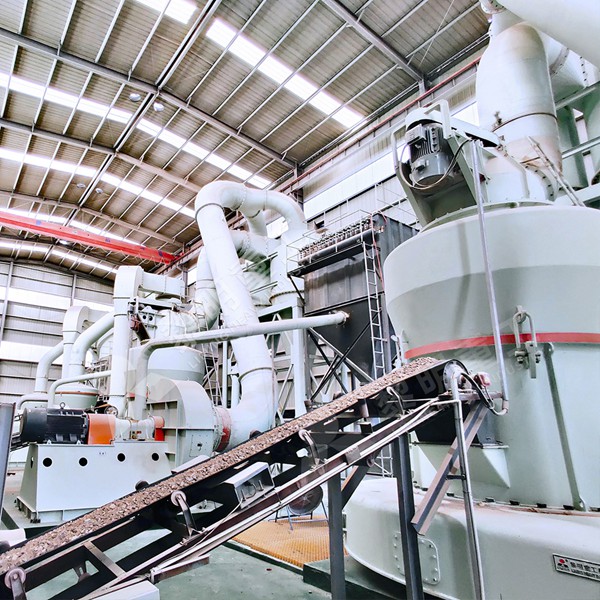
The application of limestone powder produced by our Raymond Mill is vast. In power plants, it is essential for flue gas desulfurization (FGD). In construction, it serves as a filler in asphalt, concrete, and paints. The chemical and plastics industries rely on it as a raw material or additive. Choosing Liming Heavy Industry's equipment means leveraging our commitment to scientific research, precision manufacturing, and continuous innovation. Our modern facilities in Zhengzhou's HI-TECH Industry Development Zone are dedicated to developing machinery that enhances our clients' competitiveness, ensuring that every Raymond Mill delivers performance, durability, and value.
In conclusion, for consistent and efficient production of crushed limestone powder, a well-engineered Raymond Mill from a trusted manufacturer like Liming Heavy Industry remains a superior choice. By understanding the material properties, desired output, and scale of operation, industries can select the optimal grinding solution from our range to build a profitable and sustainable powder processing line.
Frequently Asked Questions (FAQ)
Q1: What is the typical input size of crushed limestone for your Raymond Mill?
A1: Our Raymond Mill is designed to optimally process crushed limestone with an input size ranging from 15mm to 25mm, ensuring efficient grinding and stable operation.
Q2: Can the Raymond Mill handle materials with moisture content higher than 6%?
A2: The standard Raymond Mill is suitable for materials with humidity less than 6%. For limestone with higher moisture, we recommend considering our LM Vertical Roller Mill, which integrates a drying function within the grinding process.
Q3: How fine can the limestone powder be produced using your Raymond Mill?
A3: The fineness of the final product from our Raymond Mill can be adjusted within a range of 613 microns (μm) down to 44 microns (μm), allowing flexibility to meet various industry specifications.
Q4: What dust collection system is associated with the milling process?
A4: The grinding system is equipped with an efficient pulse jet bag filter dust collector. This forms a closed-circuit, negative-pressure operation that ensures dust-free production and full compliance with environmental protection standards.
Q5: For larger capacity needs beyond 4.5 T/H, what other options does Liming Heavy Industry offer for limestone?
A5: For higher capacity requirements, we offer the LM Vertical Roller Mill (up to 400 T/H) and the MTW European Type Trapezium Mill (up to 55 TPH). Both are excellent for large-scale limestone powder production with enhanced efficiency and lower energy consumption.


