Published: October 26, 2023
In the realm of activated carbon manufacturing, coal pulverization stands as a critical precursor to activation processes, directly influencing product quality, surface area development, and adsorption performance. This article provides a comprehensive technical overview of coal pulverizers engineered for activated carbon production, drawing from the extensive expertise of Liming Heavy Industry Co., Ltd., a pioneering force in grinding equipment since 1987. The discussion encompasses mill selection criteria based on coal characteristics, grinding mechanisms, system configurations, and operational best practices, all tailored to meet the rigorous demands of activated carbon producers worldwide.
Importance of Coal Pulverization in Activated Carbon Manufacturing
Activated carbon production fundamentally relies on precise particle size reduction of raw coal—typically bituminous, sub-bituminous, or lignite types—to optimize subsequent activation steps. Proper pulverization ensures uniform heat transfer during carbonization and activation, maximizes surface area generation, and enhances pore structure development. The target fineness for coal feed to activation kilns generally ranges from 80% passing 200 mesh (74 μm) to 90% passing 325 mesh (44 μm), depending on specific product specifications. At Liming Heavy Industry, our equipment portfolio addresses these requirements with proven reliability across decades of installations.
Mill Selection for Activated Carbon Coal Feed
Selecting the optimal coal pulverizer hinges on multiple parameters: coal hardness (typically 1–3 on Mohs scale for bituminous coal), moisture content (often 5–15% as-received), abrasiveness (quartz content), throughput requirements, and target fineness. Liming Heavy Industry offers several mill types, each with distinct advantages for activated carbon feedstock preparation.
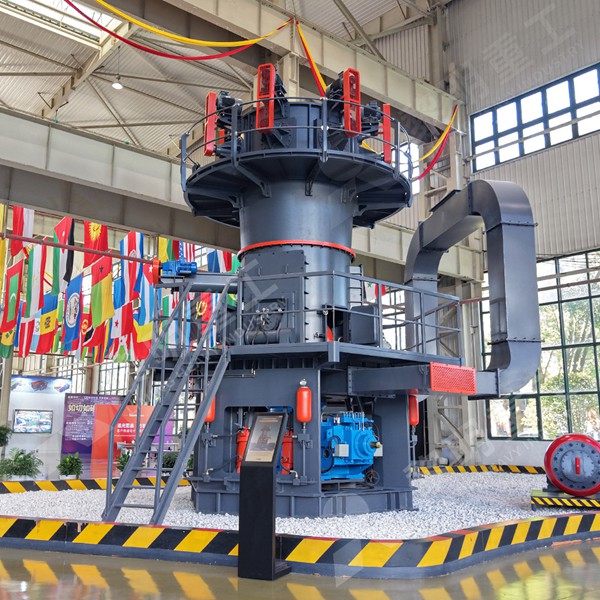
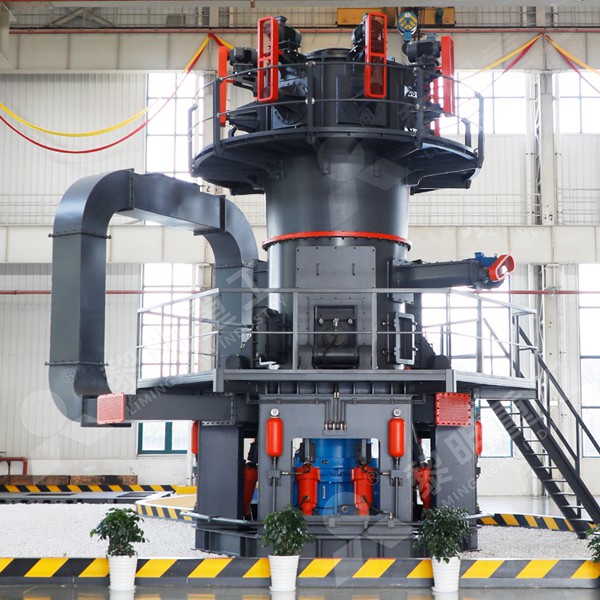
LM Vertical Roller Mill
Our LM Vertical Roller Mill integrates drying, grinding, and classification in a single unit, making it exceptionally suitable for coal with moderate to high moisture. The mill employs a rotating table and stationary rollers that crush material under hydraulic pressure. Hot gases from a auxiliary heat source or kiln exhaust can be introduced to dry coal during grinding, eliminating the need for separate drying equipment. For activated carbon lines requiring 10–400 T/H capacity with input sizes up to 55 mm, the LM series offers energy efficiency 30–50% higher than ball mills, thanks to its advanced grinding roller design and automatic electric control system. The integral classifier ensures precise cut points, delivering consistent fineness essential for uniform activation.
MTW European Type Trapezium Mill
For medium-scale operations (3–55 T/H) demanding high efficiency and environmental compliance, the MTW European Type Trapezium Mill represents an upgrade from traditional Raymond technology. Its patented roller and ring design—trapezoidal cross-section—increases grinding surface area and reduces energy consumption. The mill operates in a closed-circuit system with air blower, pulse dust collector, and classifier. Coal crushed by jaw crusher to <50 mm is fed via variable-frequency belt feeder; material is ground between ring and rollers, then lifted by airflow to the classifier. Oversized particles return for regrinding, while fine product collects in bag filters. This system is ideal for activated carbon plants requiring fineness from 613 μm down to 44 μm, with strict emission standards.
Raymond Mill
The classic Raymond mill remains a workhorse for smaller activated carbon operations (1.2–4.5 T/H) processing low-moisture, non-explosive coal. It produces fineness between 613 μm and 44 μm, handling materials with Mohs hardness <7 and humidity <6%. While not as energy-efficient as vertical mills, its simpler design offers lower initial investment and ease of maintenance—advantages for startup facilities or pilot plants.
MW Micro Powder Mill
When ultra-fine coal powder is required for specialized activated carbon grades—e.g., for supercapacitor electrodes or pharmaceutical adsorbents—our MW Micro Powder Mill achieves d97 ≤ 5 μm (325–3250 mesh). This medium-speed mill incorporates Swedish grinding technology and a multi-stage classification system. The main motor drives the turnplate through a reducer; dozens of rollers rotate against the raceway ring under centrifugal force. Material crushed by hammer crusher feeds to the upper turnplate center, falls to the ring for comminution, and fines are collected via pulse precipitator. Capacity ranges 0.5–25 T/H with input size <20 mm.
Ball Mills
For robust, high-throughput applications (0.65–50 T/H), ball mills offer proven reliability. In coal pulverization for activated carbon, ball mills grind material by impact between steel balls and the rotating drum. Ladder liners and ripple liners enhance grinding efficiency. However, their higher specific energy consumption (typically 20–30 kWh/T compared to 10–15 kWh/T for vertical mills) makes them less favored in modern plants unless capital cost is the overriding factor.
System Integration and Process Considerations
An activated carbon pulverization system must address safety, especially for coal dust explosion hazards. Liming systems include explosion vents, nitrogen inerting options, and static grounding. The grinding circuit typically comprises a crusher (jaw or hammer), feed hopper with variable-frequency feeder, mill, classifier, cyclone, bag filter, fan, and piping. Closed-loop design with recycled airflow minimizes emissions. For coal with >15% moisture, the LM vertical mill’s drying capability is indispensable: hot gases at 200–350°C evaporate moisture while grinding proceeds.
Automation is central to consistent product quality. Liming’s electric control system monitors mill differential pressure, table vibration, classifier speed, and outlet temperature, adjusting feed rate and air velocity in real time. This ensures stable operation even with variable coal properties—a common challenge in activated carbon feedstocks sourced from multiple mines.
Application Specifics: Coal to Activated Carbon
The pulverized coal must meet strict specifications for activation: typical bulk density 0.5–0.7 g/cm³, particle size distribution with minimal fines (to avoid dusting in kilns), and low ash content (<10% preferred). For thermal activation (steam or CO₂ at 800–1000°C), finer coal increases reaction rates but may cause bridging in rotary kilns. Therefore, many producers target 75–150 μm range. Liming equipment can be calibrated to achieve these tight distributions via classifier adjustments—for instance, LM mill’s rotary classifier speed directly controls cut size.
For chemical activation (e.g., with KOH or ZnCl₂), pulverization to finer sizes (d50 <50 μm) enhances impregnation efficiency. Here, MW Micro Powder Mill excels, producing powders with high specific surface area precursor potential.
Why Liming Heavy Industry?
With over 30 years of specialization in crushing and grinding, Liming Heavy Industry has supplied coal pulverization solutions to activated carbon plants across Asia, Africa, and South America. Our technical team provides system design, installation supervision, and after-sales support. The manufacturing base—80,000 m² in Zhengzhou Hi-Tech Zone and 67,000 m² in Shangjie—ensures quality control and rapid delivery. Commitment to scientific research and technological innovation keeps our products at the industry frontier.
FAQ
- What is the typical capacity of a coal pulverizer for activated carbon production? Capacity depends on mill type: LM vertical mills handle 10–400 T/H, MTW mills 3–55 T/H, Raymond mills 1.2–4.5 T/H, and MW micro mills 0.5–25 T/H. Selection is based on plant throughput and coal characteristics.
- Can your coal pulverizers handle high-moisture coal? Yes, the LM Vertical Roller Mill integrates drying, grinding, and classification, making it ideal for coal with up to 15–20% moisture using hot gas from external sources or kiln exhaust.
- What fineness range is achievable for activated carbon feed? Standard fineness is 80% passing 200 mesh (74 μm) to 90% passing 325 mesh (44 μm). For special applications, MW Micro Powder Mill can achieve d97 ≤ 5 μm (3250 mesh).
- How do you ensure safety against coal dust explosions? Our systems incorporate explosion vents, static grounding, nitrogen inerting options, and explosion-proof electrical components. Closed-loop operation with oxygen monitoring is standard.
- Do you provide after-sales support for coal pulverizer installations? Yes, Liming Heavy Industry offers comprehensive support including system design, installation guidance, commissioning, operator training, and spare parts supply. Our global service network ensures rapid response.


