Published: October 26, 2023
In the evolving landscape of clean coal utilization, the production of coal water slurry (CWS) stands as a pivotal technology, converting raw coal into a pumpable, combustion-efficient fluid fuel. Central to this process is the coal ball mill, a robust and highly efficient grinding system engineered to deliver the precise particle size distribution and rheological properties required for high-quality CWS. LIMING HEAVY INDUSTRY CO., LTD., with over three decades of expertise in grinding equipment manufacturing, offers advanced ball mill solutions tailored for CWS preparation. Our mills integrate superior grinding mechanics, durable construction, and scalable capacity to handle the demanding requirements of coal slurry production, ensuring optimal energy consumption and consistent output. This article explores the technical design, operational principles, and application advantages of our coal ball mill for coal water slurry systems.
Technical Overview of Coal Ball Mill for CWS
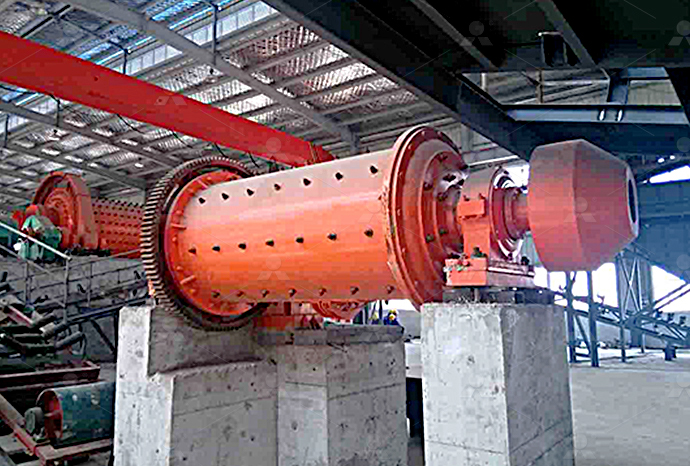
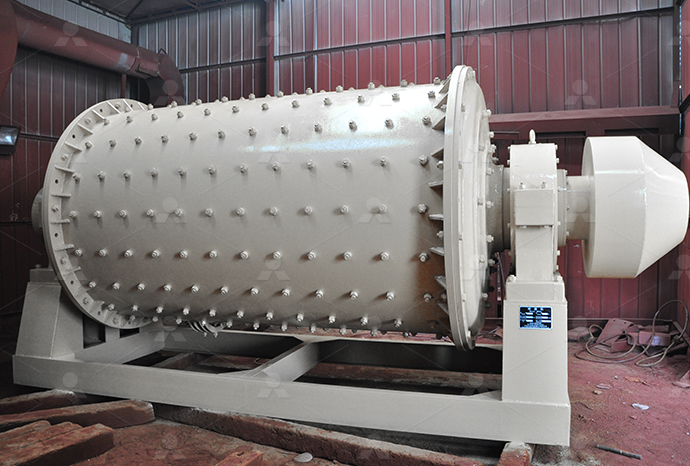
The coal ball mill designed for coal water slurry production is a horizontal cylindrical device that rotates around its horizontal axis. It is a key piece of equipment in the grinding circuit, responsible for reducing coal particles to a fine, uniform size—typically ranging from 20 to 100 microns—to achieve the desired slurry concentration and stability. LIMING HEAVY INDUSTRY's ball mill for CWS features a robust structure, including a welded steel shell, replaceable liners (ladder or ripple type), and a high-capacity grinding media charge composed of steel balls of varying diameters. The mill operates on the principle of impact and attrition: as the shell rotates, the steel balls are lifted to a certain height before cascading down, crushing and grinding the coal feed mixed with water and a small amount of chemical dispersant. The resultant slurry exits through a discharge end, ensuring continuous operation with minimal downtime. Our mills are available in capacities ranging from 0.65 to 50 tons per hour, accommodating both small-scale and large-scale CWS plants.
Key design features include an automatic electric control system for consistent slurry quality, hardened steel liners to extend service life, and optimized gear transmission for energy efficiency. The milling process can be tuned to produce slurry with a solid concentration of 60-70% by weight, with viscosity and stability parameters meeting strict industry standards for combustion and transportation. We also offer customization for input coal size (≤25mm) and moisture content up to 6%, ensuring compatibility with various coal types—from bituminous to lignite—without compromising performance.
Operational Principle and Working Mechanism
The working principle of the coal ball mill for CWS is straightforward yet highly effective. The system consists of a horizontal rotating shell, a feed inlet, a discharge outlet, and a drive unit. Raw coal, pre-crushed to ≤25mm, is fed into the mill through a quill shaft via a conveyor or feeder. Simultaneously, a controlled amount of water and additives is introduced to form a slurry. Inside the mill, the grinding media (steel balls) are lifted by centrifugal force as the shell rotates, reaching a critical speed where they fall in a cataract or cascade action. This impact and grinding action reduces coal particle size, while the water aids in preventing agglomeration and facilitating uniform dispersion. The ground slurry passes through a discharge board, where particles meeting the fineness requirements exit the mill, while oversized material is retained for further grinding.
Our design emphasizes closed-circuit grinding, where a classifier or separator can be employed to control particle size distribution tightly. The adjustable rotation speed (typically 70-80% of critical speed) and media charge ratio (30-40% of mill volume) allow operators to optimize throughput and fineness. The system is equipped with a pulse dust collector for environmental compliance, reducing fugitive emissions during operation. For CWS plants requiring high throughput, the mill can be integrated with pre-grinding equipment like a jaw crusher or hammer crusher for primary reduction. After over 30 years of refinement, LIMING HEAVY INDUSTRY's ball mill technology has achieved a stable operation rate of over 95%, with liner lifespan exceeding 5,000 hours under standard conditions.
Materials and Construction Quality
Built for durability and longevity, the coal ball mill for CWS from LIMING HEAVY INDUSTRY utilizes high-grade materials throughout its construction. The shell is fabricated from carbon steel plates with a thickness engineered for stress fatigue resistance, while the liners are crafted from manganese steel or chrome-molybdenum alloy for abrasion resistance. The grinding media—forged or cast steel balls—are selected for hardness and uniform density to maintain grinding efficiency. The gear transmission system uses hardened alloy steel for pinions and girth gears, with automatic lubrication for reduced wear. Our manufacturing facilities, located in Zhengzhou and Shangjie industrial parks, cover over 147,000 square meters of production space, enabling us to enforce stringent quality control from raw material sourcing to final assembly. Each mill undergoes dynamic balancing and load testing before shipment.
Applications and Suitability
Our coal ball mill is primarily designed for CWS production, which is widely used in the following applications:
- Cogeneration and Power Plants: CWS replaces heavy fuel oil for boiler combustion, reducing emission of SOx and NOx while utilizing coal efficiently.
- Industrial Boilers: Steel, chemical, and textile factories adopt CWS as a cost-effective and clean alternative to traditional coal firing.
- Gasification and Liquefaction: CWS serves as feed material for coal gasification processes in hydrogen or methanol production.
- Desulfurization: In flue gas desulfurization (FGD) units, fine ground coal slurry can be used as an sorbent in certain wet scrubber systems.
The mill's versatility extends beyond CWS to other coal grinding tasks, such as pulverized coal preparation for boilers, cement industry fuel grinding, and non-metallic mineral processing (like gypsum and limestone). Our ball mill is compatible with closed-loop particle size control systems, making it suitable for applications requiring consistent mesh sizes between 100 and 400 mesh.
Integration with LIMING's Grinding Solutions
As part of LIMING HEAVY INDUSTRY's comprehensive product portfolio, the coal ball mill can be seamlessly integrated with other equipment for a complete grinding circuit. For larger throughput requirements, we recommend pairing the ball mill with our European-type trapezium mill (MTW series) or Raymond mill for pre-grinding, or with our vertical roller mill for a combined milling and drying process. Our MW micro powder mill offers an alternative for ultra-fine grinding (down to 5 microns) if required. The ball mill is compatible with vibrating feeders, bucket elevators, air classifiers, and dust collection systems from our catalog, enabling turnkey project delivery. Our technical team provides engineering support for plant layout, piping design, and automation integration.
Advantages of Choosing LIMING Heavy Industry
With a history dating back to 1987, LIMING HEAVY INDUSTRY CO., LTD. has established itself as a leader in crushing and grinding machinery. Our commitment to scientific research and development ensures continuous improvement in ball mill efficiency and reliability. Key benefits of our coal ball mill for CWS include:
- High Grinding Efficiency: Optimized rotational speed and media charge ratio deliver over 15% higher output per unit energy compared to conventional designs.
- Low Maintenance: Modular liner system and centralized lubrication reduce downtime for replacement parts.
- Environmental Compliance: Integral dust and noise control systems meet international emission standards.
- Customization: Capacity, liner material, discharge type, and control system tailored to client specifications.
- Global Support: Our after-sales network provides installation, training, and spare parts services worldwide.
We persist in implementing a strategy centered on technological innovation, targeting the frontier of industry development to improve overall manufacturing capability. Our ball mills have been exported to over 80 countries for CWS and other applications, earning recognition for performance and durability.
Conclusion
For operators seeking a dependable and efficient solution for coal water slurry production, LIMING HEAVY INDUSTRY's coal ball mill offers a proven combination of capacity, precision, and longevity. By leveraging advanced Swedish grinding technology and over 30 years of manufacturing experience, our mills deliver the particle quality and consistency critical for successful CWS applications. Whether for a small industrial boiler or a large-scale cogeneration plant, our ball mill system adapts to your unique process while minimizing total cost of ownership. Contact our team to discuss your specific grinding requirements.
Frequently Asked Questions (FAQ)
- What is the typical input size for coal fed into the ball mill for CWS?
Our coal ball mill accepts an input size of up to 25mm after primary crushing. For lumps larger than that, we recommend using a jaw crusher or hammer crusher for pre-grinding to ensure optimal mill performance and reduce wear on liners. - How does the ball mill handle moisture in coal?
The mill is designed to handle coal with moisture content up to 6% without issues. For higher moisture, integration with a drying system (like our vertical roller mill with hot air) is recommended to prevent clogging and maintain grinding efficiency. - What is the achievable particle size for coal water slurry from this mill?
With proper classifier settings, the ball mill can produce slurry with 80% passing 75 microns (200 mesh) or finer. Fineness is adjustable down to 400 mesh for specialized applications, depending on slurry rheology requirements. - Does the mill come with an automatic control system?
Yes, all our ball mills for CWS include an automatic electric control panel that monitors rotation speed, feed rate, mill load, and slurry density. This allows for closed-loop operation and consistent output quality with minimal operator intervention. - What spare parts are included with the ball mill purchase?
Standard packages include a complete set of liners for one cycle, a set of steel balls (10-15% of total charge), gear lubrication system spares, and a user manual. Extended warranty and spare parts contracts are available for ongoing support.


