Published: May 23, 2025
In the briquette manufacturing industry, the quality of the binder directly influences briquette density, durability, and combustion efficiency. Coal grinding mills play a pivotal role in this process, as they are responsible for reducing coal into the fine powder needed for binder formulation. A properly milled coal powder enhances the binding properties, ensuring uniform mixing with the binder agent and producing briquettes with superior mechanical strength and low ash content. This article provides a comprehensive overview of coal grinding mills designed specifically for briquette binder production, highlighting key machinery from Liming Heavy Industry Co., Ltd. We will explore how our LM Vertical Roller Mill, Raymond Mill, MTW European Type Trapezium Mill, MW Micro Powder Mill, and Ball Mill address the unique demands of this application, focusing on capacity, fineness control, and system integration for maximum efficiency.
Introduction to Coal Grinding for Briquette Binder
Coal briquetting involves compressing coal fines or dust into solid blocks using a binder. The binder—typically a mixture of coal powder, clay, starch, or chemical additives—requires a consistent particle size to achieve optimal adhesion. If the coal powder is too coarse, the binder fails to penetrate uniformly, leading to weak briquettes that crumble during handling. Conversely, excessively fine powder can increase binder consumption without proportional benefits. Therefore, selecting the right grinding mill is critical for balancing particle size distribution, throughput, and energy consumption. Liming Heavy Industry Co., Ltd., with over 30 years of experience, offers a suite of mills tailored to these requirements, each with distinct advantages for different production scales and coal types.
LM Vertical Roller Mill: High-Capacity Solution for Large-Scale Production
For briquette plants requiring high throughput and consistent product quality, the LM Vertical Roller Mill is an ideal choice. This mill integrates drying, grinding, powder selection, and conveying into a single unit, simplifying the process flow and reducing equipment footprint. It is particularly suitable for non-metallic minerals, coal, and slag—common feedstocks in binder preparation. With a capacity range of 10-400 T/H and an input size of 30-55 mm, the LM mill can handle large volumes of coal while delivering a fine, uniform powder. Its automatic electric control system ensures stable operation, adjusting grinding pressure and separator speed to maintain target fineness. This reliability is essential for binder production, where variations in particle size can disrupt downstream briquetting.
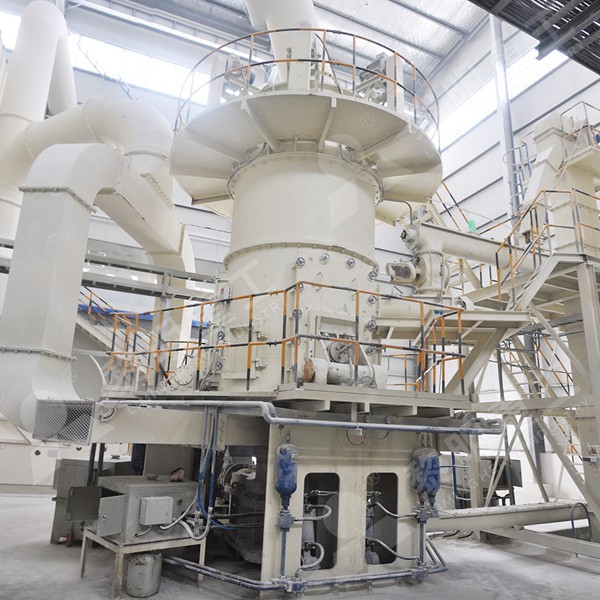
Raymond Mill: Versatile and Reliable for Moderate Outputs
Raymond Mill remains a staple in the coal grinding sector due to its proven durability and adaptability. It processes non-flammable and non-explosive materials with Mohs hardness under 7 and humidity below 6%, making it suitable for most coal grades. The output fineness ranges from 613 μm to 44 μm, allowing operators to fine-tune particle size for binder recipes. For small to medium-sized briquette plants, the Raymond Mill’s capacity of 1.2-4.5 T/H and input size of 15-25 mm provide a cost-effective solution without compromising quality. Its simple mechanical design facilitates maintenance, and the mill can be integrated with a classifier to achieve precise cut points. This versatility makes it a popular choice for binder production where feedstock consistency is moderate.
MTW European Type Trapezium Mill: Enhanced Efficiency for Non-Metallic Minerals
The MTW European Type Trapezium Mill represents an evolution of traditional Raymond and pendulum mills, incorporating patented technology for improved performance. It is designed for large-scale non-metallic mineral powder making, including coal grinding for binders. With a capacity of 3-55 TPH and input size of 30-50 mm, it bridges the gap between low-volume Raymond mills and high-volume LM mills. The mill’s working principle involves material being crushed by a jaw crusher, then fed into the grinding chamber via a variable-frequency belt feeder. Grinding occurs between rings and rollers, with air flow carrying particles upward. A separator ensures that only fine particles pass through, while coarse material is recirculated for further grinding. The closed-loop air system, coupled with a pulse dust collector, meets stringent environmental standards—important for briquette plants seeking sustainable operations. The MTW mill excels in applications like limestone desulfurization and heavy calcium carbonate processing, but its robust design translates well to coal binder grinding, especially when blending with other minerals.
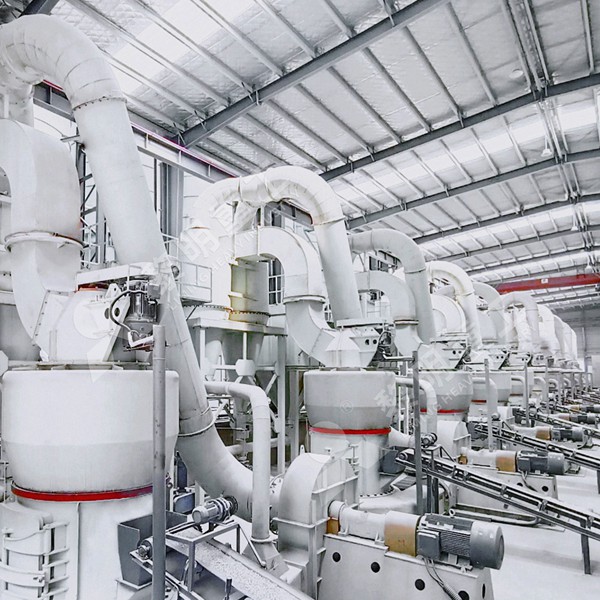
MW Micro Powder Mill: Precision Grinding for Ultrafine Binder Powders
Some advanced binder formulations require extremely fine coal powder—down to 5 μm or less—to maximize binding surface area and improve briquette density. The MW Micro Powder Mill (also known as the medium-speed micro-grinding mill) is purpose-built for superfine processing. It draws on advanced Swedish grinding technology and delivers a fineness adjustable between 325 mesh and 3250 mesh (approximately 44 μm to 5 μm). With a capacity range of 0.5-25 T/H and an input size of 10-20 mm, it is ideal for specialized briquette operations where binder quality is paramount. The mill’s drive system rotates a turnplate through a reducer, causing dozens of rollers to press against the raceway ring. Material is fed from a hopper via an elevator and vibrating feeder, then crushed between roller and ring. The inclusion of a pulse precipitator ensures dust-free operation, aligning with green manufacturing goals. For binder producers aiming at premium briquette markets, the MW mill offers a distinct edge.
Ball Mill: Traditional Workhorse for Wet or Dry Grinding
Despite advancements in vertical and trapezium mills, the Ball Mill remains a reliable option for coal grinding in binder production, particularly when wet grinding or combined grinding with other components is required. It is key equipment for milling after primary crushing, handling a variety of ores and materials. With capacities from 0.65 to 50 T/H and an input size of ≤25 mm, it suits smaller briquette plants or those with diverse feedstocks. The mill operates as a horizontal rotating device, where steel balls cascade within the chamber to impact and grind the material. Ladder and ripple liners aid in efficient grinding. The fineness is controlled by adjusting the residence time and ball charge. While the Ball Mill consumes more energy compared to vertical mills, its simplicity and low initial cost make it a viable choice for binder production in regions with lower labor costs or less stringent energy efficiency requirements.
Selection Criteria for Coal Grinding Mills in Binder Production
Choosing the right mill depends on several factors: desired throughput, required fineness, coal characteristics (hardness, moisture, ash content), and integration with existing briquetting equipment. Liming’s portfolio covers all bases—from the high-capacity LM mill for industrial-scale operations to the precision MW mill for niche ultrafine products. Additionally, the company’s commitment to scientific research and development ensures that each mill incorporates the latest in energy-saving and environmentally friendly technology. Whether you are upgrading an existing line or building a new plant, our team can assist in selecting the optimal configuration to maximize binder performance and briquette quality.
Conclusion
Coal grinding mills are the backbone of briquette binder production, directly influencing the final product‘s strength, combustion characteristics, and cost efficiency. Liming Heavy Industry Co., Ltd. offers a comprehensive range of mills that cater to varying production volumes and quality standards. By leveraging our expertise in grinding technology, manufacturers can achieve consistent particle sizes, reduce waste, and enhance the economic viability of their briquetting operations. With over three decades of innovation, we remain dedicated to supporting the global briquette industry with reliable, efficient machinery.
Frequently Asked Questions (FAQ)
- What is the recommended particle size for coal powder used in briquette binders?
Typically, a fineness of 80-200 mesh (177-74 μm) is suitable for most binder formulations, though ultrafine binders may require sub-50 μm powder. Our LM and MTW mills can achieve these ranges with precise control. - Can the same mill grind both coal and the binder material?
Yes, depending on the mill type. For example, the MTW European Type Trapezium Mill can process non-metallic minerals and coal, making it ideal for premixing binder components. However, dedicated mills for each material may be better for high-volume operations to avoid cross-contamination. - How does moisture content in coal affect grinding performance?
High moisture can cause clogging and reduce grinding efficiency. The LM Vertical Roller Mill includes integrated drying capabilities, allowing it to handle moisture up to 15-20%. For other mills, pre-drying the coal may be necessary if moisture exceeds 6%. - What maintenance is required for these mills in binder production?
Routine checks include inspecting grinding rollers, rings, and separator blades for wear. Lubrication schedules and belt tension should be maintained per manuals. Liming provides training and support to minimize downtime. - Can Liming mills be customized for specific briquette binder recipes?
Absolutely. Our engineers work with clients to adjust mill parameters such as separator speed, grinding pressure, and air flow to match the desired particle size distribution. We also offer tailored solutions for unique coal types or binder additives.


