Published: October 26, 2023
In the demanding world of industrial mineral processing, achieving high-purity limestone powder with consistent fineness and optimal particle size distribution is paramount. This requires grinding machinery engineered not just for capacity, but for precision, reliability, and energy efficiency. As a leader in comminution technology since 1987, Liming Heavy Industry Co., Ltd. has developed a comprehensive portfolio of advanced grinding mills specifically designed to meet the rigorous standards of high-purity limestone production. From large-scale vertical roller mills for massive throughput to superfine micro-powder mills for ultra-refined products, our solutions integrate decades of research, precision manufacturing, and a deep understanding of material science to deliver unparalleled performance in powder processing.
Our commitment begins with our foundation. Established in 1987 and headquartered in the HI-TECH Industry Development Zone of Zhengzhou, Liming Heavy Industry operates on a modern scientific management system, with research, manufacturing, and sales working in concert. With facilities spanning over 80,000 m² and 67,000 m², our focus on "scientific research tackling key problems" and "technological progress" has positioned us at the forefront of the machinery manufacturing industry. This ethos is directly embedded in our grinding equipment, where innovation aims at the technological frontier to solve real-world challenges in limestone processing.
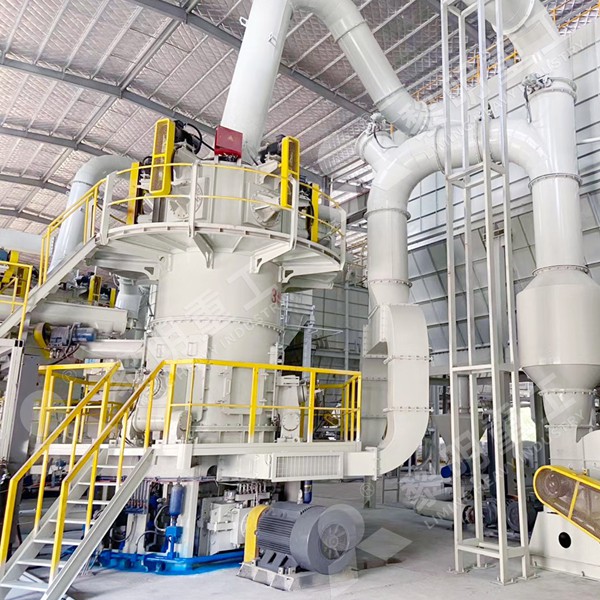 For high-volume production of high-purity limestone powder, the LM Vertical Roller Mill stands as a cornerstone technology. Its integrated design combines drying, grinding, powder selection, and conveying into a single, streamlined system. This is particularly advantageous for limestone, which may contain inherent moisture. The mill's ability to handle input sizes up to 55mm and deliver outputs ranging from coarse to fine powders at capacities from 10 to 400 T/H makes it ideal for major projects in power plant desulfurization, cement, and chemical industries. The automated electric control system ensures stable operation and consistent product quality, which is critical for maintaining the chemical purity and physical properties of the final limestone powder.
When the application calls for fine to medium-fine powders, the classic yet continually refined Raymond Mill remains a workhorse. Renowned for its reliability and wide applicability, it is perfectly suited for processing non-explosive materials like limestone with Mohs hardness under 7. Its output fineness, adjustable between 44μm and 613μm (approximately 325 to 30 mesh), covers a broad spectrum of industrial requirements. From preparing feed stock for precipitated calcium carbonate to direct use in agriculture and construction, this mill offers a robust and efficient solution. Its straightforward operation and proven mechanical design make it a trusted choice for consistent production of high-purity limestone powder where ultra-fine sizes are not mandatory.
The pursuit of higher efficiency and finer control led to the development of the MTW European Type Grinding Mill. As an advanced evolution of traditional pendulum mills, it incorporates patented technology to deliver superior stability, productivity, and energy savings. Its closed-circuit system—comprising the mill, separator, blower, and dust collector—creates an efficient and environmentally friendly grinding loop. Large limestone lumps are pre-crushed and then fed into the grinding chamber where rollers grind against a ring. The integrated high-efficiency separator ensures only particles meeting the target fineness exit as final product, while coarser material is recirculated for further grinding. This precise classification is key to achieving a tight particle size distribution, a crucial factor for high-purity limestone used in plastics, paints, and pharmaceuticals.
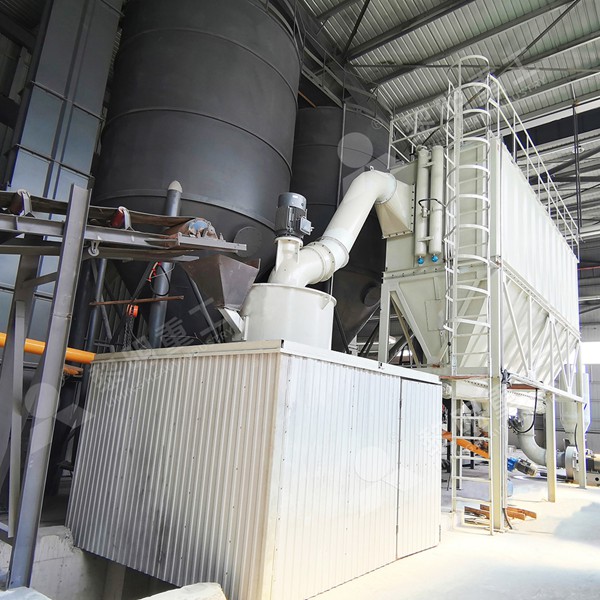 At the pinnacle of fineness lies the MW Micro Powder Mill. This technology is engineered for superfine and ultra-fine grinding, capable of producing limestone powder with a final fineness up to d97 ≤ 5μm (over 2500 mesh). By absorbing advanced grinding technology, it excels where exceptional surface area and particle uniformity are required. The working principle involves multiple rollers rotating against a raceway, creating intense yet controlled grinding forces. Coupled with a high-precision turbine classifier, it can accurately separate particles at the micron level. This capability is indispensable for producing high-value, high-purity limestone powders used in high-end applications like paper coating, advanced polymer composites, and food-grade additives. The integrated pulse dust collector guarantees that production is not only precise but also clean and green, aligning with stringent environmental standards.
Finally, the versatile Ball Mill offers a time-tested solution, especially where flexibility is key. It can grind limestone alongside other materials and is known for its robust construction. The cascading action of the steel balls within the rotating chamber provides a combination of impact and attrition, effective for achieving a wide range of fineness. While perhaps less energy-efficient for very fine grinding compared to vertical or roller mills, its simplicity and ability to handle various feed conditions make it a reliable component in many processing circuits.
Selecting the right high-purity limestone powder grinding machine is a strategic decision that hinges on the target fineness, required capacity, moisture content of the feed, and overall energy consumption goals. Liming Heavy Industry's diverse range, backed by over three decades of scientific research and precision manufacturing, provides tailored solutions. From the massive LM Vertical Mill to the ultra-fine MW Micro Powder Mill, each machine embodies our commitment to improving product competitiveness through technological innovation, ensuring our clients can meet the most exacting standards of purity and performance in the global market.
Frequently Asked Questions (FAQs)
- What is the primary advantage of a vertical roller mill over a traditional ball mill for limestone grinding?
The primary advantages include significantly higher energy efficiency, integrated drying capability for moist feed, a more compact footprint, and the ability to produce a consistent product with a narrower particle size distribution due to more controlled grinding and immediate external classification. - Can your mills handle limestone with a slight moisture content?
Yes, specifically our LM Vertical Roller Mill is designed with an integrated drying function. Hot air can be introduced into the grinding chamber concurrently with the grinding process, effectively removing surface moisture from the limestone feed, which is essential for maintaining grinding efficiency and preventing clogging. - What fineness range can be achieved for high-purity limestone powder with your equipment?
Our portfolio covers the entire spectrum. Raymond and MTW Mills can produce powder from approximately 44μm (325 mesh) to 600μm. The MW Micro Powder Mill is specialized for superfine grinding, achieving fineness from 5μm to 45μm (325 to 2500+ mesh), which is essential for high-value applications. - How is the final product purity maintained during the grinding process?
Purity is maintained through several design features: the use of wear-resistant materials in grinding components to minimize contamination, fully enclosed negative-pressure systems that prevent external dust ingress, and efficient, self-contained collection systems (like pulse dust collectors) that ensure no product loss or cross-contamination. - Are your grinding systems environmentally compliant?
Absolutely. All our modern grinding systems, especially the LM, MTW, and MW series, are designed as closed-circuit systems equipped with high-efficiency pulse jet bag dust collectors or similar technology. This ensures dust emissions are kept far below national and international environmental protection standards, making the entire production process clean and sustainable.


