Published on: October 26, 2023
For industries requiring consistent, high-quality calcium carbonate powder, selecting the right milling equipment is paramount. Liming Heavy Industry's Raymond Mill stands as a proven, efficient solution specifically engineered for processing non-metallic minerals like calcium carbonate. It excels in transforming raw limestone into fine powders ranging from 613μm to 44μm, catering to diverse applications from plastics and paints to construction materials. With over three decades of engineering expertise, Liming Heavy Industry designs its Raymond Mills for reliability, energy efficiency, and precise particle size control, making it a cornerstone for modern powder production lines seeking robust performance and operational stability.
At the heart of many industrial processes, calcium carbonate powder serves as a critical filler, coating agent, and raw material. Its quality—defined by fineness, purity, and particle size distribution—directly impacts the final product's characteristics. Producing this powder to exact specifications demands milling technology that is both precise and rugged. Liming Heavy Industry's Raymond Mill, a product of continuous innovation since 1987, meets this challenge. Engineered for minerals grinding, it handles non-flammable, non-explosive materials with Mohs hardness under 7 and humidity less than 6%, making it ideally suited for calcium carbonate.
The operational principle of the Raymond Mill is a testament to efficient design. The system typically integrates a jaw crusher for primary size reduction, a vibrating feeder for consistent material flow, the grinding mill core, a separator, a blower, and dust collection equipment. Within the mill chamber, grinding rollers rotate against a grinding ring, crushing the fed material. The centrifugal force keeps the rollers pressed against the ring, while the ground powder is carried upward by the airflow to the classifier. Here, oversized particles are separated and returned for regrinding, ensuring a uniform final product. The closed-loop air system, coupled with an efficient pulse dust collector, minimizes dust emissions and promotes an environmentally friendly production environment.
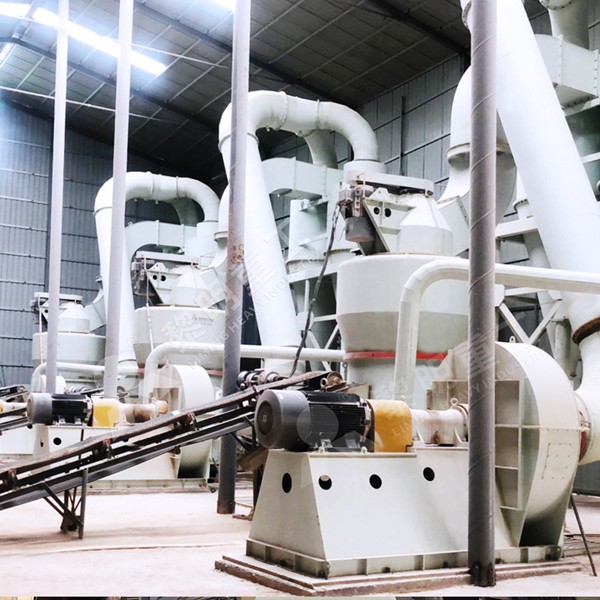
What sets Liming's Raymond Mill apart is its balance of performance and practicality. With a capacity range of 1.2 to 4.5 tons per hour for feed sizes between 15-25mm, it is perfectly scaled for dedicated powder production lines. Its strength lies in its simplicity and durability, requiring less floor space than larger vertical mills while delivering consistent output for medium to fine powder requirements. The company's commitment to "scientific research tackling key problems" is evident in the mill's design, which focuses on stable operation, ease of maintenance, and reduced energy consumption per ton of output. For businesses focused on calcium carbonate, gypsum, or other non-metallic minerals, this mill represents a reliable workhorse technology.
While the Raymond Mill is an excellent choice, Liming Heavy Industry's comprehensive portfolio allows for tailored solutions. For projects demanding ultra-fine calcium carbonate powder (d97 ≤ 5μm), the MW Micro Powder Mill, which incorporates advanced Swedish grinding technology, is the optimal choice. For large-scale production of non-metallic mineral powder with higher capacity needs, the MTW European Type Trapezium Mill offers patented technology with enhanced productivity and energy savings. The classic Ball Mill remains a versatile option for various grinding tasks, and the LM Vertical Roller Mill integrates drying and grinding for larger-scale operations. This range ensures that whether a customer needs coarse filler grade or high-grade coating calcium carbonate, Liming has a technologically advanced mill to match.
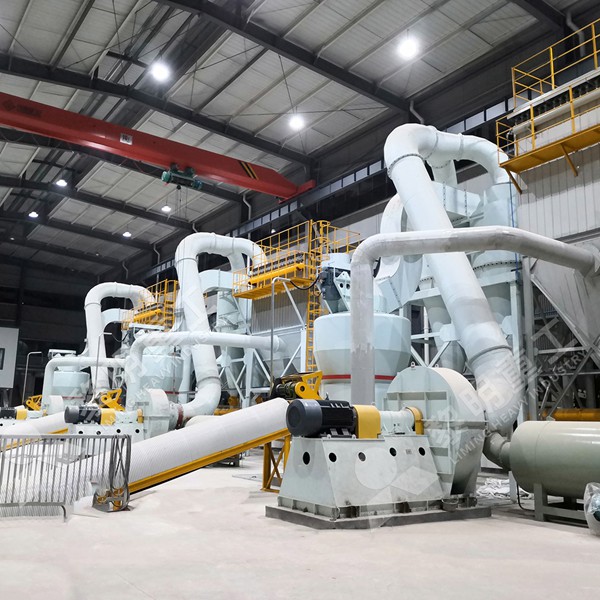
Choosing Liming Heavy Industry means partnering with a leader in crushing and grinding equipment. Headquartered in Zhengzhou's HI-TECH Industry Development Zone, with extensive manufacturing facilities, the company's modern management and precision manufacturing ethos underpin every machine. The Raymond Mill, like all Liming products, is backed by a dedicated R&D team focused on technological frontiers and improving product competitiveness. From initial consultation to installation support, Liming provides a complete service package, ensuring the milling system integrates seamlessly into your production line to deliver the precise calcium carbonate powder your business depends on.
Frequently Asked Questions (FAQ)
1. What is the typical fineness range achievable for calcium carbonate with your Raymond Mill?
Our Raymond Mill is designed to produce calcium carbonate powder with a fineness range between 613 microns (μm) and 44 microns (μm). This range can be adjusted to meet specific customer requirements for various industrial applications.
2. Can the Raymond Mill handle wet or high-moisture content limestone?
The standard Raymond Mill is suitable for grinding materials with a moisture content of less than 6%. For raw materials with higher moisture, we often recommend our LM Vertical Roller Mill, which integrates a drying function during the grinding process.
3. What kind of after-sales support do you provide with the milling equipment?
We provide comprehensive support including installation guidance, operational training, maintenance manuals, and readily available spare parts. Our technical team is available for consultation to ensure optimal and continuous operation of your equipment.
4. How does the Raymond Mill compare to the MTW European Type Grinding Mill for calcium carbonate?
The Raymond Mill is a robust, traditional design ideal for fine powder production up to 44μm. The MTW European Type Grinding Mill is an upgraded, more efficient version with higher capacity (up to 55 TPH), patented technology for better energy savings, and is often preferred for larger-scale, high-volume powder production lines.
5. Is the grinding system environmentally friendly?
Yes. Our Raymond Mill systems are equipped with efficient pulse jet dust collectors that recycle air within a closed circuit. This design significantly reduces dust emissions, ensuring the production process complies with national environmental protection standards.


