Published: October 26, 2023
For industries requiring precise and efficient pulverization of hard limestone, selecting the right grinding equipment is paramount to operational success, product quality, and cost management. Liming Heavy Industry Co., Ltd., with over three decades of engineering expertise, provides advanced Raymond mill and European Type Grinding Mill solutions specifically engineered to tackle the challenges of processing hard, abrasive materials like limestone. These systems integrate robust construction, intelligent design for fine powder control between 44μm and 613μm, and eco-friendly closed-circuit operations, ensuring high productivity for applications ranging from power plant desulfurization to heavy calcium carbonate production. This article delves into the technical specifications, working principles, and strategic advantages of utilizing Liming's specialized grinding technology for hard limestone processing.
Hard limestone, characterized by its high compressive strength and abrasiveness, demands grinding machinery built for endurance and precision. Liming Heavy Industry's flagship solution for such materials is the enhanced Raymond Mill and its technological successor, the MTW European Type Trapezium Mill. Unlike standard grinding equipment, these mills are designed with reinforced grinding rollers and rings, capable of handling materials with Mohs hardness up to 7. The MTW series, in particular, represents a significant evolution from traditional Raymond mill designs, incorporating patented technologies that enhance stability and output. Its capacity range of 3-55 TPH for hard limestone, with an input size of 30-50mm, makes it suitable for medium to large-scale production lines focused on producing fine powders for industrial fillers, sorbents, or cement raw meals.
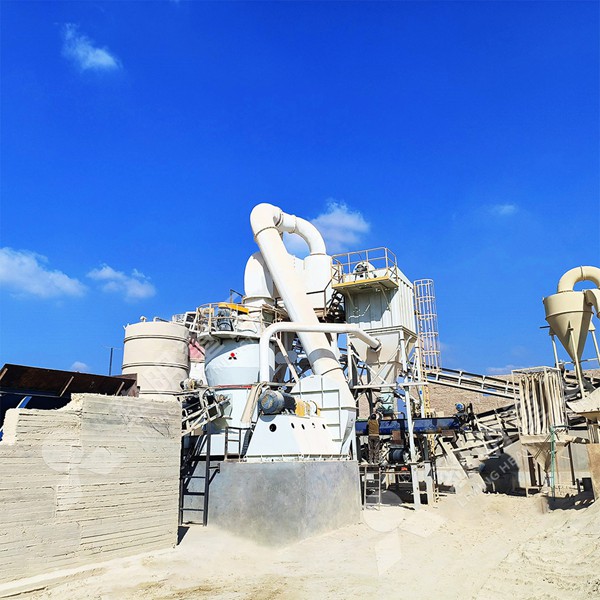
The core of Liming's grinding excellence lies in a sophisticated yet reliable working principle that optimizes every stage of size reduction. The process begins with a jaw crusher reducing large limestone lumps to the mill's feed size. A variable-frequency belt feeder then ensures a consistent and controllable material flow into the grinding chamber. Here, the limestone is ground between the rotating rollers and the stationary ring. The ground particles are carried upward by an airflow generated by an integrated blower to a high-efficiency separator. Critical to processing hard materials, this separator precisely classifies particles: oversized particles are rejected back to the grinding zone for further milling, while in-spec powder passes through as the final product. This closed-circuit system, coupled with a pulse dust collector, minimizes dust emissions and material loss, aligning with stringent environmental standards while maximizing yield.
Beyond the grinding mechanism itself, Liming's holistic approach to system design ensures operational synergy. The entire grinding line—comprising the mill, separator, blower, crusher, feeder, and dust collection system—is engineered to work as a cohesive unit. This integration facilitates automation, simplifies operation, and enhances energy efficiency. For hard limestone, the ability to maintain a stable grinding bed and control the fineness dynamically is crucial. The MTW European Type Mill's advanced electric control system allows for precise adjustment of parameters like roller pressure and classifier speed, enabling operators to achieve the target fineness (e.g., 200 mesh for desulfurization or 325 mesh for fillers) consistently, even as the material's grindability fluctuates.
When comparing grinding solutions, it's essential to consider the specific demands of hard limestone. While vertical roller mills (like the LM series) excel in high-capacity scenarios for softer materials, and micro powder mills (like the MW series) are unparalleled for superfine grinding, the Raymond/MTW mill platform offers an optimal balance of precision, robustness, and cost-effective operation for the 44μm to 613μm range. Its mechanical design, with easily replaceable wearing parts made from high-alloy materials, reduces maintenance downtime—a key factor when processing abrasive limestone. Furthermore, the system's compact footprint and lower installation height compared to some large ball mills make it a practical choice for plant upgrades or space-constrained environments.
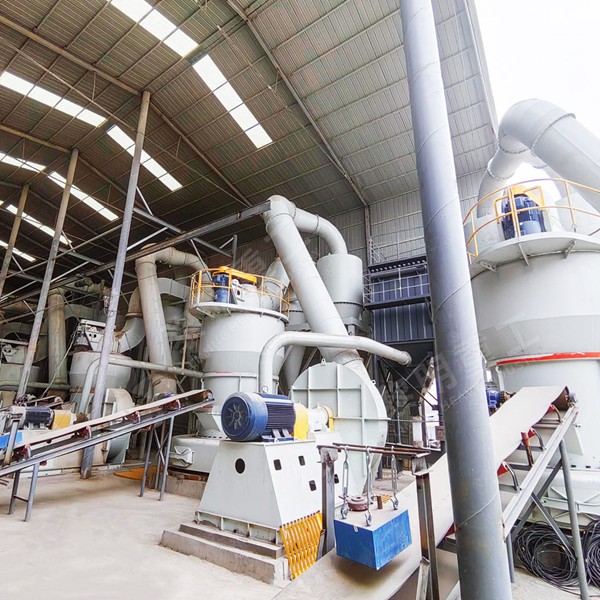
Liming Heavy Industry's commitment to scientific research and technological innovation is the backbone of its grinding equipment's performance. Based in Zhengzhou's HI-TECH Industry Development Zone, the company's R&D team continuously refines material science for wear parts and optimizes aerodynamic flow within the mill to reduce energy consumption per ton of product. This focus on "production, learning, and research" ensures that their Raymond and MTW mills are not just off-the-shelf products but solutions tailored for challenging materials like hard limestone. The result is equipment that delivers reliable uptime, consistent product quality for downstream processes, and a lower total cost of ownership, solidifying its role in modern non-metallic mineral processing circuits worldwide.
Frequently Asked Questions (FAQ)
- What is the main advantage of using an MTW European Type Mill over a traditional Raymond mill for hard limestone?
The MTW mill incorporates patented technological upgrades such as a curved air duct, internal lubricating system, and geared drive, which provide greater grinding efficiency, higher stability, lower vibration, and reduced energy consumption specifically beneficial for processing hard and abrasive materials like limestone. - How does the closed-circuit system contribute to environmental protection?
The closed-circuit system recycles the airflow, and any fine dust is captured by the integrated pulse dust collector before air is released. This design drastically reduces particulate emissions, ensures a cleaner workshop environment, and recovers valuable product, complying with modern environmental regulations. - Can the fineness of the ground limestone be adjusted during operation?
Yes. The fineness is primarily controlled by the speed of the built-in separator or classifier. Operators can adjust this speed via the electric control system to produce finer or coarser powder without needing to stop the mill, allowing for flexible production to meet different customer specifications. - What are the key wear parts in the mill when processing hard limestone, and how are they maintained?
The primary wear parts are the grinding rollers and the grinding ring. Liming designs these components from high-chromium or other wear-resistant alloys. They are modular and designed for relatively straightforward replacement, minimizing maintenance time and cost. - Is this equipment suitable for producing limestone powder for power plant flue gas desulfurization (FGD)?
Absolutely. Producing limestone powder for FGD is a primary application. The Raymond/MTW mill can efficiently produce the required 200-325 mesh fine powder with high uniformity and reactivity, which is critical for effective sulfur dioxide removal in power plants.


