Published: October 26, 2023
For over three decades, LIMING HEAVY INDUSTRY CO., LTD. has been at the forefront of industrial grinding technology, developing robust and efficient solutions for mineral processing. Among its flagship offerings, the Standard Type Raymond Mill stands out as a cornerstone for limestone grinding applications. This mill represents a mature, reliable, and highly adaptable technology, engineered to deliver consistent fine powder production for industries ranging from construction and chemicals to power plant desulfurization. It combines proven mechanical principles with modern refinements to offer a balance of performance, durability, and operational simplicity, making it an indispensable asset for processing non-flammable, non-explosive materials like limestone with Mohs hardness under 7 and humidity below 6%.
The core design philosophy of the Standard Type Raymond Mill centers on delivering dependable performance in demanding environments. Its structural integrity begins with a heavy-duty base and housing, constructed to withstand continuous operation and the vibrational stresses inherent in grinding processes. The heart of the system lies in its grinding assembly—comprising a vertical spindle, a grinding ring, and multiple grinding rollers. These components are crafted from high-chromium alloy or other wear-resistant materials, significantly extending service life when processing abrasive materials like limestone. The rollers, suspended under spring tension, rotate against the stationary ring, applying both pressure and shearing force to the feed material. This mechanical action is the primary driver for size reduction, efficiently crushing and grinding limestone into fine particles.
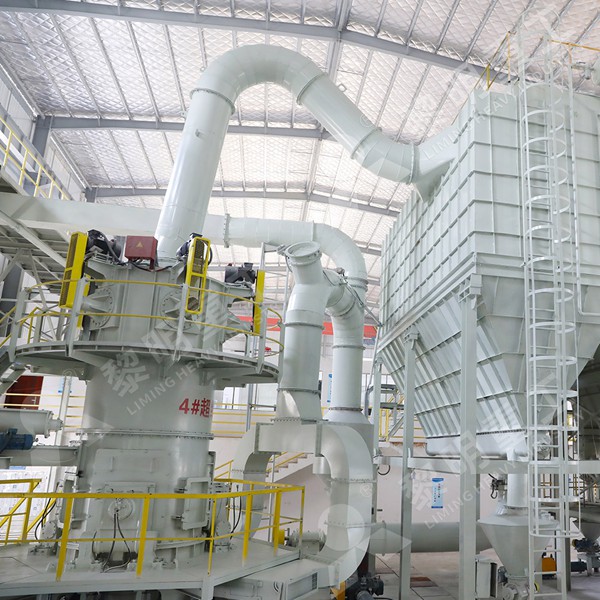
Operational efficiency is further enhanced by an integrated air system. A high-pressure centrifugal blower generates an upward air stream through the grinding chamber. This airflow serves a dual purpose: it transports the ground limestone particles upward to the separator (classifier), and it assists in drying the material by evaporating residual moisture, a crucial function given the mill's humidity specification. The classifier, typically a high-density impeller located at the top of the mill, is a critical component for product fineness control. It creates a centrifugal field that allows only particles meeting the target fineness to pass through and be carried to the cyclone collector and bag filter for final collection. Oversized particles are rejected by the classifier and fall back to the grinding zone for further comminution, creating a continuous, closed-circuit grinding loop.
The versatility of the Standard Type Raymond Mill for limestone is one of its most compelling attributes. Its adjustable fineness range, typically between 44μm (325 mesh) and 613μm, allows operators to produce powders tailored for diverse end-uses. For instance, coarser grinds may be suitable for agricultural lime or construction aggregates, while finer powders are essential for manufacturing paper, plastics, paints, and as a reagent in flue gas desulfurization (FGD) systems at thermal power plants. The mill's design accommodates a feed size of 15-25mm, which can be easily provided by a primary jaw crusher. With a capacity range of 1.2 to 4.5 tons per hour, it is ideally suited for medium-scale production lines, offering a practical balance between output and investment.
Beyond its core grinding function, LIMING's engineering emphasizes system integration and environmental responsibility. The standard configuration often includes auxiliary equipment such as a jaw crusher for primary size reduction, an electromagnetic vibrating feeder for consistent material flow, and a pulse-jet baghouse dust collector. This dust collector is paramount, ensuring that the entire grinding process is enclosed and that particulate emissions are kept well within stringent environmental standards. The system's electrical control cabinet centralizes operations, allowing for monitoring and adjustment of key parameters, thereby simplifying operation and maintenance procedures for plant personnel.
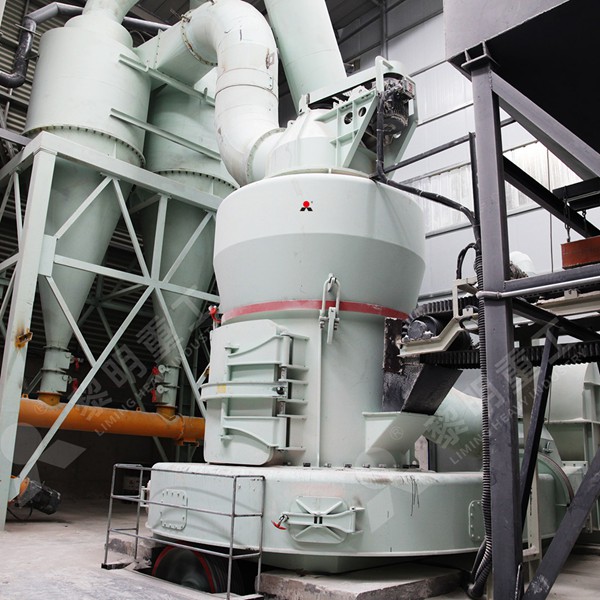
Maintenance of the Standard Type Raymond Mill is designed for straightforwardness, a testament to its mature design. Key wear parts like grinding rollers and rings are accessible and replaceable. The centralized lubrication system for the grinding roller bearings reduces manual intervention and enhances reliability. Furthermore, LIMING's commitment to "precision manufacturing, pioneering and innovation" means that even this established model benefits from ongoing technological improvements in material science and manufacturing techniques, ensuring that every unit delivers the performance and longevity that has become synonymous with the LIMING brand. For enterprises seeking a proven, efficient, and cost-effective solution for transforming limestone into valuable powder, the Standard Type Raymond Mill remains a benchmark in mineral grinding technology.
Frequently Asked Questions (FAQ)
- What is the maximum feed size and moisture content for limestone in this Raymond Mill?
The Standard Type Raymond Mill is designed to handle limestone feed with a maximum size of 15-25mm and a moisture content not exceeding 6%. Material pre-drying may be required if moisture levels are higher. - How is the fineness of the final limestone powder controlled?
Fineness is primarily controlled by adjusting the speed of the built-in classifier. Increasing the classifier speed allows only finer particles to pass, resulting in a finer product, and vice-versa. - What are the main wear parts, and what is their typical service life?
The primary wear parts are the grinding rollers and the grinding ring. Their service life depends on the abrasiveness of the limestone but typically ranges from several hundred to over a thousand hours of operation before requiring replacement or rebuilding. - Can this mill be used for materials other than limestone?
Yes, this Raymond mill is suitable for grinding various non-flammable and non-explosive materials with Mohs hardness below 7, such as calcite, barite, dolomite, feldspar, and activated clay, among others. - Is the grinding system a closed circuit? How does dust collection work?
Yes, the air system is a closed loop. A pulse-jet bag filter is integrated into the system to collect the final product and ensure no dust is released into the atmosphere, making the operation clean and environmentally compliant.


