Published: October 26, 2023
For over three decades, LIMING HEAVY INDUSTRY CO., LTD. has been at the forefront of designing and manufacturing robust, high-efficiency grinding solutions tailored for the demanding requirements of industrial-scale limestone processing. Our Raymond grinding equipment portfolio, encompassing traditional Raymond Mills, advanced MTW European Type Trapezium Mills, and specialized vertical and micro-powder systems, represents a synthesis of precision engineering, innovative technology, and a deep understanding of mineralogy. These systems are engineered to transform raw limestone into precisely graded powders for applications ranging from power plant desulfurization and construction materials to chemical manufacturing, all while prioritizing operational stability, energy efficiency, and environmental compliance.
At the core of our philosophy is a commitment to scientific research and technological advancement. Founded in 1987, LIMING has evolved from a domestic machinery manufacturer into a global leader by adhering to a modern management system and a "production, learning, and research" development model. Our headquarters and expansive production facilities enable us to maintain stringent quality control from raw material to finished machine. This dedication is embodied in our Raymond-type grinding mills, which are not merely off-the-shelf products but customizable solutions built to handle the specific hardness, humidity, and output fineness requirements of industrial limestone.
The classic Raymond Mill remains a cornerstone for reliable, medium-fine grinding. It is exceptionally suited for processing non-flammable, non-explosive materials like limestone with a Mohs hardness under 7 and humidity below 6%. Its strength lies in its proven design and versatility, capable of producing powders in a fineness range between 44μm and 613μm. This makes it ideal for initial processing stages in calcium carbonate production, gypsum preparation, and as a preparatory step for further refinement.
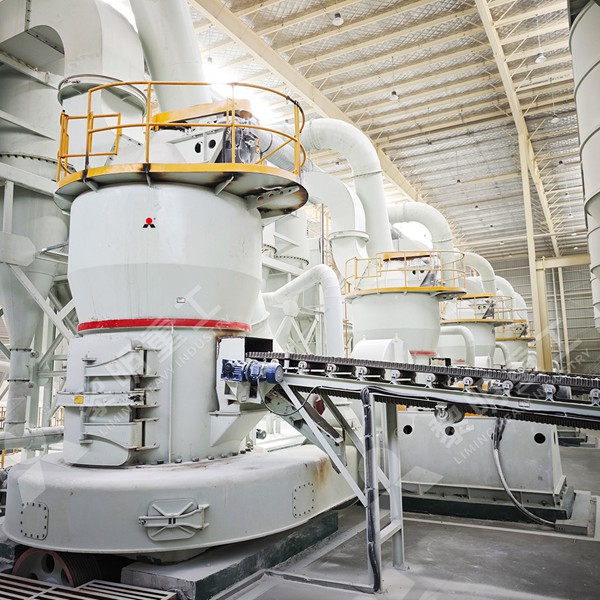
For operations demanding higher throughput, superior particle size distribution, and enhanced energy efficiency, the MTW European Type Trapezium Mill stands as a significant technological evolution. As an upgrade over traditional Raymond and pendulum mill designs, it incorporates patented technologies that stabilize grinding performance and boost productivity. Its integrated system—comprising jaw crusher, vibrating feeder, grinding mill, separator, and pulse dust collector—forms a closed-loop, environmentally sound process. This system is particularly effective for large-scale projects such as power plant limestone desulfurization and high-volume production of heavy calcium carbonate powder, where consistent quality and environmental standards are paramount.
Beyond these, our portfolio is diversified to cover the full spectrum of limestone processing needs. The LM Vertical Roller Mill integrates drying, grinding, powder selection, and conveying into a single, space-saving unit, offering high capacity (10-400 T/H) for raw limestone feed. For ultra-fine powder applications where fineness down to 5μm (d97) is required, the MW Micro Powder Mill, leveraging advanced Swedish grinding technology, delivers exceptional results for high-value limestone products. Meanwhile, the traditional Ball Mill serves as a robust and universally applicable option for various milling stages.
The working principle of our flagship MTW series exemplifies our focus on efficiency. Large limestone lumps are first reduced by a jaw crusher, then consistently fed into the grinding chamber. Here, materials are ground between the rotating rollers and the fixed ring. The ground powder is pneumatically conveyed to a high-efficiency separator, where oversized particles are recycled for further grinding, ensuring a uniform final product. The entire air circuit is recycled, and the integrated pulse dust collector guarantees that emissions meet stringent environmental regulations, making the process as green as it is productive.
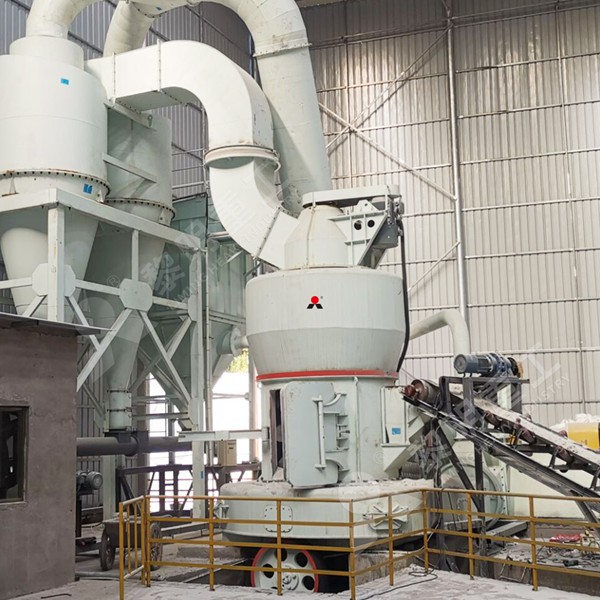
Choosing the right limestone grinding equipment is a critical decision that impacts operational cost, product quality, and plant footprint. LIMING HEAVY INDUSTRY provides not just equipment, but comprehensive support—from initial application analysis and system design to installation and maintenance. Our machines are built for durability and ease of service, ensuring maximum uptime in the harsh conditions of mineral processing plants. By investing in a LIMING grinding solution, industries gain a partner dedicated to pushing the boundaries of what is possible in mineral powder preparation, driving progress in construction, energy, and manufacturing sectors worldwide.
Frequently Asked Questions (FAQ)
- What is the primary difference between a traditional Raymond Mill and the MTW European Type Trapezium Mill?
The MTW Mill is an advanced evolution featuring patented technology for greater stability, higher productivity, and improved energy efficiency. It often includes a more integrated system with a feeder and crusher, and is engineered for larger-scale, more environmentally controlled production compared to the classic Raymond Mill. - Can your grinding equipment handle wet or high-humidity limestone?
Our LM Vertical Roller Mill is specifically designed with integrated drying capabilities, making it suitable for materials with higher moisture content. The standard Raymond Mill requires material humidity to be less than 6% for optimal operation. - What fineness range can be achieved for limestone powder with your equipment?
Our range covers from coarse grinding to superfine powders. The MTW and Raymond Mills can achieve 44μm-613μm, while the MW Micro Powder Mill can produce ultra-fine powder as fine as 5μm (d97), adjustable within a range of 325 to 3250 mesh. - How does your equipment ensure environmental compliance in industrial settings?
Our grinding systems, particularly the MTW and MW series, are designed as closed-loop circuits with high-efficiency pulse jet dust collectors integrated into the system. This design minimizes dust emissions and ensures the process meets national environmental protection standards. - What factors should be considered when selecting a limestone grinding mill for a new project?
Key factors include: the required production capacity (TPH), the target fineness of the final product, the initial size and moisture content of the raw limestone, the intended application (e.g., desulfurization, construction, chemicals), and overall plant space and energy efficiency goals. Our technical team can assist in this evaluation.


