Published: February 18, 2025
Summary: Battery anode grade graphite requires precise grinding, classification, and spheroidization. Liming Heavy Industry Co., Ltd. offers a complete range of grinding mills — LM Vertical Roller Mill, MTW European Type Trapezium Mill, MW Micro Powder Mill, Raymond Mill, and Ball Mill — that can handle feed sizes from ≤10 mm up to 55 mm and deliver capacities from 0.5 T/H to 400 T/H, with fineness ranging from 613 μm to d97 ≤ 5 μm. This article explains the key equipment, selection criteria, and system design considerations for producing consistent graphite anode material.
The Hidden Challenge of Graphite Anode Grinding
Graphite anode material is not just about making powder. It is about making the right kind of powder. Lithium-ion batteries demand anode particles with high tap density, narrow particle size distribution, good sphericity, and stable electrochemical performance. This means the grinding mill must do more than crush; it has to shape, classify, and protect the graphite's crystalline structure.
Over years of working with mineral processing projects, I have learned that graphite can be one of the most deceptive materials to grind. It is soft, slippery, and easy to over-grind. If you apply too much energy, you create excessive fines and destroy the flaky morphology needed for later spheroidization and coating. That is why equipment selection and system design matter more than raw power.
Core Equipment for Graphite Anode Production
Liming Heavy Industry has built grinding systems for dozens of non-metallic minerals, and graphite is a natural fit for several products in our lineup. Below I will walk through the mills most relevant to battery anode preparation.
1. LM Vertical Roller Mill
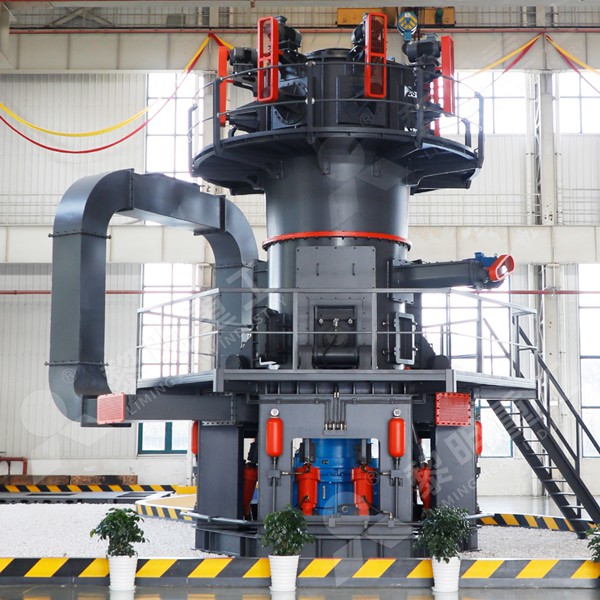
The LM Vertical Roller Mill is a workhorse for large-scale graphite preparation. It integrates drying, grinding, powder selection, and conveying in one unit. For battery anode plants that need continuous throughput and stable quality, this mill can deliver a significant advantage.
- Capacity: 10–400 T/H
- Input size: 30–55 mm
- Main application: large-scale preparation, coal-based synthetic graphite, and pre-grinding before spheroidization
In a graphite anode production line, the LM vertical mill is often used in the primary grinding stage. Because it can take a relatively large feed and produce a consistent product, it reduces the load on downstream micronization equipment. The automatic electric control system helps stabilize the grinding ring pressure and classifier speed, which directly affects the final particle size distribution.
2. MTW European Type Trapezium Mill
If you are upgrading from an old Raymond mill or pendulum mill, the MTW European Type Trapezium Mill is the modern replacement. It keeps the simplicity of roller grinding but improves efficiency, powder fineness, and reliability.
- Capacity: 3–55 T/H
- Input size: 30–50 mm
- Main application: natural flake graphite, medium-capacity spheroidization feed preparation
The closed system includes a separator, air blower, pulse dust collector, and recycling air flow. That means lower dust leakage and a cleaner workshop. For graphite, which can produce very fine conductive dust, this is not a luxury. It is a safety and environmental necessity.
3. MW Micro Powder Mill
When the target fineness goes down to micron levels, the MW Micro Powder Mill is the machine I usually recommend. It is designed for superfine grinding, and the finished product can reach d97 ≤ 5 μm, with fineness adjustable from 325 mesh to 3250 mesh.
- Capacity: 0.5–25 T/H
- Input size: 10–20 mm
- Main application: micronization of graphite for anode coating and battery-grade fine powder
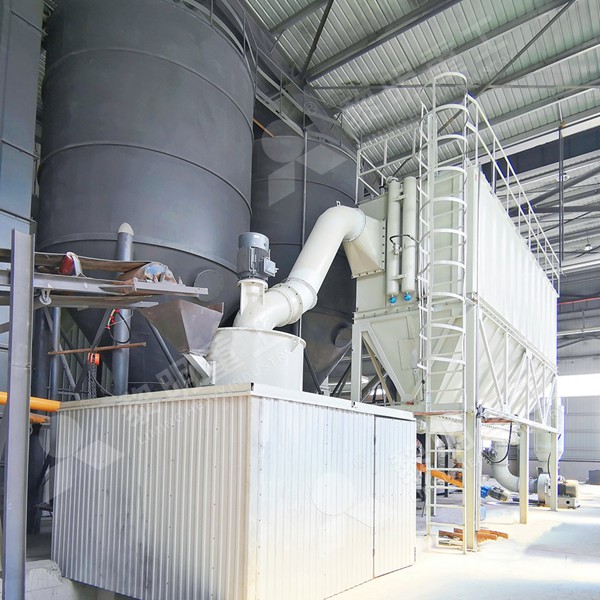
Graphite anode materials often need a D50 between 8 and 20 μm, with a controlled amount of fine particles below 5 μm. The MW Micro Powder Mill, with its classifier and multi-roller grinding mechanism, can produce this type of distribution without excessive energy consumption. It also uses a pulse precipitator, which keeps the process green.
4. Raymond Mill
The Raymond mill remains a reliable choice for smaller graphite processing lines. It is suitable for non-flammable and non-explosive materials under 7 Mohs hardness and less than 6% humidity, making it appropriate for natural graphite.
- Capacity: 1.2–4.5 T/H
- Input size: 15–25 mm
- Output fineness: 613 μm–44 μm
For a small battery anode production line or a pilot plant, the Raymond mill is simple to operate and easy to maintain. However, its capacity is limited, so if you plan to scale up, you should start with a larger system or add multiple units.
5. Ball Mill
The ball mill is the oldest and most widely used grinding equipment in the industry. It can grind all kinds of ores and other materials, and it is especially common in beneficiation and construction materials.
- Capacity: 0.65–50 T/H
- Input size: ≤25 mm
- Main application: blending, co-grinding, or producing a broad particle size distribution
In graphite anode processing, the ball mill is less common as a final shaping tool because its product size distribution is often too wide. But it can be useful for pre-grinding mixtures, synthetic graphite, or recycling edge trims. The ladder and ripple liners, combined with different steel ball sizes, allow operators to adjust the grinding intensity to some extent.
How to Choose the Right Graphite Grinding Mill
There is no single best mill for all battery anode projects. The right choice depends on several variables:
- Feed size: Larger feed sizes need a vertical roller mill or MTW mill. Smaller feeds can go directly to a micro powder mill.
- Target fineness: If you need 325 mesh, a Raymond mill may be enough. If you need D97 below 10 μm, use the MW Micro Powder Mill.
- Throughput: High-volume plants need the LM Vertical Roller Mill. Pilot plants can work with a Raymond mill or small ball mill.
- Moisture content: Graphite is usually dry, but if the incoming material is damp, choose a mill with drying capability, such as the LM vertical mill.
- Downstream process: If spheroidization is next, you need a narrower particle size distribution. That favors a mill with an efficient internal classifier.
System Design and Process Integration
A grinding mill does not operate alone. For a graphite anode preparation plant, the whole system must work together. A typical circuit includes:
- Jaw crusher for primary crushing of lump graphite
- Vibrating feeder or variable-frequency belt feeder for controlled material flow
- Grinding mill with internal or external classification
- Pulse dust collector for clean air and product recovery
- Powder collector and conveying system
The MTW mill's working principle shows this kind of integrated system well. Large lumps are crushed, then fed uniformly. Ground material moves upward with air flow, and particles that cannot pass the separator fall back for another pass. Air is recycled in a closed loop. This design not only improves efficiency but also reduces dust emissions, which is critical when processing graphite because graphite dust is electrically conductive and can settle on switchgear and control panels.
In my experience, operators often underestimate the importance of the classifier. For battery anode material, the separator's rotating speed determines the top particle size. Too slow, and you get coarse particles that hurt electrode coating. Too fast, and you generate too many ultrafine particles that degrade the anode's first-cycle efficiency. Modern mills like the LM vertical mill and MW micro powder mill allow fine-tuning of the classifier, and that is a major reason they perform better than older equipment.
Quality Control and Environmental Compliance
Anode manufacturers are under increasing pressure to reduce costs, improve battery life, and meet environmental regulations. Using the right grinding mill contributes to all three. A stable grinding process reduces batch-to-batch variation. A closed-loop system with pulse dust collection prevents powder loss and keeps the plant compliant with air quality standards.
Liming Heavy Industry has been manufacturing grinding equipment since 1987. Our headquarter in Zhengzhou's High-Tech Industry Development Zone covers 80,000 square meters, and another workshop in Shangjie Industry Park covers 67,000 square meters. This manufacturing scale gives us the ability to deliver large systems and spare parts quickly. More importantly, the research team continues to improve mill designs to meet the changing requirements of lithium-ion battery materials.
Conclusion
Graphite grinding for battery anodes is not just a simple size reduction operation. It requires a balance between particle size, shape, throughput, and energy consumption. Liming Heavy Industry offers a range of grinding mills that can be matched to the specific needs of natural or synthetic graphite processing. For large-scale production, the LM vertical roller mill and MTW European type trapezium mill offer high capacity and reliable classification. For micronization and fine anode powder, the MW micro powder mill is the standout choice. The Raymond mill and ball mill still have their place in smaller lines and specific applications.
If you are planning a new graphite anode production line or upgrading an existing one, start by defining your feed material, target D50/D97, capacity, and moisture limitations. Then choose the mill that fits, and design the surrounding system with a proper classifier and dust control. In doing so, you will not only make better battery anode material but also run a safer, cleaner, and more profitable plant.
Frequently Asked Questions (FAQ)
1. What is the best grinding mill for spherical graphite anode material?
For spherical graphite production, the MW Micro Powder Mill is often the best choice because it can produce fine powder with a narrow particle size distribution and adjustable fineness down to d97 ≤ 5 μm. It works well with a downstream spheroidization or shaping step.
2. Can the same mill grind both natural and synthetic graphite?
Yes, in many cases. Both natural flake graphite and synthetic graphite are relatively soft, non-flammable, and non-explosive. However, synthetic graphite can be more abrasive and may require harder grinding elements. The LM vertical mill and MTW mill can handle both, with proper configuration.
3. How do you control particle size distribution in graphite grinding?
You control it by adjusting the internal classifier speed, air flow, grinding pressure, and feed rate. Modern mills from Liming Heavy Industry have automatic control systems that make these adjustments more precise and repeatable.
4. What is the role of classification in a graphite grinding circuit?
Classification ensures that only particles within the desired size range leave the mill. Oversize particles are returned for further grinding. This is essential for battery anode material because oversized particles cause problems in electrode coating, and excessive fines hurt electrochemical performance.
5. How can I minimize over-grinding and fines in graphite processing?
Use a mill with an efficient internal classifier and avoid excessive grinding pressure. Also, consider multiple passes with intermediate classification. The MW micro powder mill and LM vertical mill both allow careful control of residence time and classification, which helps protect graphite morphology.


