Published: April 27, 2026
When it comes to Raymond roller mill for powder making, Liming Heavy Industry Co., Ltd. offers a proven grinding solution that has served the global market for decades. This mill is designed for non-flammable and non-explosive materials with Mohs hardness below 7 and moisture content under 6%. It accepts feed sizes of 15-25 mm and delivers a capacity of 1.2-4.5 t/h. The output fineness can be adjusted from 613 μm to 44 μm, which covers many common powder specifications. Liming has been manufacturing medium and large crushing and grinding equipment since 1987, and the Raymond roller mill remains a reliable, cost-effective choice for calcium carbonate, gypsum, desulfurization, non-metallic ore, and pulverized coal applications.
If you are evaluating a powder making system, the Raymond roller mill is often one of the first machines to consider. It is not the newest type of grinder, but it has a simple structure, stable operation, and low maintenance cost. In this article, I will walk you through the key features, working principle, typical applications, selection considerations, and maintenance tips for this classic mill. I will also share a few related equipment options from Liming Heavy Industry, so you can make an informed decision for your project.
Why Choose a Raymond Roller Mill?
The Raymond roller mill has been around for many years, yet it remains popular because it gets the job done efficiently. For small and medium powder-making projects, it offers a balanced combination of output, fineness, and operating cost.
- Stable performance: The grinding roller and ring are designed for continuous operation. The machine can run for long hours without frequent stops.
- Adjustable fineness: By changing the classifier speed, you can control the final particle size within the range of 613 μm to 44 μm. This flexibility is useful for producers who need to switch between different powder grades.
- Simple structure: Fewer moving parts mean less wear and easier maintenance. Operators can learn the basic routine without extensive training.
- Compact footprint: Compared with some other grinding systems, the Raymond mill is relatively compact. It fits well into existing plants where space is limited.
- Environmental protection: When equipped with a pulse dust collector, the mill can meet modern emission requirements. The powder collection system also helps improve product yield.
The Working Principle of a Raymond Roller Mill
Understanding how the Raymond mill works will help you operate it correctly and troubleshoot problems before they become serious. The system is not complicated, but every component has a specific job.
First, the raw material is crushed by a jaw crusher to a size that the mill can handle. The recommended feed size for the Liming Raymond mill is 15-25 mm. Then, a vibrating feeder or a variable-frequency belt feeder sends the material evenly into the grinding chamber. Inside the chamber, the grinding roller swings outward under centrifugal force and presses tightly against the grinding ring. The material is crushed and ground between the roller and the ring.
As the material is ground, air flow carries the fine powder upward to a classifier. The classifier acts like a sieve: particles that are fine enough pass through and enter the powder collector; particles that are still too coarse fall back to the grinding area for another cycle. The air flow then returns to the blower, and the system operates in a closed loop. A pulse dust collector removes fine dust from the air before it is recycled, making the whole process cleaner.
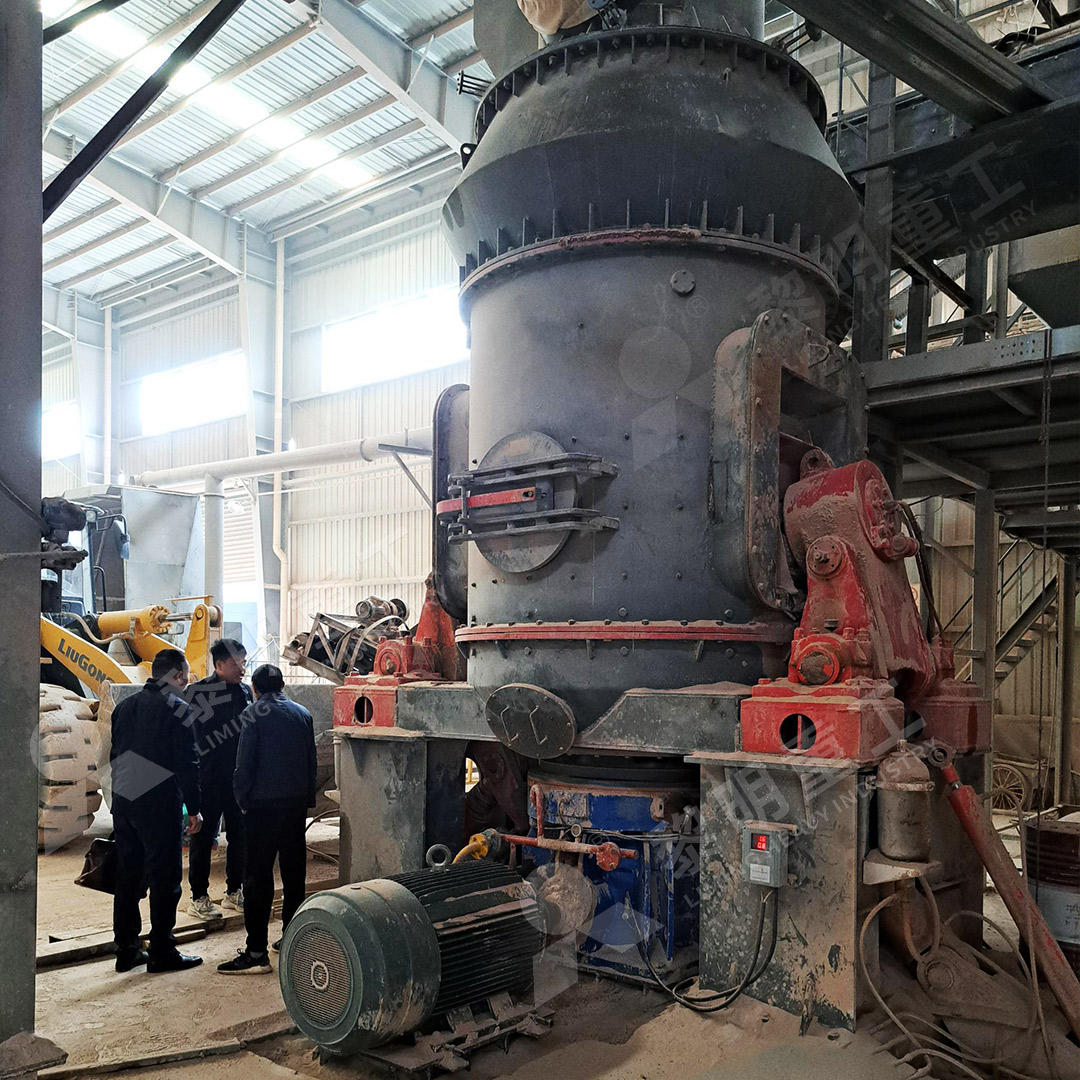
The ability to grind and classify in one continuous process is one of the main reasons why the Raymond roller mill is still widely used. It reduces the need for separate screening equipment and saves energy.
Main Applications of Raymond Roller Mill
The Liming Raymond roller mill is suitable for grinding materials with a hardness below 7 on the Mohs scale and a moisture content below 6%. This covers a wide range of non-metallic minerals and industrial powders.
- Calcium carbonate crushing and processing: From coarse fillers to fine powders, the Raymond mill can produce the particle sizes needed in plastics, rubber, paint, and paper industries.
- Gypsum powder making: The mill grinds gypsum into powder for building materials, plasterboard, and cement additives.
- Power plant desulfurization: Limestone powder used in desulfurization systems can be prepared with a Raymond mill. The mill provides a steady supply of fine limestone powder that reacts with sulfur dioxide.
- Non-metallic ore pulverizing: Barite, talc, kaolin, bentonite, and similar ores are common materials for Raymond mills. The machine handles them with acceptable wear and energy consumption.
- Pulverized coal preparation: For industrial boilers or furnaces, the Raymond mill can be used to produce pulverized coal. The fineness and output meet the needs of many small and medium combustion systems.
Selecting the Right Raymond Mill for Your Project
Not every Raymond mill is identical. The Liming Raymond mill has a capacity of 1.2-4.5 t/h and a feed size of 15-25 mm, but the actual performance depends on your raw material properties and target fineness.
When selecting a mill, ask yourself these questions:
- What is the hardness and moisture content of the raw material? If the hardness exceeds 7 Mohs or moisture is above 6%, a Raymond mill is not suitable.
- What final fineness do you need? If the target is 613 μm to 44 μm, the Raymond mill is a good fit. If you need ultra-fine powder below 325 mesh, a micro powder mill or vertical mill might be better.
- What is your required capacity? For small plants, the Raymond mill offers a practical range. For larger projects, consider the LM vertical roller mill or the MTW European trapezium mill.
- What auxiliary equipment is available? You need a crusher, feeder, blower, dust collector, and electric control panel to build a complete grinding line.
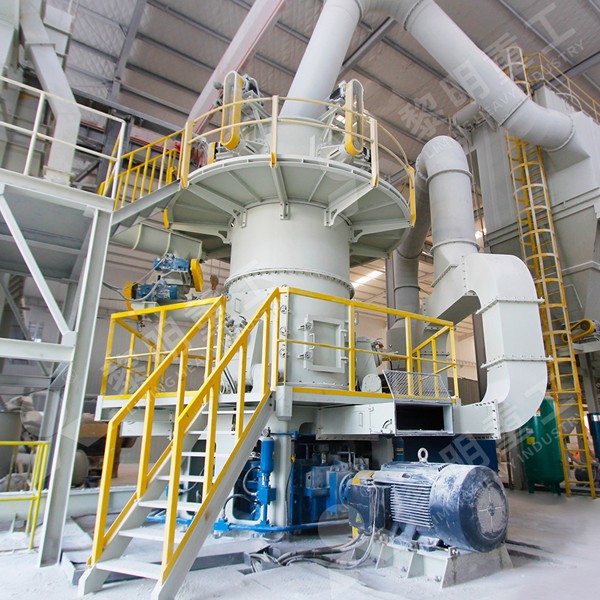
The Liming product line includes several other mills, each designed for a different challenge. The LM vertical roller mill handles 10-400 t/h and integrates drying, grinding, and powder selection. The MTW European type trapezium mill is the upgrade of the traditional Raymond mill and offers higher capacity and patented technology. The MW micro powder mill can grind material down to d97 ≤ 5 μm, with fineness adjustable from 325 mesh to 3250 mesh. The ball mill remains a common choice for beneficiation and cement plants.
Operation and Maintenance Tips
How well a Raymond mill performs over time depends on how it is operated and maintained. Here are some practical tips from my experience working with grinding equipment:
- Keep the feed uniform. A vibrating feeder with a variable frequency drive is better than manual feeding. Even distribution prevents overloading and reduces vibration.
- Monitor the grinding roller and ring. These are the main wear parts. Check them regularly and replace them when the gap becomes too large.
- Lubricate the bearings. Follow the manufacturer's recommended grease or oil schedule. Overheating is often caused by poor lubrication.
- Check the classifier. If the fineness changes, the classifier blades may be worn or the speed may need adjustment.
- Clean the dust collector. A blocked filter bag can reduce air flow and cause the mill to overheat or produce coarser powder.
- Listen for abnormal noise. Metal-to-metal contact or loose bolts often create unusual sounds. Stop the machine and inspect before continuing.
By following these simple steps, you can extend the service life of the Raymond roller mill and keep product quality stable.
Why Liming Heavy Industry?
Liming Heavy Industry Co., Ltd. was founded in 1987 and has grown into a modern joint-stock company with research, manufacturing, and sales capabilities. The headquarters is located in the Hi-Tech Industry Development Zone of Zhengzhou, covering about 80,000 square meters. Another workshop in the Shangjie Industry Park covers 67,000 square meters. Over more than 30 years, Liming has developed a mature scientific research team and a full range of crushing and grinding equipment.
Liming does not simply sell machines. The company offers a complete solution, including equipment selection, process design, installation guidance, and after-sales support. This is important because a powder making plant involves more than just the mill. The crusher, feeder, conveying system, dust collection, and electrical automation must all work together.
FAQ
Here are five common questions about the Raymond roller mill for powder making.
1. What is the feed size range for the Liming Raymond roller mill?
The recommended feed size is 15-25 mm. If the raw material is too large, it should be pre-crushed by a jaw crusher or another primary crusher before entering the mill.
2. What output fineness can the Raymond mill achieve?
The standard fineness range is 613 μm to 44 μm. This corresponds to roughly 25 mesh to 325 mesh. The exact fineness is controlled by the classifier and can be adjusted to meet your product requirements.
3. Can the Raymond mill handle wet materials?
No. The moisture content of the feed must be below 6%. If the material is wetter, it will stick to the grinding ring and rollers, causing lower output and higher downtime. A drying step is needed before milling.
4. Which industries use the Raymond roller mill?
It is used in calcium carbonate processing, gypsum powder making, power plant desulfurization, non-metallic ore pulverizing, and pulverized coal preparation. It is also used in building materials and chemical industries for fine powder production.
5. Does Liming provide a complete grinding system?
Yes. Liming can supply the complete Raymond grinding line, including the jaw crusher, vibrating feeder, mill, classifier, blower, dust collector, pipe system, powder collector, and electric cabinet. The closed-loop airflow system with a pulse dust collector meets modern environmental protection standards.


