— Summary: The LM Vertical Roller Mill from Liming Heavy Industry Co., Ltd. is a modern grinding system that combines drying, grinding, powder selection and pneumatic conveying in one compact unit. Delivering a capacity of 10 to 400 tons per hour with a feed size of 30 to 55 mm, this mill is designed for cement, electricity, metallurgy, chemical, non-metallic mineral, coal and slag applications. It is particularly suited to non-metallic minerals, coal and slag, and its automatic electric control system ensures stable, energy-efficient production.
Vertical Roller Mill: A Modern Answer to Mineral Grinding
Mineral grinding is a demanding process. Operators must balance particle size distribution, moisture content, energy consumption and equipment reliability. For many years, traditional tumbling mills were the default choice, but they often require large floor space, high energy input and separate drying and classification systems. The vertical roller mill has changed that picture by putting several functions into one machine. At Liming Heavy Industry, we have focused on this technology for more than three decades, and our LM Vertical Roller Mill represents a practical, efficient and intelligent solution for modern mineral processing plants.
What Is a Vertical Roller Mill?
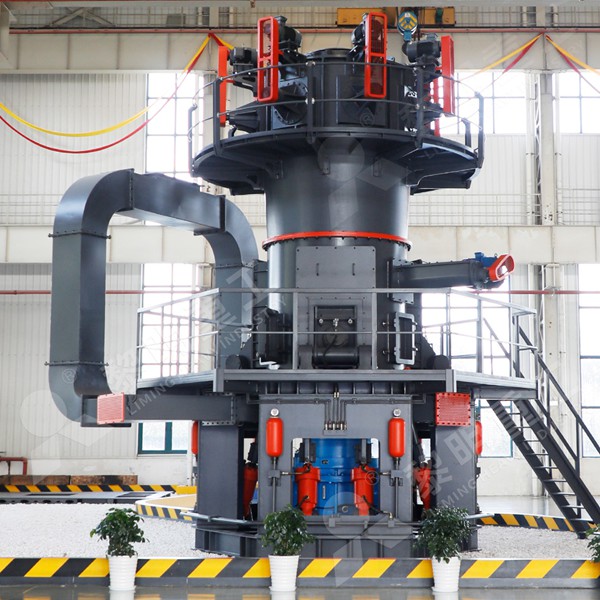
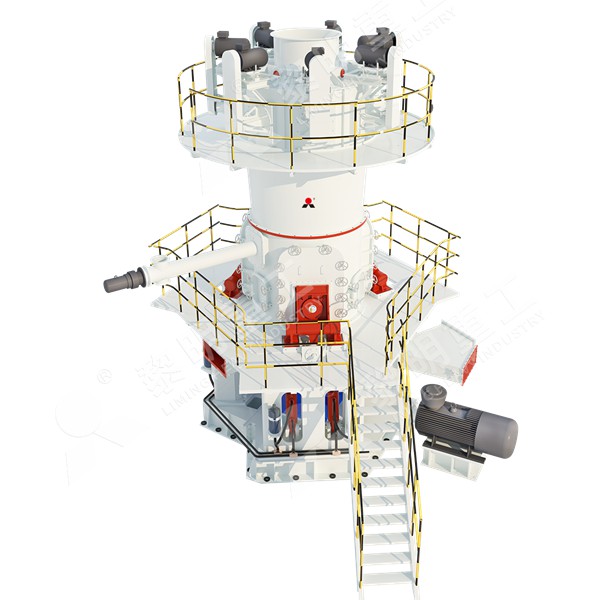
A vertical roller mill uses a vertically oriented grinding table and one or more conical rollers to crush and shear material. Unlike horizontal tumbling mills, the VRM relies on a combination of compressive force and shear force. Material forms a bed on the rotating table. As the table passes under hydraulically loaded rollers, the material is ground by pressure and shearing action. The ground particles are then carried upward by an air stream and classified by an integrated separator. This design is what allows the vertical roller mill to achieve high efficiency with a relatively compact footprint.
Working Principle of the LM Vertical Roller Mill
In the LM vertical roller mill, raw material enters through a feed chute and falls onto the center of the rotating grinding table. Centrifugal force moves the material outward into the grinding bed. Hydraulic cylinders press the grinding rollers firmly against the material, crushing and shearing it into fine particles. The table's rotation continuously supplies fresh material to the rollers, creating a stable and consistent grinding process.
Hot air, or gas, enters from below the table and lifts the ground powder upward to the separator. Coarse particles are rejected by the classifier and returned to the table for another pass. Fine particles pass through the separator and are collected as finished product by a dust collector or cyclone. The system uses a closed-circuit airflow, which improves efficiency and reduces dust emission. The automatic electric control system monitors feed rate, grinding pressure, gas temperature and classifier speed, maintaining consistent product quality even when raw material characteristics change.
Integrated Drying, Grinding, Selection and Conveying
One of the most important advantages of the LM vertical roller mill is its ability to perform several process steps in a single machine. The mill integrates drying, grinding, powder selection and conveying into one system, which simplifies plant layout and reduces auxiliary equipment.
- Drying: Hot gas can remove moisture from minerals, coal and slag while the material is being ground and conveyed. This is especially valuable for materials with relatively high moisture content.
- Grinding: The grinding table and rollers use a material bed grinding principle, which is more energy-efficient than impact grinding in traditional ball mills.
- Powder selection: The built-in classifier controls fineness precisely. Operators can adjust rotor speed to meet different product specifications.
- Conveying: The air stream carries finished powder to the collector, eliminating the need for a separate mechanical conveyor system.
Because these functions are combined, the LM vertical roller mill helps customers reduce installation cost, building area and maintenance workload.
Technical Highlights of the LM Vertical Roller Mill
| Item | Specification |
| Machine type | LM Vertical Roller Mill |
| Capacity | 10–400 T/H |
| Feed size | 30–55 mm |
| Process integration | Drying, grinding, powder selection, conveying |
| Main industries | Cement, electricity, metallurgy, chemical, non-metallic minerals |
| Key focus areas | Non-metallic minerals, coal, slag |
With such a broad capacity range, the LM vertical roller mill can serve small industrial mineral projects as well as large cement raw material or slag grinding plants. The feed size range also gives plant designers flexibility when selecting upstream crushing equipment.
Applications in Mineral Processing
The LM vertical roller mill is widely used across several heavy industries. In the cement sector, it grinds raw meal and cement additives. In the electricity sector, it is used for coal grinding and limestone for desulfurization. In metallurgy, the mill can process slag and other auxiliary materials. In the chemical and non-metallic mineral industries, it handles a variety of ores and industrial minerals including calcium carbonate, gypsum, barite, phosphate rock and many other non-metallic minerals.
Three major application areas stand out: non-metallic minerals, coal and slag. These materials have different grinding characteristics, but the LM mill's adjustable grinding pressure, airflow and classifier speed allow it to adapt quickly. Whether the target is a coarse powder or a fine product, the system can be tuned to meet the required specification.
Key Advantages of Choosing a Vertical Roller Mill
- Energy efficiency: The material bed grinding mechanism uses less energy per ton than conventional tumbling mills, especially in large-scale operations.
- Compact layout: The integrated design reduces the number of separate machines, ducts and conveyors, saving valuable plant space.
- Excellent drying performance: Hot gas can be introduced directly into the mill, making it easier to process slightly moist materials.
- Adjustable fineness: The dynamic classifier enables accurate control of product particle size distribution.
- Stable process: The automatic electric control system responds quickly to process fluctuations, ensuring a reliable output.
- Environmental protection: The closed-circuit airflow system and pulse dust collector help reduce dust leakage and meet modern environmental standards.
Engineering Experience Behind the LM Mill
Liming Heavy Industry Co., Ltd. was founded in 1987. Over the past 30 years, the company has grown into a modern joint-stock enterprise integrating research, manufacturing and sales. Our headquarters is located in the HI-TECH Industry Development Zone of Zhengzhou, covering 80,000 square meters. Another workshop in the Shangjie Industry Park covers 67,000 square meters. This manufacturing capacity allows us to produce large and medium-sized crushing and grinding equipment for customers around the world.
We have always adhered to a scientific management system and precision manufacturing. In our R&D work, we combine scientific research, technological progress and feedback from real projects. Our engineering team works continuously on improving the competitiveness of our products, focusing on the technological frontier of the industry. This is why Liming Heavy Industry has become a leader in domestic and overseas machinery manufacturing.
Operation and Maintenance Considerations
Successful operation of a vertical roller mill depends on proper handling of feed size, moisture content, grinding pressure, airflow and roller wear. The LM mill's automatic control system simplifies these tasks for operators. Regular inspection of the grinding table, roller tires, hydraulic system and seal air system helps maintain long service life and stable performance.
Because the LM vertical roller mill operates under negative pressure in a closed circuit, dust emissions are well controlled. This is an important advantage for plants located in environmentally sensitive areas. The compact design also means maintenance access can be arranged more easily than with traditional grinding systems.
Conclusion
The LM Vertical Roller Mill is a robust and intelligent solution for mineral grinding. With a capacity range of 10 to 400 tons per hour, a feed size of 30 to 55 mm, and integrated drying, grinding, selection and conveying, it meets the needs of cement, electricity, metallurgy, chemical and non-metallic mineral industries. The automatic electric control system provides stability and ease of operation, while the compact design contributes to lower construction and operating costs. For companies looking to upgrade their grinding process, the LM vertical roller mill from Liming Heavy Industry offers a proven, future-oriented option.
Frequently Asked Questions
1. What types of minerals can be ground with the LM vertical roller mill?
The LM vertical roller mill is suitable for non-metallic minerals, coal, slag, cement raw materials and many other ores. It is widely used in cement, electricity, metallurgy, chemical and mineral processing industries.
2. Does the LM vertical roller mill have drying capability?
Yes. The system integrates drying, grinding, powder selection and conveying. Hot gas from an external heat source or kiln can dry materials with increased moisture as they are ground and conveyed.
3. What feed size does the LM mill accept?
The standard LM vertical roller mill can accept feed sizes of 30 to 55 mm. Larger particles should be crushed by a primary crusher before entering the mill.
4. How is product fineness controlled?
Product fineness is controlled by the integrated dynamic separator and the mill's automatic electric control system. Adjusting the classifier speed and airflow allows operators to respond quickly to fineness requirements.
5. Why is the LM vertical roller mill considered energy-efficient?
Because it combines multiple process steps in one compact machine and uses a material bed grinding mechanism, the LM vertical roller mill consumes less energy than conventional tumbling mills. It also reduces auxiliary equipment requirements and building area.


