Published: June 12, 2025
Rare earth ore grinding mill is the core equipment used to process rare earth minerals into fine powders for subsequent beneficiation, hydrometallurgy, and industrial applications. Liming Heavy Industry Co., Ltd. supplies a complete range of grinding solutions for rare earth ore processing, covering vertical roller mills, European type trapezium mills, micro powder mills, Raymond mills, and ball mills. With a manufacturing headquarters covering 80,000 m² in Zhengzhou Hi-Tech Industrial Development Zone, an additional 67,000 m² workshop in Shangjie Industry Park, and over thirty years of research and production experience, Liming offers equipment with capacities from 0.65 to 400 T/H and product fineness from 613 μm to d97 ≤ 5 μm. This article provides an in-depth look at rare earth ore grinding mill selection, equipment features, working principles, system design, and environmental protection measures, helping project owners make reliable decisions for their rare earth powder production lines.
1. Why Grinding Is Essential for Rare Earth Ore
Rare earth ores usually contain valuable rare earth elements locked within complex gangue minerals such as quartz, feldspar, clay, and other silicates. The purpose of a rare earth ore grinding mill is to break the ore down to a particle size that liberates rare earth minerals from the surrounding matrix. Adequate grinding creates a large specific surface area, which is essential for downstream processes such as flotation, magnetic separation, leaching, and roasting. At the same time, overgrinding must be avoided because excessive ultrafine particles can reduce recovery efficiency, increase reagent consumption, and make dewatering more difficult. Therefore, a well-designed rare earth ore grinding mill must provide stable particle size distribution, adjustable fineness, and high energy efficiency.
2. Key Challenges in Rare Earth Ore Grinding
Rare earth ore presents several grinding challenges. Many rare earth minerals have Mohs hardness between 5 and 7, which makes them abrasive to grinding rollers, rings, liners, and other wear parts. Ore moisture can also vary considerably, especially in weathered crust rare earth deposits, and high moisture can cause plugging, poor material flow, and unstable grinding conditions. In addition, rare earth ore grinding generates fine dust that must be carefully captured to protect workers and satisfy environmental requirements. Liming Heavy Industry addresses these challenges through integrated drying, closed-loop air circulation, pulse dust collection, and wear-resistant grinding components.
3. Liming Heavy Industry Grinding Equipment Portfolio
Liming Heavy Industry Co., Ltd. was founded in 1987 and is a modern joint-stock enterprise that integrates research, manufacturing, and sales. The company specializes in large and medium-sized crushing and grinding equipment, and its products are widely used in cement, electricity, metallurgy, chemical, non-metallic mineral ore, coal, and slag processing. For rare earth ore applications, the main equipment options are described below.
3.1 LM Vertical Roller Mill
LM Vertical Roller Mill is the preferred solution for large-scale rare earth ore grinding operations. It adopts a new milling device and an automatic electric control system, and it integrates drying, grinding, powder selection, and conveying in a single unit. The capacity range is 10 to 400 T/H, and the input size can be 30 to 55 mm. Because the LM vertical mill can accept relatively coarse feed material after primary crushing, it simplifies the overall plant layout and reduces the need for additional secondary crushing stages. The automatic control system helps maintain stable operation even when ore properties fluctuate. For rare earth projects with high throughput requirements and varying moisture levels, the LM Vertical Roller Mill is an excellent choice.
3.2 MTW European Type Trapezium Mill
MTW European Type Trapezium Mill is the upgraded product of traditional Raymond mills and pendulum mills. It has patented technology, stable performance, high productivity, environmental protection, and energy-saving features. The capacity range is 3 to 55 T/H, and the input size is 30 to 50 mm. The MTW mill is designed for large-scale non-metallic mineral powder making, including rare earth ore grinding. It uses a variable-frequency belt feeder to ensure even and continuous feeding. The grinding system includes a mill, separator, air blower, jaw crusher, vibrating feeder, hopper, dust collector, pipe, powder collector, electric cabinet, and motors. This equipment is particularly suitable for medium to large rare earth ore processing plants that require stable output and reliable operation.
3.3 MW Micro Powder Mill
MW Micro Powder Mill, also called medium speed micro-grinding mill, absorbs advanced Swedish grinding technology and is good at superfine powder processing. The finished product can reach d97 ≤ 5 μm, and the fineness can be adjusted between 325 mesh and 3250 mesh. The capacity range is 0.5 to 25 T/H, and the input size is 10 to 20 mm. The motor drives the main shaft and every turnplate through the reducer. The reducer drives dozens of rollers to rotate against the raceway of the ring through the pin. Small material crushed by a hammer crusher is transported into a hopper by an elevator, and then a vibrating feeder feeds the material to the central part of the upper turnplate evenly. The material falls to a circle under centrifugal force and comes down to the raceway of the ring to be crushed into powder. Equipped with a pulse precipitator, the MW Micro Powder Mill provides a greener and more environmentally friendly solution for ultrafine rare earth powder production.
3.4 Raymond Mill
Raymond Mill is a proven, versatile solution for small and medium capacity rare earth ore grinding. It is widely used in minerals grinding processes for metallurgy, building materials, chemicals, mining, and other fields. The Raymond Mill is suitable for processing various non-flammable and non-explosive materials with Mohs hardness below 7 and moisture less than 6%. The output fineness is between 613 μm and 44 μm, which can meet different user requirements. The capacity range is 1.2 to 4.5 T/H, and the input size is 15 to 25 mm. In rare earth projects, Raymond Mill is often used for pilot plants, small-scale operations, or pre-grinding stages where moderate fineness and low investment are required.
3.5 Ball Mill
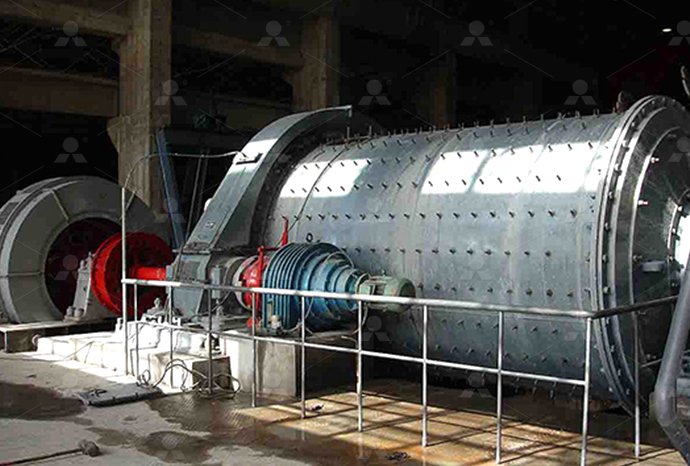
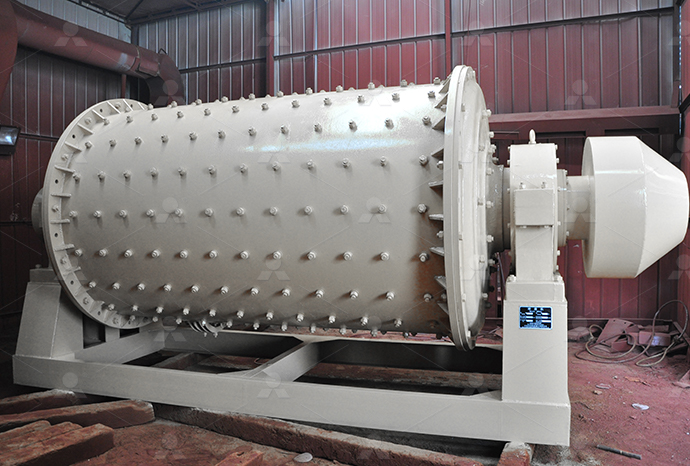
Ball Mill is common grinding equipment used widely in the industry and is a key machine for milling after materials are crushed. It can grind all kinds of ores and other materials, and it is widely applied in beneficiation, construction, and chemical industries. The capacity range is 0.65 to 50 T/H, and the input size is no more than 25 mm. The ball mill is a horizontal rotating device transmitted by the outer gear. Materials are transferred to the grinding chamber through the quill shaft uniformly. There are ladder liners, ripple liners, and different specifications of steel balls in the chamber. The centrifugal force caused by rotation of the barrel brings the steel balls to a certain height, and then they impact and grind the materials. In rare earth ore beneficiation plants, the ball mill can be used to grind crushed rare earth ore before flotation, leaching, or other separation processes.
4. Equipment Selection Criteria for Rare Earth Ore Grinding
Selecting the right rare earth ore grinding mill depends on several key factors, including ore hardness, feed size, target fineness, capacity, moisture content, and environmental requirements. For large rare earth processing plants that need capacities above 10 T/H, the LM Vertical Roller Mill offers high efficiency and integrated drying. For medium capacity operations that need stable powder quality, the MTW European Type Trapezium Mill is a reliable choice. For ultrafine rare earth powder applications, especially in high-value separation and material preparation, the MW Micro Powder Mill provides the required fine fineness. For small-scale production or pilot testing, Raymond Mill is simple and economical. For traditional beneficiation circuits that require uniform grinding before flotation or leaching, the Ball Mill remains a robust option. Liming Heavy Industry can also design a complete grinding line that combines a jaw crusher, feeder, mill, separator, air blower, dust collector, and powder collector according to the specific rare earth ore characteristics.
5. Complete System Design and Working Principle
The working principle of a complete rare earth ore grinding line is based on a closed-loop system. In the MTW European Type Trapezium Mill system, the grinding line consists of grinding mill, separator, air blower, jaw crusher, vibrating feeder, hopper, dust collector, pipe, powder collector, electric cabinet, motors, and other auxiliary equipment. Big lump materials are first crushed to the required size by a jaw crusher. Then, through the variable-frequency belt feeder, the crushed material is evenly and continuously fed into the mill to be ground. Inside the mill, materials are ground between the ring and rollers. The fine particles move upward with the airflow. Particles that cannot pass through the separator fall down and are ground again, while the qualified particles are collected as finished product through the powder collector. The airflow passing through the separator goes to the air blower for recycling, forming a closed system. The pulse dust collector is equipped to meet national environmental protection standards and to reduce dust emissions.
6. Environmental Protection and Energy Conservation
Modern rare earth ore grinding projects must meet strict environmental requirements. Liming Heavy Industry integrates environmental protection into the design of each rare earth ore grinding mill. The pulse dust collector captures fine dust generated during grinding and prevents it from entering the atmosphere. The closed-loop air circulation system reduces energy consumption and controls material loss. The LM Vertical Roller Mill is especially effective for combined drying and grinding, allowing the use of hot gas from the kiln or furnace without an additional drying device. This reduces overall energy consumption and lowers operating costs. In addition, the automatic electric control system helps optimize mill operation, reduce power consumption, and maintain stable product quality.
7. Conclusion
Rare earth ore grinding mill selection is one of the most important decisions in a rare earth processing project. The right mill can improve mineral liberation, enhance downstream recovery, reduce energy consumption, and meet strict environmental standards. Liming Heavy Industry Co., Ltd. offers a complete range of rare earth ore grinding equipment, including LM Vertical Roller Mill, MTW European Type Trapezium Mill, MW Micro Powder Mill, Raymond Mill, and Ball Mill. With a strong research and development team, modern manufacturing facilities, and decades of industry experience, Liming provides reliable and innovative grinding solutions for rare earth producers worldwide. Whether the goal is coarse grinding, fine powder processing, or ultrafine material production, Liming can supply the appropriate rare earth ore grinding mill and complete system configuration.
Frequently Asked Questions
Question 1: What are the main factors when selecting a rare earth ore grinding mill?
The main factors include ore hardness, feed size, required fineness, production capacity, moisture content, and environmental regulations. Liming Heavy Industry provides mills with capacities from 0.65 to 400 T/H and fineness ranges from traditional powder to ultrafine d97 ≤ 5 μm, allowing customers to choose according to their project requirements.
Question 2: Can a rare earth ore grinding mill handle ores with high moisture?
The LM Vertical Roller Mill can integrate drying and grinding, making it suitable for ores with relatively high moisture. Raymond Mill and MTW European Type Trapezium Mill are more suitable for materials with moisture below 6%. For higher moisture rare earth ores, an independent drying step may be needed before grinding.
Question 3: What fineness can be achieved for rare earth ore powder?
Conventional rare earth ore grinding can produce powder with fineness between 613 μm and 44 μm using Raymond Mill and similar equipment. When ultrafine powder is required, the MW Micro Powder Mill can produce product with fineness up to d97 ≤ 5 μm, adjustable between 325 mesh and 3250 mesh.
Question 4: Is the rare earth ore grinding system environmentally friendly?
Yes. Liming Heavy Industry grinding systems are equipped with pulse dust collectors and closed-loop air circulation. These systems reduce dust emissions, control material loss, and comply with national environmental protection standards. The modern control system also improves energy efficiency.
Question 5: Does Liming Heavy Industry supply only single grinding mills or complete grinding systems?
Liming Heavy Industry supplies both single grinding mills and complete grinding systems. In addition to the mill, the complete system can include jaw crusher, vibrating feeder, hopper, separator, air blower, dust collector, pipe, powder collector, electric cabinet, and motors. This allows customers to build a complete rare earth ore grinding production line from one reliable supplier.


