Published: April 26, 2026
Perlite is one of the most versatile minerals in modern construction. When ground to the correct fineness, it becomes a key ingredient in lightweight plasters, insulation boards, ceiling tiles, concrete additives, and fireproof coatings. However, perlite grinding is not a one-size-fits-all operation. The moisture content, feed size, target fineness, and throughput all determine which mill will work best. This article summarizes the essential information for construction material producers: the main perlite grinding mill types offered by Liming Heavy Industry, their capacities, input sizes, and application advantages. It also provides practical selection guidance so you can choose a reliable system for expanded perlite powder production, building material manufacturing, and construction-grade additives.
Perlite in Construction: Why Particle Size Matters
Perlite is a naturally occurring volcanic glass. When heated quickly, it expands and becomes a lightweight white material that is widely used in construction. Grinding expanded perlite or raw perlite ore into powder allows manufacturers to use it as a filler, aggregate, or functional additive. The particle size and distribution directly affect the thermal conductivity, mechanical strength, and workability of the final construction material. For example, perlite used in gypsum board needs a fine and consistent powder, while perlite used in lightweight concrete may require a coarser fraction. This is why choosing a perlite grinding mill is not simply about reducing particle size; it is about matching the mill's control and capacity to the exact building material specification.
What to Look for in a Perlite Grinding Mill for Construction
In my experience, the most common mistake in perlite grinding projects is choosing a machine based only on initial cost. The real selection criteria should be:
- Target fineness: Construction perlite powder usually ranges from 40 mesh to 325 mesh, while special insulation coatings may need finer than 600 mesh.
- Throughput: A small plaster production line might only need 1–5 tons per hour. A large board manufacturer may need 20 tons per hour or more.
- Feed condition: Perlite ore can arrive with up to 6% moisture or as dry crushed material. Some mills can handle drying internally, which reduces the need for a separate dryer.
- Environmental control: Dust collection is essential. Closed-circuit grinding with pulse dust collectors keeps the site clean and meets modern construction industry standards.
- Energy efficiency: Grinding consumes a significant amount of electricity. A vertical roller mill or MTW mill can lower energy consumption compared with older equipment.
Liming Heavy Industry: Experience Behind the Equipment
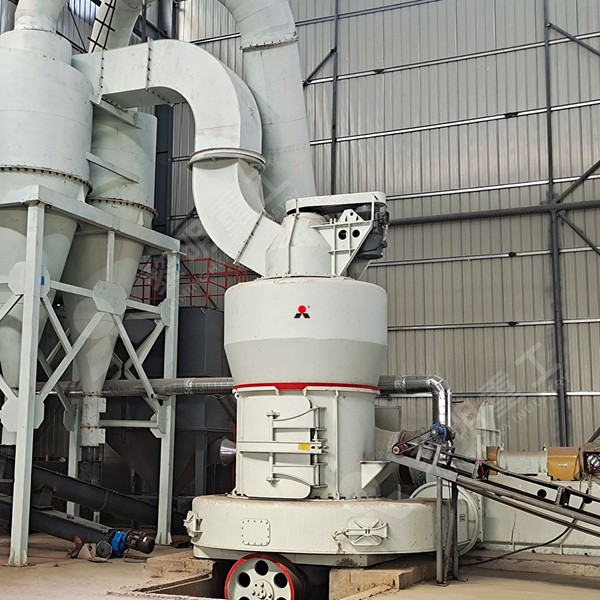
Liming Heavy Industry Co., Ltd. was founded in 1987 and has become a recognized manufacturer of large and medium-sized crushing and grinding equipment. The company combines research, manufacturing, and sales in a modern joint-stock structure. Its headquarters in the HI-TECH Industry Development Zone of Zhengzhou covers 80,000 square meters, and another workshop in Shangjie Industry Park covers 67,000 square meters. Over more than three decades, Liming has developed a full range of grinding machinery that is used in cement, electricity, metallurgy, chemical, and non-metallic mineral industries. This engineering background matters for perlite grinding because it means the mills are designed for continuous industrial operation, not just small laboratory work.
Perlite Grinding Mill Options for Construction Applications
1. Raymond Mill: A Cost-Effective Choice for Small and Medium Plants
Raymond mill is probably the most familiar grinding machine in mineral powder processing. It is suitable for non-flammable and non-explosive materials with Mohs hardness below 7 and moisture under 6%. Perlite falls in this range, so Raymond mill can handle it reliably. The output fineness is between 613 μm and 44 μm, which covers most basic construction powder needs. Capacity is 1.2–4.5 T/H, and the input size can be up to 15–25 mm.
For a small construction material workshop that needs to produce perlite powder for mortar or plaster, Raymond mill is a practical and simple solution. Its maintenance is straightforward, and the operation is familiar to many plant operators.
2. MTW European Type Trapezium Mill: The Balanced Performer
MTW European Type Trapezium Mill is Liming's upgraded product from traditional Raymond mill and pendulum mill. It has patented technology, stable performance, and better productivity. It is particularly well suited for non-metallic mineral powder making and building materials. The capacity is 3–55 T/H, with input size 30–50 mm. This makes it a good option for medium-sized perlite processing lines.
The MTW mill uses a closed system with an air blower, separator, and pulse dust collector. The airflow is recycled, so the system is more environmentally friendly than open grinding systems. This is important for construction product factories that need to meet strict environmental standards.
3. LM Vertical Roller Mill: For Large-Scale Perlite Grinding
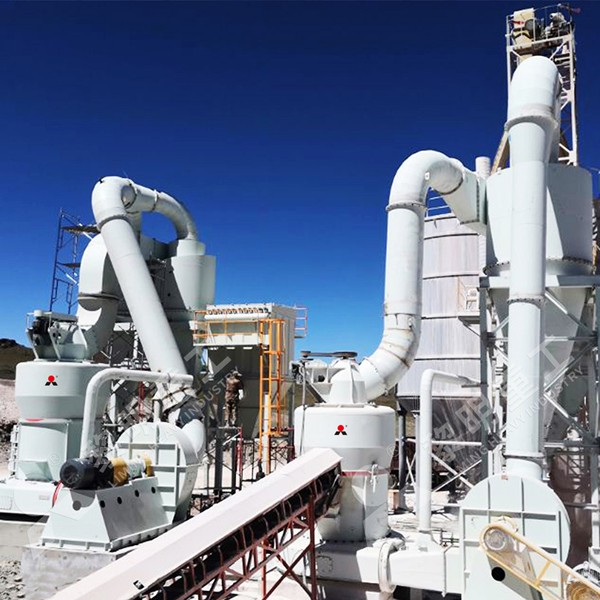
When the project needs high capacity, LM vertical roller mill is the strongest candidate. It has capacity from 10 to 400 T/H and input size of 30–55 mm. The LM mill integrates drying, grinding, powder selection, and conveying in one unit. In perlite grinding, this can eliminate some auxiliary equipment and reduce the floor area of the plant.
LM vertical mill is especially effective for non-metallic minerals, coal, and slag. In construction, it can process perlite ore into fine powder for wallboard, cementitious insulation systems, and high-volume dry mortar production. The automatic electric control system also helps keep the product quality stable.
4. MW Micro Powder Mill: For Superfine Perlite Powder
Some construction applications require very fine perlite, such as specialty fireproof coatings or high-performance composite materials. MW micro powder mill can produce powder as fine as d97 ≤ 5 μm, with fineness adjustable between 325 mesh and 3250 mesh. Its capacity is 0.5–25 T/H, and input size is 10–20 mm. This mill uses advanced grinding principles from Swedish technology and is equipped with a pulse precipitator, so production is cleaner.
If the construction product is an ultra-light or nano-enhanced material, MW micro powder mill is the appropriate technical direction. It gives the producer more freedom to develop premium perlite-based building products.
5. Ball Mill: A Reliable Option for Coarse and Fine Grinding
Ball mill is a classic choice for many grinding applications. It is a horizontal rotating device driven by outer gear, and the grinding chamber contains steel balls of different specifications. The capacity is 0.65–50 T/H, with input size up to 25 mm. Ball mill is common in construction material production, beneficiation, and chemical industry. For perlite, it can be used when the target is a moderate fineness and the plant already uses a ball mill for other materials. However, the energy consumption may be higher than a vertical or trapezium mill, so it should be evaluated carefully.
How to Choose the Right Perlite Grinding Mill
From a project management perspective, the first step is to define the product specification. For instance, expanded perlite powder for gypsum board often needs to pass a 200 mesh screen. In that case, Raymond mill or MTW mill can do the job. If the capacity is above 10 T/H, an LM vertical roller mill offers better energy efficiency. If the target is finer than 600 mesh, MW micro powder mill is the right route. If the raw perlite contains moisture, an LM vertical mill with internal drying may save capital cost by removing the need for a separate drying drum.
Another important factor is the complete system. A perlite grinding line is not just the mill. It includes a jaw crusher, vibrating feeder, hopper, bucket elevator, dust collector, pipes, powder collector, electric cabinet, and motors. Liming Heavy Industry supplies the whole system, and this is valuable because the equipment is designed to work together. A mismatch between feeder and mill, or between crusher and mill, can cause unnecessary downtime and product inconsistency.
Operational Tips for Perlite Grinding in Construction
- Pre-crush perlite ore to the mill's required input size. Oversize material reduces capacity and increases wear.
- Control moisture carefully. If the moisture is higher than the mill can handle, the powder may stick and block the separator.
- Regularly check the separator and dust collector. Perlite is abrasive, so wear parts should be inspected according to the maintenance schedule.
- Adjust the classifier speed to achieve the target fineness. This is the quickest way to control powder quality without changing other settings.
- Keep the air flow balanced. Too much air reduces grinding efficiency, and too little air causes material to fall too early.
Conclusion
Perlite grinding mill selection for construction should be based on a clear understanding of raw material, finished product specification, capacity, and environmental requirements. Liming Heavy Industry offers several practical solutions: Raymond mill for small projects, MTW European trapezium mill for medium capacity, LM vertical roller mill for high-capacity integrated processing, MW micro powder mill for superfine products, and ball mill for conventional grinding duties. With decades of manufacturing experience and a strong focus on research and development, Liming can help construction material producers build a stable and efficient perlite powder production line.
Frequently Asked Questions
1. What is the best perlite grinding mill for a small construction material plant?
For a small plant, Raymond mill is often the best choice because it has a low capacity threshold of 1.2–4.5 T/H, simple operation, and can produce fineness between 613 μm and 44 μm. This range is enough for many construction applications like plaster and mortar additives.
2. Can one grinding mill handle both coarse and fine perlite powder?
Yes, most grinding mills allow you to adjust the classifier or separator speed to change the fineness. For example, MTW European type trapezium mill can produce a range of powders, and MW micro powder mill is specifically for fine and ultra-fine output. The key is to choose a mill whose fineness range matches your frequently produced products.
3. Does Liming Heavy Industry supply a complete perlite grinding system?
Yes. Liming Heavy Industry provides the full line, including jaw crusher, vibrating feeder, hopper, grinding mill, air blower, dust collector, pipes, powder collector, electric cabinet, and motors. This integrated approach helps avoid compatibility issues and simplifies project management.
4. What fineness is needed for perlite used in construction?
It depends on the product. For lightweight plaster and mortar, 40–200 mesh is typical. For gypsum board and fireproof coatings, 200–325 mesh is common. Specialty materials may require more than 600 mesh, and MW micro powder mill can go up to 3250 mesh with d97 ≤ 5 μm.
5. Is perlite grinding environmentally safe?
Modern perlite grinding systems can be designed to be environmentally safe. Liming's mills often use closed-circuit air flow and pulse dust collectors to capture fine particles. This reduces dust emission and makes the line compliant with modern environmental standards. Perlite itself is a non-toxic volcanic glass, so with proper dust control, it is a safe material to process.


