Zeolite grinding mills for water purification play a decisive role in transforming natural zeolite into high-performance filtration media and adsorbent powders. Liming Heavy Industry Co., Ltd. supplies proven grinding solutions with capacities from 0.5 t/h to 400 t/h and product fineness adjustable from coarse granules to ultra-fine powder with d97 ≤ 5 μm. The LM vertical roller mill, MTW European type trapezium mill, and MW micro powder mill enable efficient processing of zeolite for ammonia nitrogen removal, heavy metal adsorption, and VOC control. These mills integrate drying, grinding, classifying, and conveying while using closed-circuit airflow and pulse dust collectors to meet stringent environmental standards.
The Role of Zeolite in Water Purification
Zeolite is a natural microporous aluminosilicate mineral with a distinctive cage-like structure. This structure gives zeolite exceptional abilities to exchange cations and adsorb polar molecules. In water treatment, zeolite is widely used for removing ammonia nitrogen from municipal wastewater, capturing heavy metal ions such as lead, copper, and zinc, and filtering suspended solids in aquaculture and swimming pools. Clinoptilolite, one of the most common zeolite types, is especially valued for its high selectivity for ammonium ions and its long service life.
To maximize these functions, raw zeolite must be processed into consistent powders or granules. The particle size and surface characteristics directly influence the adsorption rate, ion exchange capacity, and hydraulic behavior of the filter media. Therefore, selecting a reliable zeolite grinding mill is essential for water purification plant operators who need stable quality and high productivity.
Why Grinding Mill Performance Matters
Natural zeolite is a hard, abrasive mineral. Grinding creates new surfaces and opens micropores that are otherwise blocked by impurities. A properly ground zeolite powder has high surface area, which improves the contact between water and active sites. Particle size distribution must be controlled carefully. If particles are too coarse, the adsorption speed decreases; if they are too fine, the material may cause excessive pressure drop in filtration beds. A modern grinding mill with a high-efficiency separator can produce a narrow particle size distribution, ensuring uniform product performance.
Moreover, the grinding process helps break down mineral aggregates and exposes the internal channels of the zeolite framework. This activation step is particularly important for water purification because the removal of contaminants depends on the accessibility of micropores. The specific energy consumption, wearing resistance, and system stability of the grinding mill directly affect the cost and reliability of the entire production line.
Liming Heavy Industry Grinding Solutions
Liming Heavy Industry Co., Ltd. was founded in 1987 and specializes in large and medium-sized crushing and grinding equipment. The company operates from a headquarters in Zhengzhou High-tech Industry Development Zone covering 80,000 square meters and an additional workshop in Shangjie Industry Park covering 67,000 square meters. With 30 years of manufacturing experience and a scientific research team, Liming offers advanced grinding technologies for the non-metallic mineral industry, including zeolite.
LM Vertical Roller Mill
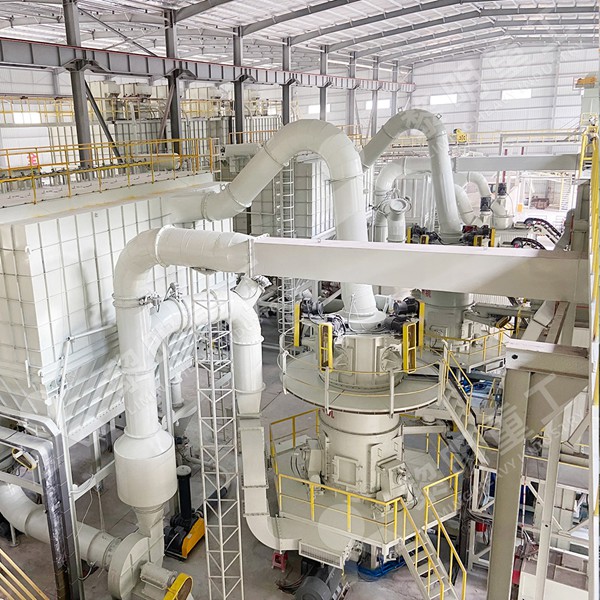
The LM vertical roller mill is an ideal primary choice for large-scale zeolite powder production. It adopts a new milling device and automatic electric control system, integrating drying, grinding, powder selection, and conveying in one unit. The LM mill can process zeolite and other non-metallic minerals with a capacity of 10 to 400 t/h and an input size of 30 to 55 mm. For water treatment zeolite, the LM mill provides high throughput, stable fineness, and lower energy consumption, especially when the feed material contains surface moisture that must be removed.
MTW European Type Trapezium Mill
The MTW European type trapezium mill is an upgrade of the traditional Raymond mill and pendulum mill. It has patented technology, stable performance, high productivity, and environmental protection. The capacity ranges from 3 to 55 t/h with an input size of 30 to 50 mm. The MTW mill is particularly suitable for zeolite powder making in medium-capacity plants. The whole grinding line consists of a grinding mill, separator, air blower, jaw crusher, vibrating feeder, hopper, dust collector, pipe, powder collector, and electric cabinet. During operation, materials are ground between the ring and rollers, move upward with the airflow, and are classified by the separator. Oversized particles fall back for regrinding, while finished powder is collected. The airflow is recycled in a closed system, and the pulse dust collector ensures clean production.
MW Micro Powder Mill
For ultra-fine zeolite grinding, the MW micro powder mill is an excellent solution. It is designed for superfine powder processing and produces finished products with d97 ≤ 5 μm. The fineness can be adjusted between 325 mesh and 3250 mesh, allowing water purification manufacturers to tailor the product to specific applications such as slow-release filtration media or high-surface-area adsorbents. The MW mill has a capacity of 0.5 to 25 t/h and accepts an input size of 10 to 20 mm. Its grinding principle uses a reducer to drive the main shaft and turnplates, causing dozens of rollers to rotate against the raceway. This fine grinding action is ideal for activated zeolite used in advanced water treatment.
Raymond Mill and Ball Mill
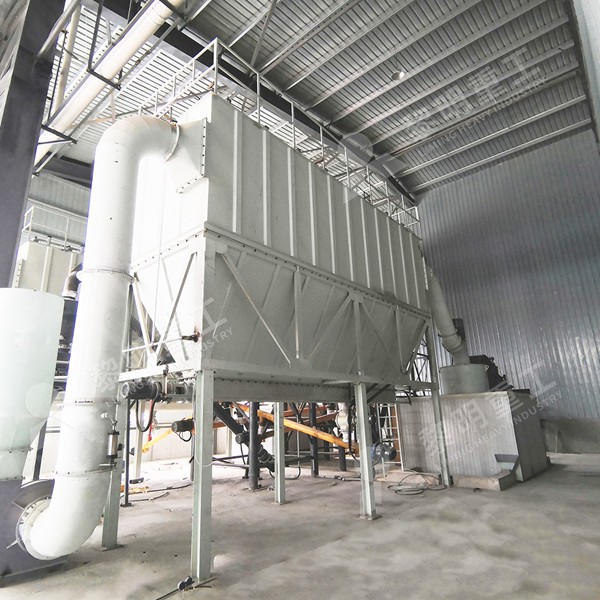
In addition to the above advanced mills, Liming also provides the Raymond mill and the ball mill. The Raymond mill is suitable for processing non-flammable and non-explosive materials under 7 Mohs hardness and less than 6% humidity. Its output fineness is between 613 μm and 44 μm, with a capacity of 1.2 to 4.5 t/h. This makes it a practical option for small zeolite grinding projects. The ball mill is another common grinding plant used after primary crushing. It can grind all kinds of ores and other materials and is widely applied in cement, coal, construction, and chemical industries. For zeolite, the ball mill offers a robust and economical solution when the target is a coarser powder for dosing or blending.
How to Build a Zeolite Grinding Line
A complete zeolite water purification grinding line from Liming includes several stages. First, raw zeolite blocks are crushed by a jaw crusher to a size suitable for the mill. The crushed material is transported to a hopper by an elevator. A vibrating feeder then feeds the material evenly into the grinding mill. Inside the mill, the zeolite is ground by rollers or ball charges. The grinding system uses airflow to transport fine particles to the separator. Particles that cannot pass the separator are returned to the grinding zone for further reduction. The qualified zeolite powder is collected by a dust collector and conveyed to storage or packing. The air blower keeps the system in a closed loop, minimizing dust emission and heat loss.
This process ensures that the final zeolite powder has a consistent fineness and low moisture content. For water purification, the target fineness usually ranges from coarse granules of 0.5 to 2 mm to fine powders of several micrometers, depending on the application. Liming grinding mills can be configured with different classifiers and speeds to meet these requirements.
Operational and Environmental Benefits
Liming grinding mills are designed with environmental protection in mind. The pulse dust collector is equipped as standard in many models, making the production process cleaner and compliant with air emission standards. The closed-circuit airflow system reduces the emission of fine dust and also prevents moisture from entering the mill. The automatic electric control system adjusts the feeding rate, separator speed, and air volume, keeping the operation stable and energy efficient.
From a maintenance perspective, the wearing parts of Liming mills are manufactured with high abrasion resistance. This is important for zeolite because it is a hard mineral that can accelerate wear. The modular design of the LM vertical roller mill and the MTW trapezium mill allows quick replacement of grinding rollers and bullock rings, reducing downtime. The result is a lower total cost of ownership for zeolite powder producers and a more reliable supply chain for water purification projects.
Conclusion
Zeolite grinding mills are indispensable equipment in the production of water purification media. They determine the surface area, particle size, and adsorption performance of the final product. Liming Heavy Industry offers a complete range of grinding solutions, from the high-capacity LM vertical roller mill to the ultra-fine MW micro powder mill, so every plant can find the right machine for its capacity and product specification. With integrated drying, classifying, conveying, and dust collection, Liming mills improve production efficiency while protecting the environment. As the demand for clean water grows, reliable zeolite grinding technology will continue to play a vital role in ensuring the quality and safety of drinking water and wastewater treatment systems.
Frequently Asked Questions
1. What type of grinding mill is best for zeolite water purification?
The best type depends on the required capacity and fineness. For large plants, the LM vertical roller mill is preferred because of its high capacity and integrated functions. For ultra-fine zeolite powder, the MW micro powder mill is the best choice.
2. What output fineness is required for zeolite water treatment media?
Typical filtration media use granules from 0.5 mm to 2 mm, while adsorbent powders can be ground to 325 mesh or finer. The MW micro powder mill can produce fineness down to d97 ≤ 5 μm for high-surface-area applications.
3. Can Liming grinding mills handle zeolite with high moisture content?
Yes. The LM vertical roller mill and MTW European type trapezium mill integrate drying with grinding, allowing them to process materials containing moderate surface moisture without a separate dryer.
4. How does grinding improve zeolite performance in water purification?
Grinding increases the surface area and opens the micropore structure of zeolite. This improves the contact between water and active sites, increasing the speed and capacity of ammonia nitrogen and heavy metal removal.
5. What environmental protection features are included in Liming grinding mills?
Liming grinding mills are equipped with pulse dust collectors and closed-circuit airflow systems. These features prevent dust leakage, reduce emissions, and make the entire zeolite grinding process cleaner and more sustainable.


