Diatomite, also known as diatomaceous earth, is a natural siliceous rock with high porosity and low density, making it one of the most widely used raw materials for filtration aids and filter media. The quality of a diatomite grinding mill for filtration directly affects the particle size distribution, specific surface area, and pore structure of the final powder. Liming Heavy Industry Co., Ltd., founded in 1987, has more than 30 years of experience in the design and manufacture of grinding equipment for non-metallic minerals. The company operates a modern 80,000 m² headquarter in Zhengzhou High-Tech Industrial Development Zone and a 67,000 m² production workshop in Shangjie Industrial Park. Its main products applicable to diatomite processing include the LM Vertical Roller Mill, Raymond Mill, MTW European Type Trapezium Mill, MW Micro Powder Mill, and Ball Mill. With capacities ranging from 0.5 to 400 t/h and fineness adjustable from coarse granular media to d97 ≤ 5 μm, Liming offers a complete solution for filtration-grade diatomite production.
This article explains why diatomite grinding must be carefully controlled for filtration applications, compares the available mill systems, and provides practical selection advice for different production scales.
Why Diatomite Grinding Is Critical for Filtration
Diatomite filter aids work through physical particle capture. The particles must be sufficiently fine to form a filter cake, yet remain porous enough to allow liquid to pass. If the grinding process destroys the diatoms, the powder loses its characteristic shape and the filtration performance decreases. Therefore, the grinding mill must produce a narrow, controllable size distribution rather than simply reducing the material to an arbitrary powder.
Another important factor is the surface chemistry of the powder. Grinding equipment should avoid excessive iron or metal contamination because dissolved metals can affect the taste, clarity, and chemical stability of filtered liquids. Liming's mills are built with wear-resistant components and can be configured with classifiers to meet the exact specifications of food and beverage filtration, industrial chemical filtration, and water treatment.
Grinding Mill Options for Diatomite Processing
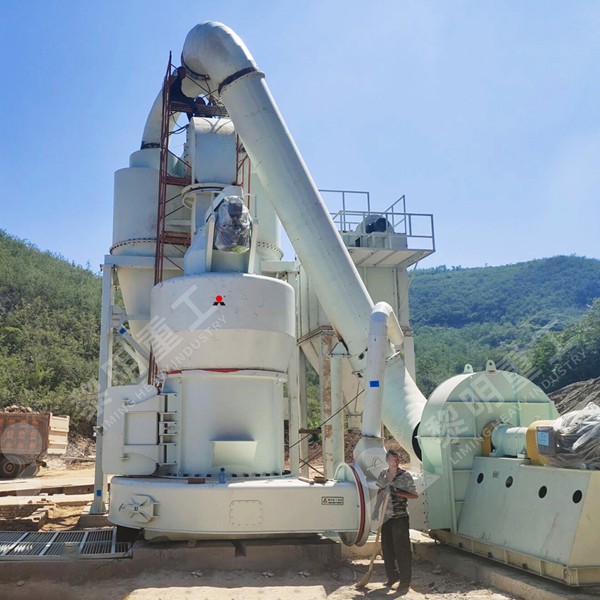
Liming Heavy Industry supplies several types of mills that can be used as a diatomite grinding mill for filtration. Each machine has a different working principle, capacity range, and fineness capability. The following sections describe the major options.
LM Vertical Roller Mill
The LM Vertical Roller Mill is the best choice when a large diatomite processing plant needs to grind, dry, classify, and convey powder in one integrated system. It adopts a new milling device and an automatic electric control system. The mill can handle feed sizes of 30 to 55 mm and produce 10 to 400 t/h, depending on the model and the hardness of the diatomite.
In this mill, diatomite falls onto a rotating table and is ground by rollers. Hot air dries the material while transporting the fine powder to a separator. Oversized particles fall back for another cycle. Because the entire process is closed and equipped with pulse dust collection, it can reduce dust emission and meet strict environmental requirements.
MTW European Type Trapezium Mill
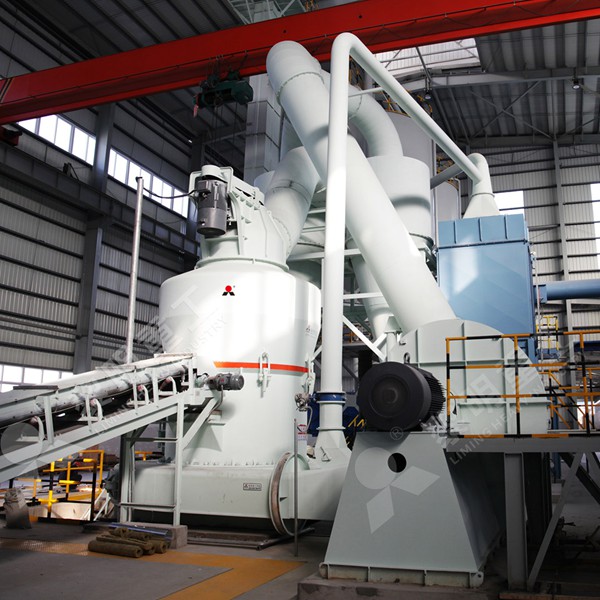
The MTW European Type Trapezium Mill is an upgraded version of the traditional Raymond mill and pendulum mill. It is designed for large-scale non-metallic mineral powder making and is well-suited for diatomite filtration media. Its capacity is 3 to 55 t/h with an input size of 30 to 50 mm. Patented technology, stable performance, high productivity, and energy-saving operation make it a popular choice in the diatomite industry.
The working system includes the mill, separator, air blower, jaw crusher, vibrating feeder, hopper, dust collector, pipe, powder collector, electric cabinet, and motors. Large diatomite blocks are first crushed to the required size by a jaw crusher, then conveyed evenly through a variable-frequency belt feeder into the mill. The material is ground between the ring and rollers and carried upward by the airflow. The separator ensures that only particles of the required fineness leave the system, while other particles return to the grinding zone. The closed air circuit and pulse dust collector meet national environmental protection standards.
Raymond Mill
For smaller diatomite grinding projects, the Raymond Mill is a compact and reliable option. It is widely used in metallurgy, building materials, chemicals, and mining. Diatomite with Mohs hardness below 7 and moisture under 6 percent can be ground on this mill. The output fineness is between 613 μm and 44 μm, which covers many filtration and filler grades. Capacity is 1.2 to 4.5 t/h with an input size of 15 to 25 mm.
MW Micro Powder Mill
When the filtration application requires superfine diatomite powders, the MW Micro Powder Mill is a suitable choice. This medium-speed micro-grinding mill incorporates advanced Swedish grinding technology and can produce finished materials with d97 ≤ 5 μm. Fineness can be adjusted between 325 mesh and 3250 mesh. Capacity ranges from 0.5 to 25 t/h, with an input size of 10 to 20 mm. The mill uses a central feeding system and rotating rollers that press materials against the grinding ring. With an integrated pulse precipitator, the process is more environmentally friendly.
Ball Mill
The Ball Mill is a conventional grinding solution for materials already crushed to about 25 mm or less. It is a horizontal rotating device driven by an outer gear. The grinding chamber is filled with steel balls of different sizes. As the barrel rotates, centrifugal force lifts the balls and then allows them to impact and grind the material. The ball mill capacity is 0.65 to 50 t/h. For diatomite filtration media, a ball mill is often combined with an air classifier to obtain a precise powder fraction. However, for materials that are sensitive to over-grinding, roller mills and trapezium mills are usually preferred.
How to Select the Right Diatomite Grinding Mill
Selection should be based on capacity, target fineness, moisture content, and the desired production process.
| Equipment | Capacity | Feed size | Typical Fineness | Recommended Application |
|---|---|---|---|---|
| LM Vertical Roller Mill | 10-400 T/H | 30-55 mm | Coarse to fine, adjustable | Large diatomite plants needing drying and grinding |
| MTW European Type Trapezium Mill | 3-55 T/H | 30-50 mm | Medium to fine powder | Medium-capacity filtration aid production |
| Raymond Mill | 1.2-4.5 T/H | 15-25 mm | 613-44 μm | Small-scale diatomite processing |
| MW Micro Powder Mill | 0.5-25 T/H | 10-20 mm | d97 ≤ 5 μm, 325-3250 mesh | Superfine diatomite filter aids |
| Ball Mill | 0.65-50 T/H | ≤ 25 mm | Depends on classifier | General grinding with external classifier |
Key Considerations for Filtration-Grade Diatomite Powder
To produce a reliable diatomite grinding mill for filtration applications, the system must address several quality factors. First, particle size distribution must be adjusted to the specific filtration grade. A classifier is necessary to remove oversize particles and to keep the filter cake porous. Second, moisture must be controlled. If the raw diatomite has a high moisture content, a mill with integrated drying such as the LM Vertical Roller Mill is recommended. Third, dust collection is essential for safe operation and environmental compliance. Pulse dust collectors and closed air loops help prevent fine diatomite powder from escaping into the workshop environment.
In addition, the process should avoid overheating and excessive impact. Diatomite is brittle, and violent grinding can generate excessive ultrafine dust that blocks filtration channels. Roller mills and trapezium mills generally provide a more controllable grinding force than tumbling mills. Liming Heavy Industry manufactures all of these systems with a focus on precision, energy efficiency, and reliable operation.
Company Strength and Support
Liming Heavy Industry Co., Ltd. persists in implementing a scientific research and development strategy with the core goal of improving product competitiveness. The company focuses on scientific tackling, technological progress, and production-learning-research cooperation. This mature research and innovation system allows Liming to stay close to the technological frontier of the grinding industry. Over the past 30 years, the company has become a leader in the domestic and overseas machinery manufacturing industry. Customers benefit from comprehensive support, including equipment selection, process design, installation guidance, and after-sales service.
Frequently Asked Questions
1. What is the best diatomite grinding mill for filtration?
The best mill depends on the required capacity and fineness. For large plants, the LM Vertical Roller Mill provides integrated drying, grinding, and classification. For medium and small plants, the MTW European Type Trapezium Mill and Raymond Mill are more economical. For superfine filter aids, the MW Micro Powder Mill is recommended.
2. Can Liming mills produce diatomite powder for water filtration?
Yes. The Raymond Mill, MTW mill, and LM vertical mill can produce particles from around 613 μm to 44 μm, and the MW Micro Powder Mill can reach d97 ≤ 5 μm. These ranges cover common diatomaceous earth filter aid grades used in water filtration, beverage clarification, and chemical process filtration.
3. Does the grinding process include dust collection?
Most Liming grinding systems are closed-circuit and can be equipped with pulse dust collectors. These collectors reduce powder loss and help the production line comply with environmental protection standards.
4. How do I choose between the MTW European Trapezium Mill and the LM Vertical Roller Mill?
If the required throughput is above 10 t/h and the raw diatomite contains moisture, the LM Vertical Roller Mill is a strong choice. If the capacity is below 55 t/h and the material has been pre-crushed to 30-50 mm, the MTW mill offers stable production and easier operation.
5. What is the typical feed size for Liming diatomite grinding mills?
Raymond Mill accepts 15-25 mm feed; MW Micro Powder Mill accepts 10-20 mm; MTW accepts 30-50 mm; LM accepts 30-55 mm; and Ball Mill accepts up to about 25 mm. The jaw crusher is usually used before the mill to reduce large lumps.


