Published: April 26, 2026
Summary: Bentonite is the workhorse of drilling mud systems, but the performance of that mud starts with the powder you grind. Since 1987, Liming Heavy Industry has designed and built grinding equipment for non-metallic minerals, and today our product line includes the LM vertical roller mill, MTW European trapezium mill, Raymond mill, MW micro powder mill, and ball mill. For drilling-mud bentonite, the critical project parameters are feed size, target fineness, throughput, moisture, and dust control. This article gives a field-tested guide to selecting and operating a bentonite grinding mill, based on more than thirty years of experience and a manufacturing footprint that includes an 80,000 m² headquarters and an additional 67,000 m² workshop.
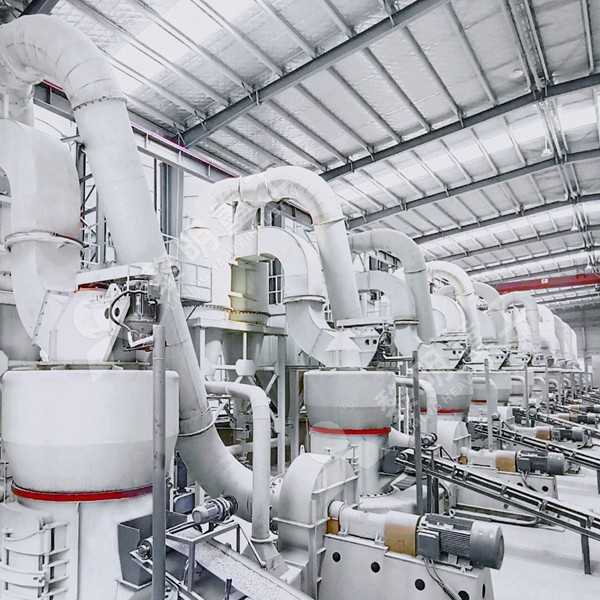
Why Bentonite Grinding Quality Matters in Drilling Mud
Bentonite is a clay material that swells when mixed with water. In drilling, it cools and lubricates the bit, suspends cuttings, and builds a low-permeability filter cake on the borehole wall. If the bentonite powder is not ground to the right fineness, hydration is incomplete. Too coarse, and the particles settle or take too long to hydrate. Too fine, and the mud can become over-viscous or suffer from poor filter-cake quality. That is why a proper bentonite grinding mill is not just a piece of machinery; it is the first control point of drilling fluid performance.
In practice, most drilling-grade bentonite is ground to pass a 200-mesh screen, which means a target of 75 microns or smaller. Some operators ask for 325-mesh material. Others want a product that meets a recognized standard such as API specification 13A. Whatever the target, the mill must be adjustable because bentonite deposits vary in moisture, hardness, cation content, and swelling clay percentage.
Core Requirements for a Drilling-Mud Bentonite Mill
A good bentonite grinding mill for drilling mud should meet at least six requirements:
- Fineness control through adjustable separator speed, so the operator can change mesh size without stopping production.
- Moisture tolerance, ideally combined with a drying section when raw bentonite is mined with ten percent or more moisture.
- Wear resistance for quartz and hard silica particles often present in natural bentonite.
- Stable throughput at the required capacity, from a small one t/h pilot line to a large 400 t/h industrial plant.
- Closed-circuit operation with pulse dust collection, because dry clay powder is very dusty and needs to meet environmental standards.
- Simple automation, so the line can run continuously with minimal operator attention.
Liming grinding mills meet these requirements in different degrees. The choice depends on your project scale and final powder specification.
The Liming Grinding Mill Options
LM Vertical Roller Mill — Best for Large-Scale Production
The LM vertical roller mill is designed for outputs from 10 to 400 t/h and feed sizes from 30 to 55 mm. It integrates drying, grinding, powder selection, and conveying in one system. This is the right machine when a single line must supply a central bentonite plant or a large mud-mixing facility. The new milling device and automatic electric control system keep the product uniform. It also works well for coal, slag, cement, and non-metallic minerals, so the same machine can support multiple product streams.
MTW European Type Trapezium Mill — The Balanced Performer
The MTW European Type Trapezium Mill is the upgraded product of the traditional Raymond mill and pendulum mill. Its capacity is 3 to 55 t/h, and feed size can be 30 to 50 mm. This range fits medium-size bentonite processing plants, especially those producing 200-mesh material for nearby drilling operations. The MTW system includes a jaw crusher, vibrating feeder, mill, separator, blower, pulse dust collector, and air recirculation loop. Material is ground between the ring and rollers, lifted by air, classified, and returned if it is too coarse. The closed system helps keep bentonite dust under control.
Raymond Mill — Simple and Cost-Effective for Small Plants
The Raymond mill has been the classic solution for small non-metallic mineral grinding. Its capacity is 1.2 to 4.5 t/h with an input size of 15 to 25 mm. It can produce powder in the range of 613 to 44 microns, roughly 30 to 325 mesh, and is suitable for materials with Mohs hardness below 7 and moisture below 6%. For a small drilling-mud powder factory or a pilot plant, a Raymond mill is easy to operate, repair, and maintain. It is not the best choice for very large capacities, but it remains a reliable workhorse when the output is modest.
MW Micro Powder Mill — When You Need Ultrafine Bentonite
The MW Micro Powder Mill, also called a medium speed micro-grinding mill, absorbs advanced Swedish grinding technology and is good at superfine powder processing. It can produce material with d97 ≤ 5 μm, and fineness can be adjusted between 325 mesh and 3250 mesh. Capacity is 0.5 to 25 t/h with feed size of 10 to 20 mm. For drilling mud, ultrafine bentonite is not always required, but it can be useful for high-value specialty fluids or for blending with standard material to control viscosity. The pulse precipitator keeps the production process greener and more environmentally friendly.
Ball Mill — A Conventional Workhorse
The ball mill is a common grinding plant used in mining, beneficiation, construction, and chemical industries. Its capacity is 0.65 to 50 t/h with feed size no larger than 25 mm. The machine uses steel balls in a rotating cylinder to impact and grind the material. For bentonite, a ball mill works best when the plant already uses one for other minerals and wants to keep the maintenance culture simple. However, compared with vertical or trapezium mills, energy consumption is higher and fineness adjustment is less flexible. It is a conventional solution, not the most modern one.
Quick Comparison Table
| Mill | Capacity | Feed Size | Finished Fineness | Best Use for Bentonite Drilling Mud |
|---|---|---|---|---|
| LM Vertical Roller Mill | 10-400 t/h | 30-55 mm | Adjustable, uniform | Large integrated plants, drying needed |
| MTW European Type Trapezium Mill | 3-55 t/h | 30-50 mm | 30-325 mesh typical | Medium production, environmental standard |
| Raymond Mill | 1.2-4.5 t/h | 15-25 mm | 613-44 microns | Small plants, pilot lines |
| MW Micro Powder Mill | 0.5-25 t/h | 10-20 mm | 325-3250 mesh | Specialty ultrafine bentonite |
| Ball Mill | 0.65-50 t/h | ≤25 mm | Medium to fine | Existing mineral processing plants |
Working Principles and System Layout
The actual grinding line is more than the mill. For the MTW system, big lump materials are first crushed by a jaw crusher to the required size. The material enters a hopper, then a variable-frequency belt feeder sends it evenly into the mill. Inside, the material is ground between the ring and rollers. Air flow carries the fine particles upward; the separator rejects oversized particles, which fall back for another pass. Finished powder is collected, and air is recycled. The pulse dust collector meets national environmental protection standards.
For the MW Micro Powder Mill, the motor drives the main shaft and turnplate through a reducer. Dozens of rollers rotate against the raceway of a ring. Material is first crushed by a hammer crusher, lifted to a hopper, and fed by a vibrating feeder to the center of the upper turnplate. Centrifugal force makes the material fall to the raceway where it is crushed into powder.
The ball mill works differently. It is a horizontal rotating device powered by an outer gear. Steel balls in the chamber are lifted by rotation, then fall to impact and grind the material. Finished powder is discharged through the discharge board.
Selection Guide: How to Choose Without Getting Lost
Start with four numbers: your desired capacity, required fineness, raw material feed size, and moisture content. If you need more than 50 t/h or you need to dry bentonite at the same time, the LM vertical roller mill is the strongest candidate. If you produce 3 to 30 t/h and need a European-style grinding solution with a compact footprint, the MTW is usually the answer. If you are starting small and want a proven simple machine, the Raymond mill is enough. If the target is ultrafine powder for high-yield drilling mud additives, look at the MW micro powder mill. If you have an existing facility with a ball mill and no space for a new building, keep the ball mill but pay attention to feed size and steel ball grading.
A Quick Field Story
I remember a drilling fluid contractor in a desert region who was struggling with bentonite quality. The powder passed the sieve, but the mud viscosity did not develop. We visited the site and found the Raymond mill was running at maximum separator speed, so most of the powder was far finer than the required 200 mesh. The fine powder floated and clumped, slowing hydration. We reduced the separator speed, adjusted the feed size, and installed a small pre-crusher to keep the feed under 20 mm. Within a day, the product developed a clean Marsh funnel viscosity, and the customer accepted delivery. The lesson? Grinding is not about making every powder finer. It is about matching the particle size to the job.
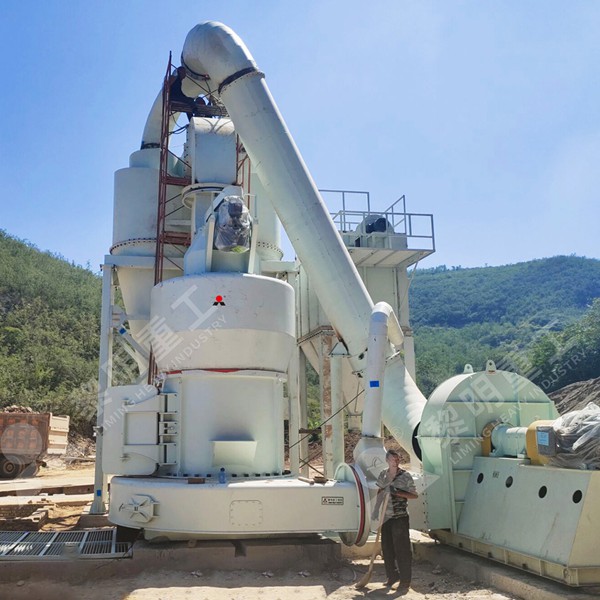
Final Thoughts
Bentonite grinding for drilling mud is a precision process. The right mill must handle moisture, wear, dust, and varying clay minerals. With more than thirty years of manufacturing experience and thousands of installations in the non-metallic mineral industry, Liming Heavy Industry can help you choose a machine that fits your capacity and powder specification. No single mill is perfect for every job, but the right combination of crusher, mill, classifier, and dust collector will make your drilling mud project run smoothly.
Frequently Asked Questions
1. What fineness is recommended for drilling-mud bentonite?
Most drilling-mud bentonite should pass 200 mesh, or 75 microns. Some operators ask for 325 mesh to get faster hydration. The ideal fineness depends on the mud recipe, so a laboratory test is recommended before choosing a mill.
2. Which mill should I choose for a 20 t/h bentonite plant?
A 20 t/h line sits well in the MTW European Type Trapezium Mill range, because its capacity reaches up to 55 t/h. If you plan to expand beyond 50 t/h in the future, consider a larger LM vertical roller mill.
3. Does bentonite need to be pre-dried before grinding?
For Raymond and MTW mills, it is safer to keep the feed moisture below 6% to prevent clogging. If raw bentonite contains more moisture, the LM vertical mill can integrate drying and grinding. A separate rotary dryer is also possible.
4. Can the same mill process both bentonite and barite?
Yes. Liming grinding mills are designed for non-metallic minerals with Mohs hardness below 7. However, you must clean the mill thoroughly when switching between minerals, especially from barite to bentonite, to avoid contamination and ruined mud properties.
5. How do I know which Liming mill is best for my project?
Send a representative raw material sample and tell us the target fineness, hourly capacity, and available power. Our engineers can recommend the shortest system layout and the right grinding equipment. We have designed lines for many drilling-mud producers around the world, and we are happy to do the same for you.


