Published: February 18, 2026
Summary: Copper ore flotation requires grinding to the correct particle size so that valuable copper sulfides are liberated from gangue. Liming Heavy Industry Co., Ltd. provides a complete grinding portfolio for copper concentrators, led by the robust Ball Mill for flotation feed preparation. The company also supplies Raymond Mill, MTW European Type Trapezium Mill, LM Vertical Roller Mill, and MW Micro Powder Mill for auxiliary grinding tasks. This article reviews the equipment selection, working parameters, and practical considerations for using Liming mills in copper ore flotation circuits.
Why Grinding Is Critical in Copper Flotation
In a conventional copper flotation plant, ore is first crushed and then ground to a size at which chalcopyrite, bornite, or other copper minerals are liberated from quartz and silicate gangue. If the ore is not ground enough, copper minerals remain locked and flotation recovery drops. If it is over-ground, slimes form and consume collector reagents. The grinding mill directly controls this balance.
Most copper flotation circuits operate with a target P80 between 75 and 200 microns. For many small and medium scale concentrators, a ball mill with a closed classification circuit is the simplest way to reach this target. That is why the ball mill remains the central equipment in copper ore grinding.
Ball Mill: The Backbone of Copper Ore Grinding
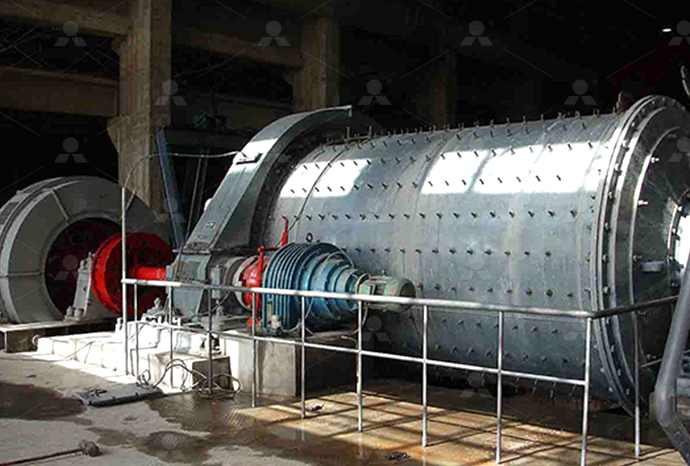
Liming Heavy Industry's Ball Mill is widely used in beneficiation, construction, and chemical industries. For copper ore flotation, it is the preferred primary grinding unit because it can handle feed sizes up to 25 mm and reduce the ore to flotation-size particles with a stable capacity range of 0.65 to 50 T/H. The horizontal rotating device is driven by an outer gear. Inside the chamber, ladder liners, ripple liners, and steel balls are arranged in different specifications. As the barrel rotates, centrifugal force carries the steel balls to a certain height; the balls then fall and impact the material, grinding it by both impact and abrasion.
For a copper project with a throughput of several hundred tons per day, one or more ball mills can be arranged in series. The ground slurry is then pumped to hydrocyclones for classification. Oversize material returns to the mill, while fine material goes to flotation.
Liming's ball mill is designed with a simple structure and reliable operation. Because copper ore often contains abrasive quartz, the lining and steel ball selection should be matched to the ore properties. Regular monitoring of slurry density and mill noise helps the operator optimize flotation feed.
Supporting Grinding Mills in a Copper Concentrator
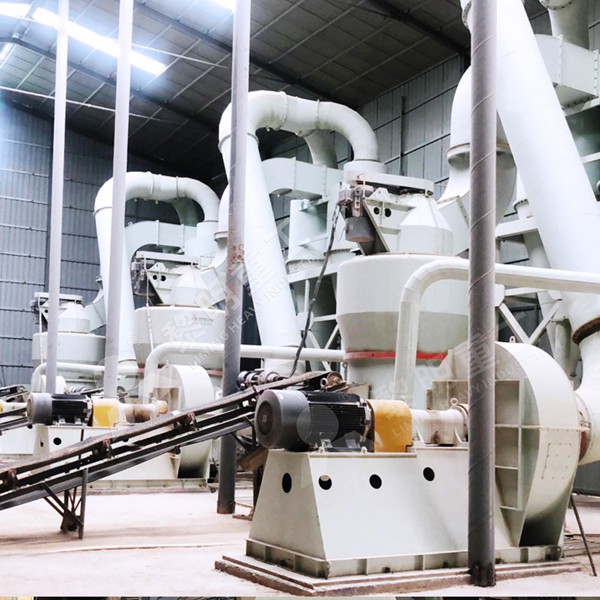
While the ball mill handles the primary flotation feed, other Liming mills can play important roles around the concentrator. The Raymond Mill is suitable for grinding non-flammable and non-explosive materials under 7 Mohs hardness and less than 6% moisture. It is often used to grind limestone or lime for pH control in flotation, as well as for desulfurization agents. The output fineness can be adjusted from 613 μm to 44 μm, making it flexible for additive preparation.
The MTW European Type Trapezium Mill is an upgrade of traditional Raymond mills and pendulum mills. It has patented technology and a compact system that includes separator, blower, jaw crusher, vibrating feeder, dust collector, and powder collector. In copper production, MTW mills can be applied to prepare desulfurization powder in smelter areas or to grind non-metallic minerals in auxiliary processes. Its capacity is 3 to 55 T/H with input size 30-50 mm.
For coal preparation or slag grinding, the LM Vertical Roller Mill can be used. It integrates drying, grinding, powder selection, and conveying, and is especially suitable for coal and slag. Copper smelters sometimes need coal for burners or slag handling; the LM mill offers a space saving solution. The LM vertical mill has a capacity of 10 to 400 T/H and can handle input materials from 30 to 55 mm.
When ultrafine powder is required, the MW Micro Powder Mill can produce products from 325 mesh to 3250 mesh, with d97 ≤ 5 μm. It might be used for advanced regrind test work or for producing fine lime powder, but for normal copper flotation feed the ball mill remains more practical.
How to Choose a Copper Ore Grinding Mill
Selecting the correct mill starts with a reliable ore characterization. The plant should determine the copper ore work index, feed size distribution, and target flotation fineness. For material with a Bond work index lower than 15 kWh/t, a standard ball mill is generally sufficient. For harder or finer ores, a closed circuit with a classifier is essential.
Moisture is another factor. Most Liming grinding mills accept materials with moisture below 6% for Raymond and similar machines. Ball mills can handle slurry inside, but the feed to the mill should be controlled to avoid plugging.
Throughput determines whether one ball mill or multiple mills are required. Liming's ball mill capacity range of 0.65-50 T/H makes it suitable for pilot plants and small-to-medium mining operations. For large concentrators, this mill can be installed in parallel or as a secondary grinding stage after a primary mill.
The final particle size distribution is crucial. A flotation feed that is too coarse loses value in tailings; too fine increases grinding cost and may depress recovery. Therefore, a sizing analysis should be done during commissioning. Liming's equipment can be integrated with vibrating feeders, hoppers, bucket elevators, and dust collectors to create an automated grinding line.
Complete Grinding Circuit Design
In a typical Liming copper ore grinding line, big lump ore is first crushed by a jaw crusher to a size smaller than 25 mm. The crushed material is then transported to a hopper and fed by a vibrating feeder into the ball mill. Inside the mill, steel balls grind the ore. The ground product is discharged through the discharge board. In a closed circuit, the slurry goes to a cyclone; overflow from the cyclone is the final flotation feed, and underflow returns to the mill.
Liming's engineering team can assist with the layout, motor power, and electric control cabinet. The pulse dust collector is also available to meet environmental regulations. By keeping the entire system under negative pressure, dust emission is reduced and working conditions are improved.
Operational Tips for Copper Ore Grinding
- Monitor the slurry density and pH in the mill discharge.
- Check steel ball consumption and add balls in the correct size ratio.
- Inspect liners regularly for wear, especially when treating high quartz copper ore.
- Adjust the classifier speed and water flow to obtain the target P80.
- Keep the grinding circuit stable before changing flotation reagent dosage.
With proper operation, a Liming ball mill can provide a reliable flotation feed for decades.
Conclusion
Copper ore flotation starts with good particle size control. Liming Heavy Industry offers a complete range of grinding equipment, from the ball mill for primary flotation feed to Raymond mills, MTW mills, LM vertical roller mills, and MW micro powder mills for supporting processes. For most copper projects, the ball mill remains the most direct and economical solution. With capacities from 0.65 to 50 T/H and input sizes up to 25 mm, Liming's ball mill can be adapted to many small and medium copper operations. By combining the correct mill, classification, and operating routine, mines can maximize copper recovery in the flotation process.
Frequently Asked Questions
1. Which Liming mill is best for copper ore flotation feed?
The Ball Mill is the best choice for copper ore flotation feed because it can reduce crushed ore to the required particle size, with capacity from 0.65 to 50 T/H and input size up to 25 mm.
2. Can the LM Vertical Roller Mill be used for copper ore?
The LM Vertical Roller Mill is mainly used for coal, slag, and non-metallic mineral grinding. In a copper project, it can be used for auxiliary grinding tasks such as coal or slag, but the conventional ball mill is preferred for flotation feed.
3. What particle size is needed before copper flotation?
Most copper flotation circuits target a P80 of 75 to 200 microns, depending on ore mineralogy and grain size. The exact target should be determined by liberation studies.
4. How can overgrinding be avoided in a copper grinding mill?
Overgrinding can be minimized by operating a closed circuit with a hydrocyclone, setting correct steel ball sizes, and controlling the pulp density in the ball mill.
5. Does Liming provide a complete system for copper ore grinding?
Yes. Liming can supply a complete grinding system including jaw crusher, vibrating feeder, hopper, ball mill, dust collector, powder collector, electric cabinet, and motors. The system can be arranged as an automatic grinding line.


