Summary: Phosphate rock grinding is a critical step in fertilizer production. Choosing the right mill affects throughput, energy consumption, fine powder quality, and operating cost. Liming Heavy Industry offers a complete range of grinding solutions from LM Vertical Roller Mill (10-400 T/H) and MTW European Type Trapezium Mill (3-55 TPH) to Raymond Mill, MW Micro Powder Mill, and Ball Mill, to match different phosphate rock characteristics and downstream fertilizer requirements. This article examines the main mill types, working principles, selection criteria, and environmental considerations, helping operators make informed decisions.
Introduction: Why Phosphate Rock Grinding Matters for Fertilizer
Phosphate rock is a natural mineral source of phosphorus, one of the three essential plant nutrients. Before it can be converted into fertilizer products like single superphosphate (SSP), diammonium phosphate (DAP), or phosphoric acid, the raw rock must be crushed and milled into a fine powder. The fineness and uniformity of the ground phosphate rock directly influence the chemical reaction speed, acid consumption, and final fertilizer quality.
In our experience at Liming Heavy Industry, the milling stage is where many fertilizer plants either gain or lose efficiency. A poorly selected mill can lead to low output, high energy waste, excessive wear, and unstable particle size. That is why we recommend a systematic approach when selecting a phosphate rock grinding mill for fertilizer.
Key Products for Phosphate Rock Grinding
Over the past thirty-plus years, we have focused on building large and medium-sized crushing and grinding equipment. Our current range includes several machines that are particularly suitable for phosphate rock processing.
LM Vertical Roller Mill
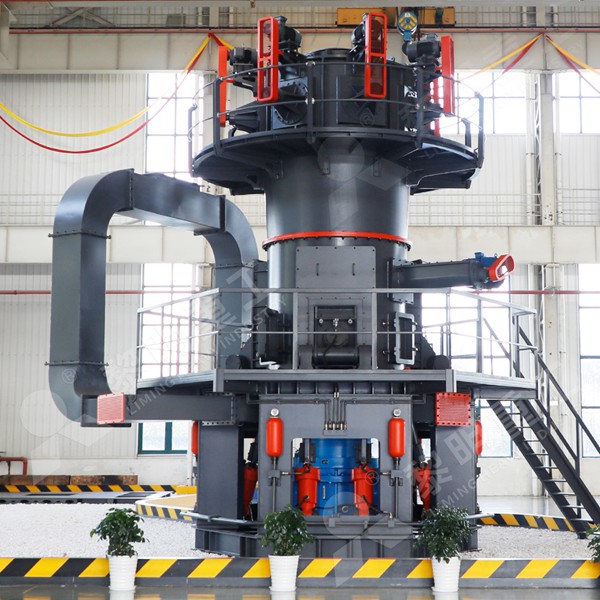
The LM Vertical Roller Mill integrates drying, grinding, powder selection, and conveying in one unit. It is designed for high-capacity operations with an output range of 10-400 T/H and input sizes of 30-55 mm. For fertilizer plants that need to process large volumes of phosphate rock continuously, the LM mill offers excellent drying capability and relatively low energy consumption. It is also useful when feed moisture is slightly higher, because the hot air inside the mill can remove moisture during grinding.
MTW European Type Trapezium Mill
The MTW European Type Trapezium Mill is an upgrade of the traditional Raymond mill and pendulum mill. With capacity from 3 to 55 TPH and input size 30-50 mm, it is one of our most versatile options for phosphate rock grinding. The machine uses a bevel gear drive, curved air duct, and a centralized lubrication system, all of which improve performance and reduce maintenance. For medium-capacity fertilizer plants, the MTW mill balances investment cost with operating efficiency and is especially popular for making 80-400 mesh phosphate rock powder.
Raymond Mill
The Raymond mill remains a workhorse in non-metallic mineral grinding. It suits materials with Mohs hardness under 7 and moisture below 6%, which covers most phosphate rock grades. It can accept feed sizes in the 15-25 mm range. Output fineness can be adjusted across a range from around 44 μm to 613 μm, which is roughly 30-325 mesh. Its capacity is 1.2-4.5 T/H, making it more suitable for smaller fertilizer operations, pilot plants, or production lines that require a simple, reliable mill.
MW Micro Powder Mill
Some specialty fertilizer processes require very fine phosphate rock powder, especially for direct application or for making certain water-soluble phosphate products. Our MW Micro Powder Mill uses advanced Swedish grinding technology and can produce finished powder with d97 ≤ 5 μm, with fineness adjustable between 325 and 3250 mesh. Capacity is 0.5-25 T/H and input size is 10-20 mm. This mill is a strong choice when ultra-fine grinding is a requirement.
Ball Mill
The ball mill is the classic grinding machine for mineral processing. It is key equipment for milling after materials are crushed, and it is often used in beneficiation and chemical plants. For phosphate rock, the ball mill can grind the material to a wide range of sizes, with capacity from 0.65 to 50 T/H and feed sizes up to 25 mm. Ball mills are especially common in large-scale wet or dry phosphate grinding circuits, and they can be paired with classifiers for precise particle size control.
How to Choose the Right Phosphate Rock Grinding Mill
There is no one-size-fits-all answer. The proper mill depends on several factors:
- Required capacity: A 50 T/H plant and a 3 T/H plant need completely different equipment.
- Feed size: Large run-of-mine rock must go through a crusher before most mills.
- Final fineness: DAP and SSP plants usually need 80-200 mesh powder, while specialty applications require finer powder.
- Moisture content: Wet rock may need a mill with drying function or a pre-drying step.
- Power consumption and wear cost: These are ongoing expenses that can quickly outweigh initial price.
At Liming Heavy Industry, we usually say that the right choice starts with material testing. Hardness, moisture, abrasiveness, and target fineness all shape the recommendation.
Working Principles: Understanding the Milling Process
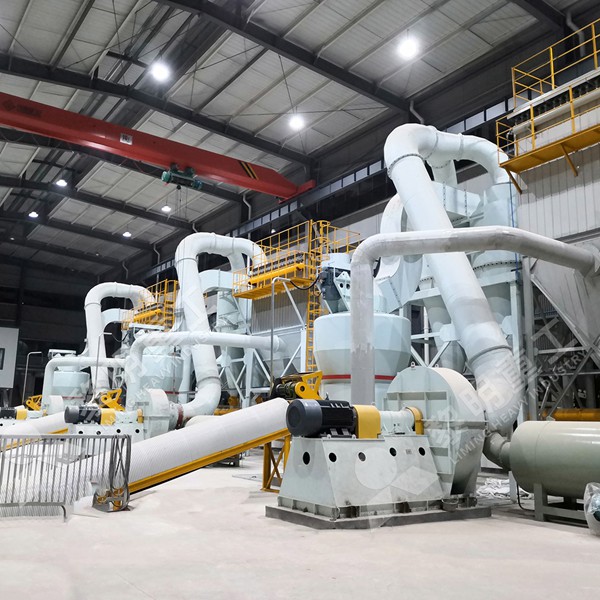
Most of our grinding mills follow a similar process: feeding, grinding, classifying, and collecting. For example, the MTW grinding line uses a jaw crusher to break large lumps into the required size, then a variable-frequency belt feeder sends the material evenly into the mill. Inside the mill, material is ground between grinding rollers and a grinding ring. The ground particles are carried upward by air flow, and a separator ensures that only particles reaching the required fineness leave the mill. Oversized particles return to the grinding table or ring for another pass.
The system is closed-loop: air is recycled through a blower, and a pulse dust collector captures fine powder and prevents dust escape. This design not only protects the environment but also improves safety, especially when dealing with fine phosphate dust.
Environmental and Energy Considerations
Fertilizer producers face increasing pressure to reduce energy consumption and dust emissions. Grinding is one of the most energy-intensive steps in phosphate processing. Therefore, selecting an energy-efficient mill matters both economically and environmentally.
Our newer mills, such as the MTW European Type Trapezium Mill and LM Vertical Roller Mill, are designed with energy-saving features. The LM vertical mill, for instance, combines crushing, grinding, drying, and powder selection in one machine, which reduces auxiliary equipment and lowers system energy use. The MW Micro Powder Mill is equipped with a pulse precipitator, making the production process greener.
Case-Oriented Approach: Why Experience Matters
Since 1987, Liming Heavy Industry has developed a deep understanding of mineral grinding. Our headquarter in the HI-TECH Industry Development Zone of Zhengzhou covers 80,000 m², and our workshop in Shangjie Industry Park covers 67,000 m². This scale allows us to manufacture large equipment with precision. But equipment alone is not enough. Our scientific research team continuously improves product design, focusing on production, learning, and research to solve real-world challenges such as wear life, sealing, and automatic control.
For a phosphate rock grinding mill for fertilizer, the value of experience shows in reliability. Unexpected downtime can halt an entire fertilizer line. That is why we emphasize robust components and simple maintenance. Whether you choose a Raymond mill for a small plant or an LM vertical mill for an integrated chemical complex, you need a machine that keeps running.
Operational Tips for Phosphate Rock Milling
Based on our field experience, we suggest operators pay attention to the following points:
- Control feed moisture. If the material is too sticky, it may clog the feed chute or cause layers on the grinding table.
- Regularly check the separator blades to maintain stable fineness.
- Monitor the air pressure and flow in the system. A blocked duct can reduce output and cause overheating.
- Use a proper crusher before the mill. Most mills are not designed to handle rock larger than their rated feed size.
- Arrange magnetic separation if the phosphate rock may contain metal debris.
Conclusion
Phosphate rock grinding for fertilizer is not an area where compromise is acceptable. The right mill improves reaction efficiency, reduces acid consumption, lowers energy bills, and ensures a consistent final product. Liming Heavy Industry offers a comprehensive range of grinding equipment that covers small, medium, and large fertilizer projects. From the high-capacity LM Vertical Roller Mill to the flexible MTW European Type Trapezium Mill, and from the classic Raymond mill and ball mill to the ultra-fine MW Micro Powder Mill, there is a solution for every phosphate rock specification.
If you are planning a new fertilizer production line or upgrading an existing grinding stage, start with a clear definition of your feed material and target powder. Then match those requirements with the right milling technology. With more than three decades of engineering experience, we are confident that Liming Heavy Industry can help you find the most efficient and reliable phosphate rock grinding mill for fertilizer.
FAQ
1. What fineness of phosphate rock powder is usually needed for fertilizer production?
Most conventional fertilizer processes require a fineness of 80-200 mesh, while some specialty direct-application products may need 300 mesh or finer. The exact target depends on the chemical process and product specification.
2. Can one grinding mill handle both phosphate rock and other materials?
Yes. Many of our mills, such as the Raymond mill and MTW European Type Trapezium Mill, are suitable for non-metallic minerals with Mohs hardness below 7. Operators can adjust the fineness and output for limestone, gypsum, coal, and similar materials.
3. What is the difference between a vertical roller mill and a ball mill for phosphate grinding?
A vertical roller mill combines drying, grinding, and classification in one unit and often has lower energy consumption. A ball mill is simpler and more traditional, but it can be more energy-intensive and may need separate classification equipment.
4. Does Liming Heavy Industry offer complete grinding systems or only the mill?
We provide complete grinding solutions, including crushers, feeders, hoppers, dust collectors, pipelines, powder collectors, and electrical control cabinets. The MTW grinding line, for example, is supplied as a full system.
5. How can I decide between the MTW trapezium mill and the LM vertical roller mill?
If your required capacity is above 10 T/H and you want integrated drying and grinding, the LM vertical roller mill is a strong option. If you need a medium-capacity plant with lower initial investment and more flexibility, the MTW European Type Trapezium Mill is usually the better choice.


