Summary: Selecting the right titanium dioxide grinding mill for paint is not simply about choosing a machine with high output. It requires a complete understanding of feed material characteristics, target fineness, production capacity, environmental constraints, and downstream paint performance. Liming Heavy Industry Co., Ltd. has manufactured grinding equipment since 1987, and its portfolio includes LM vertical roller mills, MTW European type trapezium mills, Raymond mills, MW micro powder mills, and ball mills. For titanium dioxide projects in the paint industry, the key decision points are the required particle size distribution, daily tonnage, material moisture, and whether the plant needs a compact system or a large integrated grinding line. This article provides a practical guide to these decision points and explains how each mill type can be applied to produce TiO2 pigment for paint.
Why Titanium Dioxide Grinding Matters for Paint
Titanium dioxide (TiO2) is the primary white pigment in paint because of its high refractive index and strong light-scattering ability. The grinding step determines whether those properties are fully realized. If TiO2 agglomerates are not broken down, the paint film can show poor gloss, low hiding power, and uneven tint strength. If grinding is too aggressive, new surfaces may form and affect resin demand. Therefore, a suitable titanium dioxide grinding mill for paint must provide controlled fineness, narrow particle size distribution, stable operation, and low contamination.
Key Technical Requirements for Paint-Grade Titanium Dioxide
- Fineness: Many paint systems require TiO2 powder to be ground to 325 mesh or finer, while high-gloss industrial coatings may need 800 mesh or more.
- Particle size distribution: A narrow distribution reduces the risk of coarse particles causing film defects.
- Consistency: Batch-to-batch stability in fineness is critical for paint color matching.
- Purity and whiteness: The mill must not introduce iron or other discoloring contamination.
- Environmental compliance: Dust collection and closed-loop operation are essential.
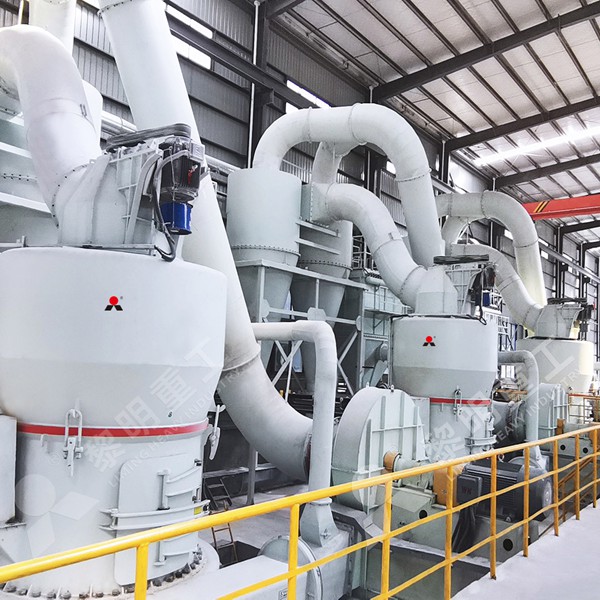
Engineering View: Selecting the Right Grinding Equipment
Liming Heavy Industry Co., Ltd. was founded in 1987 and has grown into a modern joint-stock corporation that integrates research, manufacturing, and sales. Its headquarters are located in the HI-TECH Industry Development Zone of Zhengzhou, covering 80,000 square meters. The workshop in Shangjie Industry Park covers another 67,000 square meters. With over 30 years of experience, the company uses modern scientific management, precision manufacturing, and continuous innovation to supply grinding equipment around the world.
| Mill Type | Capacity | Input Size | Fineness Range | Application for TiO2 |
|---|---|---|---|---|
| LM Vertical Roller Mill | 10-400 T/H | 30-55 mm | Adjustable with classifier | Large-scale TiO2 powder preparation and pre-grinding |
| MTW European Type Trapezium Mill | 3-55 TPH | 30-50 mm | Adjustable with separator | Medium-to-large non-metallic mineral powder making |
| Raymond Mill | 1.2-4.5 T/H | 15-25 mm | 44-613 μm | Small-to-medium TiO2 grinding for general paint |
| MW Micro Powder Mill | 0.5-25 T/H | 10-20 mm | d97 ≤5 μm; 325-3250 mesh | Superfine TiO2 for high-gloss paint |
| Ball Mill | 0.65-50 T/H | ≤25 mm | Controlled by system | Conventional grinding, with classifier for paint pigment |
LM Vertical Roller Mill
For large paint or titanium dioxide production bases, the LM vertical roller mill is an effective solution. It combines drying, grinding, powder selection, and conveying in one unit. The automatic electric control system keeps operation stable. Its capacity range of 10-400 T/H makes it suitable for large-scale mineral powder projects. Because it can handle feed sizes up to 55 mm, it reduces the need for secondary crushing and simplifies the grinding flow.
MTW European Type Trapezium Mill
MTW is an upgrade of traditional Raymond and pendulum mills. It has patented technology, high productivity, and environmental protection. In a TiO2 grinding system, a jaw crusher reduces material to 30-50 mm. A variable-frequency belt feeder sends material evenly into the mill. Particles are ground between grinding rollers and ring, then lifted with air flow. The separator rejects oversize particles for regrinding, and the pulse dust collector cleans the air before recycling. This closed system is ideal for limestone desulfurization and non-metallic mineral powder making, including paint-grade pigments.
Raymond Mill
Raymond mill is a classic solution for small and medium grinding plants. It is suitable for non-flammable, non-explosive materials under 7 Mohs hardness and less than 6% moisture. TiO2 and most related raw materials meet these requirements. The output fineness is between 44 micron and 613 micron, corresponding to roughly 25 to 325 mesh. For standard paint fillers and general TiO2 pigment, this range is often sufficient. The compact layout keeps the system simple and easy to operate.
MW Micro Powder Mill
High-gloss paints demand exceptionally fine TiO2 powders. The MW micro powder mill provides an effective way to reach d97 ≤5 micron, with fineness adjustable between 325 mesh and 3250 mesh. The machine absorbs advanced Swedish grinding technology and uses a medium-speed grinding mechanism. A hammer crusher reduces material, an elevator feeds it into a hopper, and a vibrating feeder sends it to the center of the upper turnplate. Under centrifugal force, material falls to the raceway and is crushed between rollers and ring. The pulse precipitator makes the operation cleaner. For superfine titanium dioxide projects, this is a strong candidate.
Ball Mill
Ball mill is a common grinding plant in the industry and is used after materials are crushed. It can grind all kinds of ores and other materials. The horizontal rotating device drives steel balls to a certain height, and the balls impact and grind materials. For titanium dioxide, ball mill is often applied together with an air classifier for larger tonnage lines. It is stable, durable, and widely used in beneficiation, construction, and chemical industries. However, it generally produces a broader particle size distribution than vertical or micro powder mills, so the system design must include a classifier if narrow distribution is critical.
Application View: Matching Fineness to Paint Performance
Different paint categories require different TiO2 properties. A primer may tolerate coarser particles. An exterior enamel needs high durability and gloss, so fine and narrow TiO2 distribution is required. A titanium dioxide grinding mill for paint should therefore not be selected based on capacity alone. The fineness adjustment range and classification efficiency are equally important. In Liming equipment, variable-speed classifiers and separators allow the operator to change fineness without stopping the line. This flexibility is useful for plants that produce several paint grades.
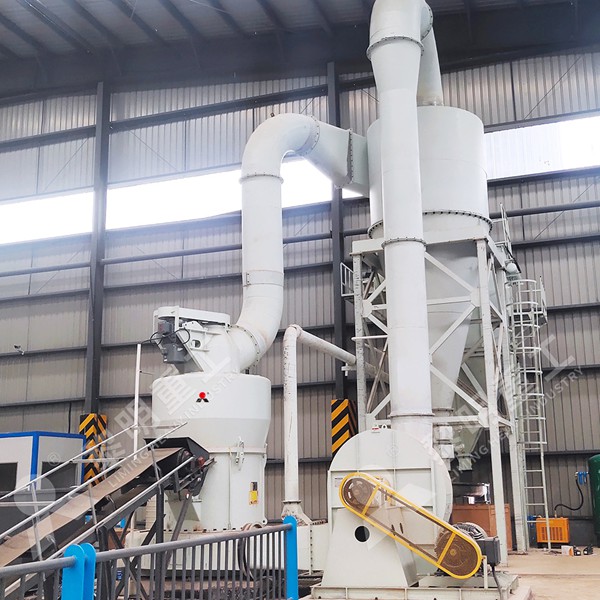
Operational View: Stable Production and Maintenance
From an operator's perspective, a grinding mill must be easy to control, safe, and resistant to wear. The following practical points help maintain stable production.
- Check material moisture. Raymond mill requires moisture below 6%; if raw TiO2 is wet, pre-drying or a vertical mill with drying function is needed.
- Feed evenly. A variable-frequency belt feeder prevents surges that cause vibration and inconsistent fineness.
- Monitor current and pressure. Changes in mill current and air pressure indicate wear or blockages.
- Inspect grinding media regularly. Rollers, rings, and ball charges should be checked according to hours of operation.
- Keep the dust collection system clean. Pulse dust collectors should be maintained so the closed air loop remains under stable negative pressure.
- Calibrate the classifier. The fineness of final powder depends on the separator speed, so routine calibration is necessary.
Process Configuration for a Titanium Dioxide Grinding Line
A complete titanium dioxide grinding line for paint can be configured as follows: raw material storage, jaw crusher, hopper, vibrating feeder, main grinding mill, separator, cyclone powder collector, pulse dust collector, air blower, and finished product silo. For large-capacity projects, an LM vertical mill can combine several steps. For medium-capacity projects, MTW or Raymond lines with crusher and pulse collector are common. For superfine powder, MW micro powder mill with hammer crusher and elevator is preferred.
Conclusion
The best titanium dioxide grinding mill for paint depends on project scale, target fineness, and supporting equipment configuration. Liming Heavy Industry Co., Ltd. offers multiple mill types that cover the full range from coarse to superfine powder. Backed by more than 30 years of manufacturing experience and a modern R&D system, these machines are designed for reliable paint pigments and minerals processing. The correct choice will balance capacity, fineness, energy consumption, and environmental requirements.
Frequently Asked Questions
1. Can a Raymond mill grind titanium dioxide for paint?
Yes. Raymond mill can process titanium dioxide as long as the material is non-flammable, non-explosive, under 7 Mohs hardness, and with moisture below 6%. Its output fineness of 44-613 micron covers many standard paint applications.
2. Which mill is better for superfine titanium dioxide?
The MW micro powder mill is the best fit for superfine TiO2 because its fineness can be adjusted between 325 mesh and 3250 mesh, with a product fineness of d97 ≤5 micron.
3. Can the same mill be used for rutile and anatase titanium dioxide?
Yes. The grinding process is based on mechanical force and classification, so the same mill can handle both rutile and anatase forms. The operator should adjust the classifier speed and feed rate because different crystal forms may have slightly different hardness and density.
4. What auxiliary equipment is needed for a complete TiO2 grinding system?
A typical system includes a jaw crusher, vibrating feeder, hopper, mill, separator, dust collector, powder collector, air blower, and electric control cabinet. The exact lineup depends on raw material size and target capacity.
5. How can paint manufacturers maintain consistent TiO2 fineness?
Use an even feeding method, maintain a stable classifier speed, inspect grinding parts periodically, and keep the dust collector under normal negative pressure. Automated control systems on Liming mills help achieve consistent fineness from batch to batch.


